

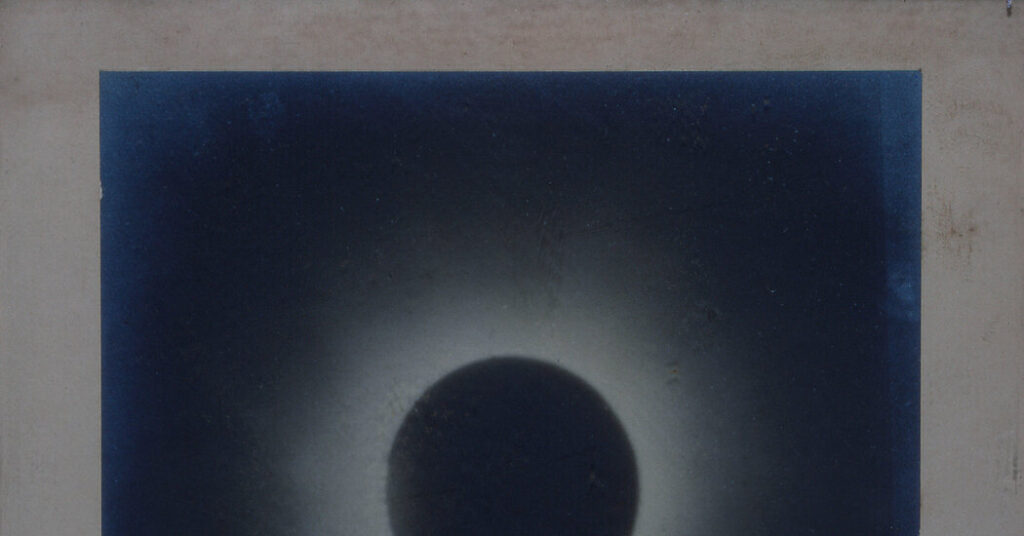
The last total solar eclipse visible from Spain was nearly 121 years ago, and, just like this year, it drew crowds from around the world. Among the spectators for the event, on Aug. 30, 1905, were the crews of three warships sent by the U.S. military to take high-definition photographs of the sun’s corona.
That “Eclipse Squadron,” as The New York Times called the expedition at the time, set sail on July 1 carrying one of the largest cameras then constructed, with a lens worth about $900 — about $34,000 today. Several naval astronomers were onboard the ships — the U.S.S. Minneapolis, U.S.S. Columbia and U.S.S. Caesar — ready to set up the camera near the Porta Coeli monastery in the mountains north of Valencia.
The trip was “a wonderful scientific adventure that brought America and Spain together,” said Vicente Muñoz Gimeno, a historical researcher and journalist in Valencia who recently compiled a report about the Eclipse Squadron.
Arriving several weeks before the eclipse, the Americans were just in time for the 1905 Great Valencia Fair, which is still a tradition to this day in the city. The sailors won a regatta against local rowers and attended a bullfight during the festivities. Then, leading up to the eclipse, they worked with residents to erect their 65-foot refractory telescope.
According to Mr. Muñoz, “The expedition resulted in a unique cultural crossroads, where American sailors and astronomers set up cutting edge equipment among local farmlands, shared traditional dances with the residents of Bétera and Serra, and ultimately captured flawless photographic plates of the inner corona during 106 seconds of totality.”