

By Omoyeni Ojeifo
Journalists must move beyond reactive reporting and actively investigate intelligence failures before security threats escalate, according to ICIR Executive Director/Founder Dayo Aiyetan.
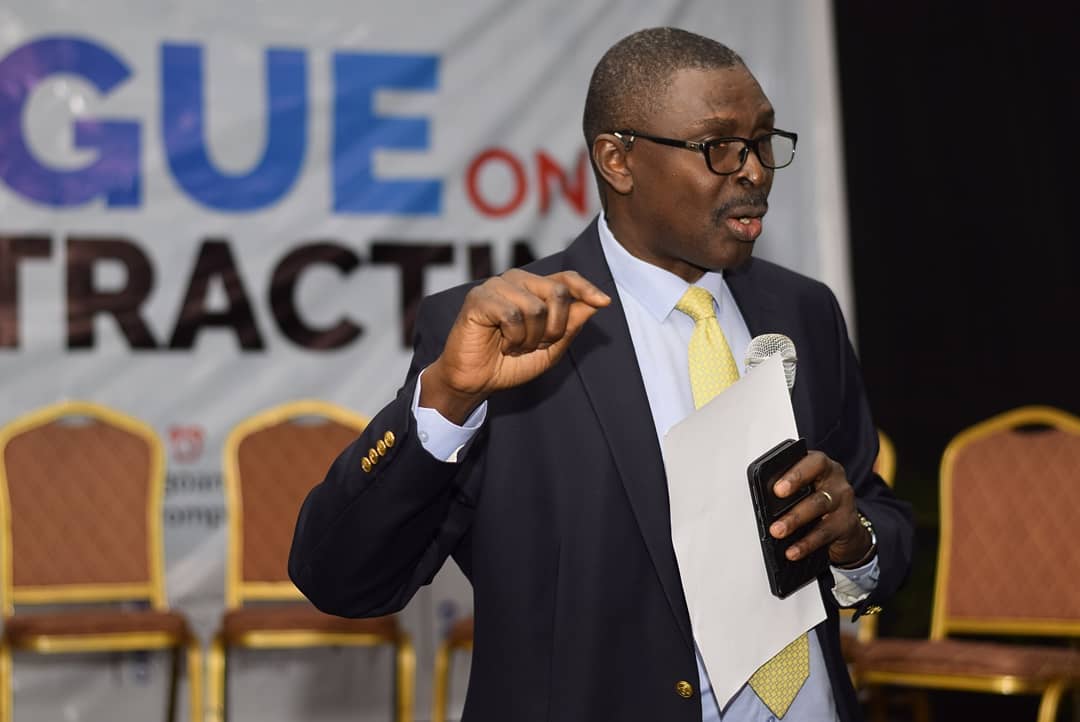
Speaking at a two-day workshop on Conflict-Sensitive Reporting in Abuja being attended by Persecondnews correspondent, Aiyetan urged reporters to hold relevant government agencies accountable for recurring security lapses.
“Perhaps the biggest problem of security in Nigeria is failure of intelligence. Security agencies are not sufficiently worried about the influx of all kinds of people, and that failure to identify threats early creates serious security risks for the country,” he said.
He said journalists covering security, illegal activities and governance must examine the responsibilities of institutions involved, rather than focus only on the immediate actors or victims.
“Investigative journalism is reporting that holds government accountable. If you say somebody is doing some wrongdoing, you cannot just report the wrongdoing and stop there.
“You have to ask: who should be held accountable? Who allowed it to happen? Who benefited from it? That is what makes the reporting investigative,” Persecondnews quotes him as saying.
Aiyetan also challenged journalists investigating abandoned projects and failed government contracts to pursue the ownership structures behind companies involved, saying accountability is incomplete when reports stop at naming contractors.
He stressed that investigative reporting must be evidence-based, urging reporters to develop hypotheses from leads and then work systematically to establish what happened, rather than treating allegations as facts.
“The ‘how’ is the kernel of investigative journalism for me, because it is in the ‘how’ that you ask questions and answer them. It is in the ‘how’ that we gather evidence, documentary and otherwise.”
The ICIR founder further warned journalists to exercise caution when using Artificial Intelligence, AI, particularly when entering sensitive information into AI platforms during research or investigation.
“When you are prompting AI, please be careful. If you tell AI, ‘What is the meaning of this medical condition?’ you are already revealing your medical information. So be careful in dealing with it.”
He said the media’s watchdog role must, however, be guided by public interest, warning journalists against confusing the power to investigate with the freedom to recklessly damage reputations.
“Everything that we do has to be in public interest. At the centre of everything we do, don’t let us forget, is public interest. Holding people to account does not mean that our responsibility is to destroy reputations.”
Aiyetan also urged journalists to cultivate curiosity, initiative, research skills and self-discipline, stressing that the constitutional mandate to hold power accountable requires reporters to pursue facts rigorously and responsibly.
Persecondnews reports that the two-day action-learning programme brings together mass media practitioners for practical sessions on conflict-sensitive reporting, investigative journalism, evidence gathering, public-interest journalism, research and responsible media practice.