

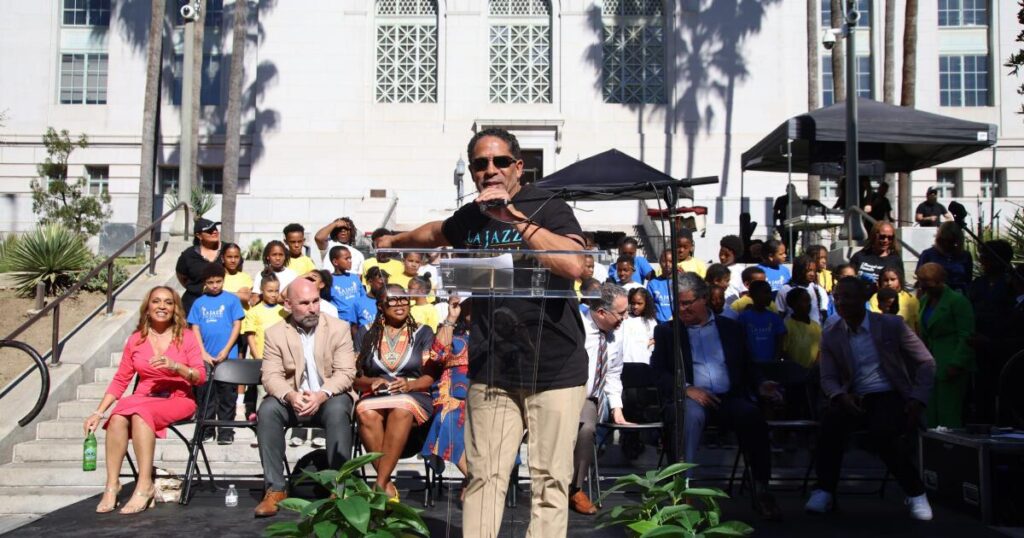
This month’s LA Jazz Festival was slated to be one of the largest concerts in Los Angeles history.
With dozens of performances spread throughout every City Council district, organizers hoped the shows would draw 250,000 attendees and inaugurate the city as a home for jazz events on par with New Orleans and Montreal.
Those plans are in doubt after the festival appeared to abruptly cancel much of its programming throughout the month, leading up to its main show on Dockweiler Beach Aug 22-23.
Organizers did not immediately respond to request for comment or clarification on the cancellations.
Two weeks of small, local and mostly free shows beginning with a kickoff concert this weekend in Leimert Park appear to have been canceled, as have planned Jazz After Dark and Caribbean Street Festival events leading up to the paid-ticket main show.
All information on the festival’s website has been taken down, with the site simply stating dates of Aug. 22-23 and “Updated event info coming soon.”
John Legend, Janelle Monáe, Charlie Wilson, Parliament Funkadelic and Raphael Saadiq were booked to headline the main show.
LA Jazz Festival was a major project of Martin Ludlow, a former Los Angeles City Council member turned music promoter and community activist after pleading guiltyto misappropriating funds in 2006.
Ludlow announced the show in a splashy speech on the steps of City Hall in February, flanked by Mayor Karen Bass and other civic leaders. “During this journey, you can only imagine there’s a lot of highs and a lot of lows,” Ludlow said then. “When you have those lows, you want a friend that really can lift you up.”
Back in February, Ludlow described the mission of LA Jazz Festival with a civil rights-inspired fervor, saying that “This festival is intended to lift up our ancestors that came to this country in bondage, terrorized, brutalized. It’s also about celebrating the end to those last bastions of Jim Crow racism, the days we were denied access to public drinking fountains, public swimming pools and public beaches. From the beginning of this journey, we’ve been very intentional about telling the narrative of that human rights struggle called Jazz.”