
JD Vance ‘Fixes’ Capitalism

Vice President JD Vance would seem to have little in common with J.D. Rockefeller (1839-1937), once the wealthiest man in the world. But the two Republicans have in common a belief that capitalism doesn’t work for the American people. Mr. Vance has little faith in market competition, which Rockefeller called “a sin.”

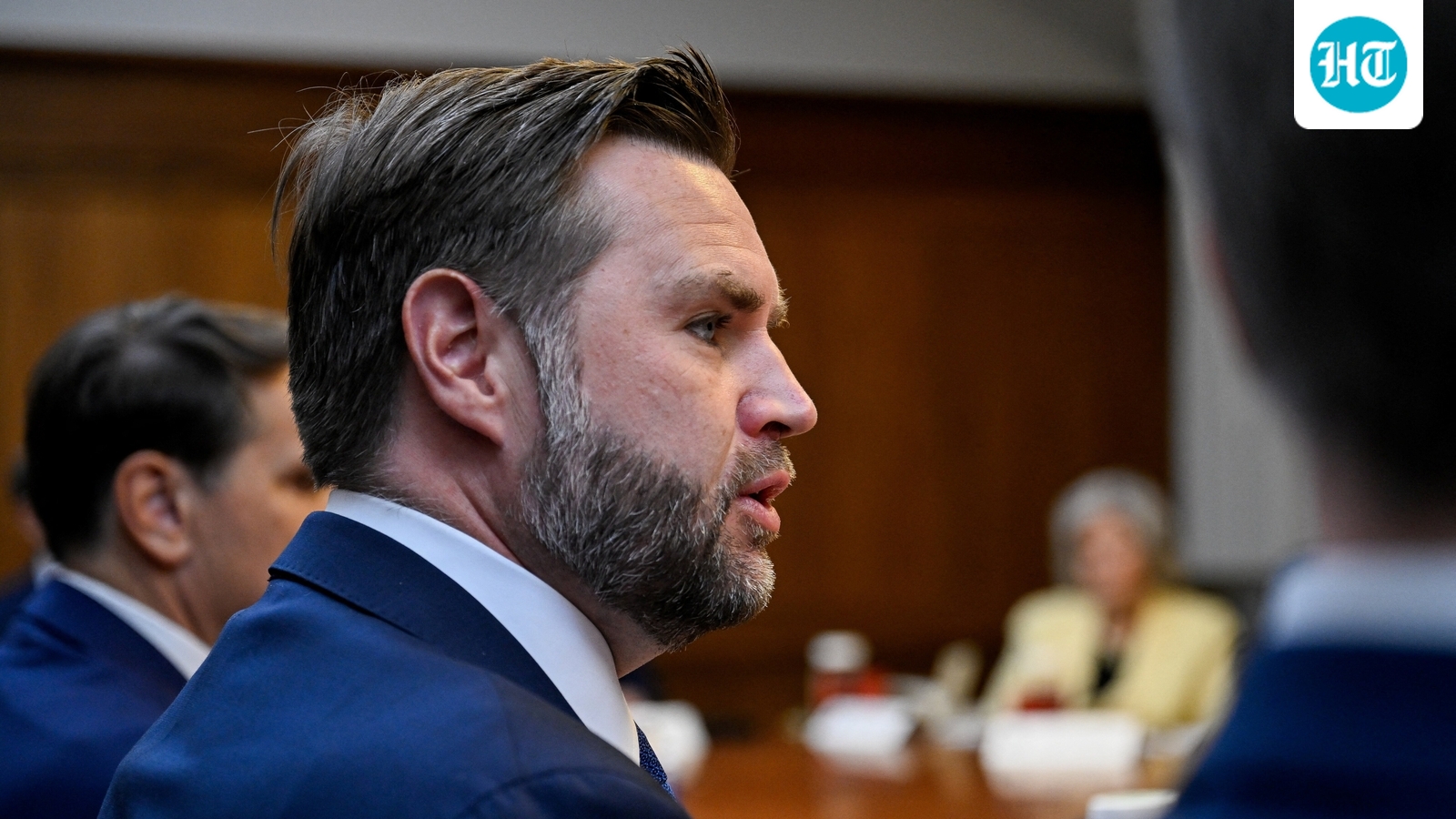
U.S. Vice President JD Vance speaks during a cabinet meeting at Camp David in Thurmont, Maryland, U.S., July 31, 2026. (REUTERS)

Pat Buchanan campaigned on similar grounds in his 1992 run for president, in which he promised to “make America first again.” This Republican distrust of the free market comes from seeing competition in exclusively destructive and material terms. To give an example, Amazon is often blamed for driving competitors out of business—primarily brick-and-mortar stores such as the bookseller Borders. In this telling, Amazon won and Borders lost.

And it’s true. But market reality is more complex than a boxing match in which one guy wins and one guy loses.

For the real winner is the customer, who gains greater choice, better prices, higher-quality goods and services or some combination thereof because people must compete for his dollar. It is the customer, not “the market,” who determines which producers win.

This isn’t how Mr. Vance sees it. Where Mr. Buchanan in the 1990s railed against the North American Free Trade Agreement, Mr. Vance attacks free-market icons such as Milton Friedman. It’s telling that in his new book, “Communion,” the chapter the vice president devotes to economics is called “A Dismal Science,” a phrase Thomas Carlyle coined in the 19th century as he opposed the coalition of evangelical Christians and economists fighting slavery.

Today Mr. Vance says that while Friedman’s ideas might have worked “in a world where there are Christian guardrails on everything,” they are ill-suited for our more secular age.

“The caricature of Milton Friedman as one who advocated for selfishness or a sort of chaotic freedom that undermined the common good is a classic straw man,” says David Bahnsen, a National Review trustee and managing partner of the Bahnsen Group, a $10 billion wealth-management firm. “Friedman’s love of free enterprise was rooted to his argument that it optimized conditions for social cooperation—not that he was apathetic about such.”

If we’re going to have an honest talk about justice, human dignity and social harmony, do we really believe any third party—especially the government—will make better choices than we ourselves would make?

While market critics are quick to point out the limitations of the market and its participants, they place extraordinary trust in the people they think will fix it. The beauty of capitalism is it is designed for imperfect people. Competition limits the harm they can do and provides real alternatives.

“The danger begins not when men compete to serve,” says the Rev. Robert Sirico, president emeritus and a co-founder of the Acton Institute, “but when they conspire—privately or politically—to prevent others from competing with them.”

This is a central tenet of the free economy: openness to new competitors. Today it’s unpopular in Republican as well as Democratic circles, albeit for different reasons. From the left, the Democratic Socialists of America wish to replace capitalism with socialism. On the Republican side, Donald Trump has embraced government intervention through tariffs and government ownership of corporate shares.

Unlike some of his intellectual supporters, however, the president is willing to live with contradictions and seldom follows his own beliefs to their logical conclusions. That’s why there are so many internal fights over what the true Trump philosophy is. He would likely say that he takes each problem and applies common sense.

Mr. Vance is an educated man who served his country in a time of war. He has a compelling life story about his rise from poverty and dysfunction to the U.S. Senate and the White House, and he is right to be skeptical about a classical liberalism not rooted in truth but in agnosticism about the very possibility of truth.

Even Karl Marx recognized the revolutionary improvements capitalism brought to feudal society. Yet even among business elites and other beneficiaries of capitalism, there is little appreciation for that fact. It is especially curious to find such critics of capitalism on the right, where many now put their faith in bureaucrats who they assume will be wise enough to impose and run a system with all the blessings of the free market without any of the defects of government-run economies.

What ought to give Mr. Vance pause is that history confirms one truth about markets: The opposite of competition isn’t cooperation. It’s collusion.

Write to [email protected].