

Stakeholders have expressed commitment to sustainable development and lasting peace across the country, through the institutionalising the Humanitarian-Development-Peace (HDP) nexus.
Minister of Humanitarian Affairs and Poverty Reduction, Dr Benard Doro, made the commitment at a high-level roundtable on financing the HDP Nexus in Nigeria, and the launch of the Policy Coherence and Learning Sub-Working Group held in Abuja.
The minister represented by Mrs Catherine Bulus, commended the National Commission for Refugees, Migrants and Internally Displaced Persons (NCFRMI), ActionAid Nigeria and other development partners for organising the event and supporting efforts to institutionalise the HDP Nexus in the country.
According to her, the Federal Government is repositioning itself to strengthen coordination across the humanitarian, development and peace sectors.
The minister said the newly inaugurated Policy Coherence and Learning Sub-Working Group would promote policy alignment, facilitate cross-sector learning, generate evidence for decision-making, strengthen institutional capacity and support the implementation of the HDP Nexus at the federal, state and local government levels.
Also, the Country Director of ActionAid Nigeria, Andrew Mamedu, represented by the organisation’s Director of Business Development and Innovation, Nkechi Illochi-Kanny, said, the HDP Nexus had become imperative as communities across Nigeria continue to grapple with displacement, recovery and rebuilding.
He noted that the framework provides a pathway for moving beyond fragmented responses to integrated interventions that make humanitarian assistance more impactful, development more sustainable and peace more enduring.
Mamedu said ActionAid Nigeria had spent the last six years working with government institutions, civil society organisations and local communities to demonstrate the effectiveness of coordinated humanitarian, development and peace interventions.
As co-chair of the Policy Coherence and Learning Sub-Working Group, he said ActionAid Nigeria would continue to promote collaboration, harmonise approaches and ensure that lessons from implementation translate into improved policies and practices.
Also speaking, Director General of Peace and Conflict Resolution, Dr. Joseph Ochogwu, said the HDP Nexus would transform humanitarian, development and peace-building practice through stronger collaboration.
“The entire essence of the Nexus is to bring humanitarian, development and peace actors together to work in sync and deliver better outcomes for people, particularly those in conflict-affected and hard-to-reach communities,” he said.
He called for greater emphasis on peace-building within the framework, noting that peace should remain central to all interventions.
In his remarks, the Federal Commissioner of the National Commission for Refugees, Migrants and Internally Displaced Persons, Dr. Tijjani Aliyu, said the dialogue was aimed at shaping how humanitarian-development-peace interventions would be financed, expanded and implemented nationwide.
Aliyu highlighted the commission’s efforts to provide durable solutions for displaced persons through housing, livelihood support, farming programmes and vocational empowerment rather than prolonged dependence on humanitarian assistance.
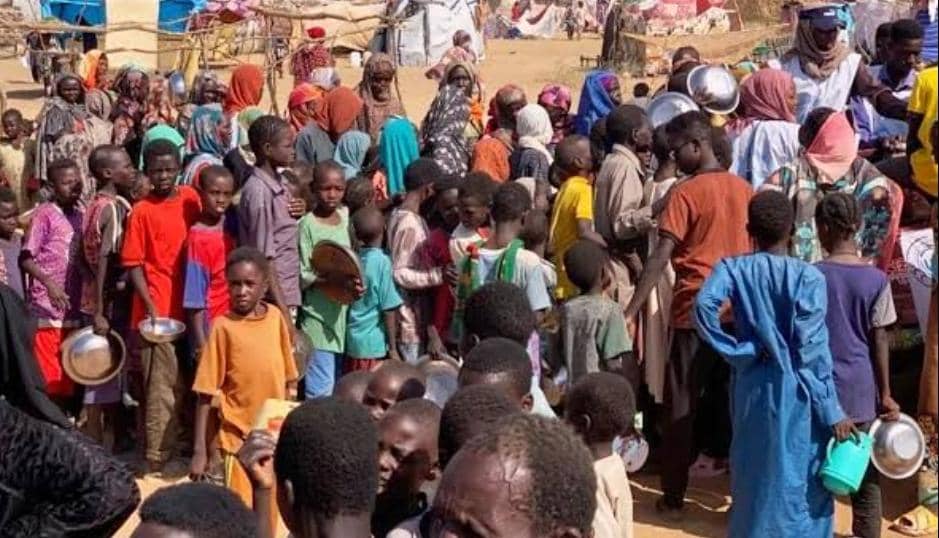
He noted that while global internal displacement had reached more than 83 million people by the end of 2024, Nigeria currently has about 6.7 million internally displaced persons.
He added that the country must shift from continuous relief distribution to sustainable livelihood support that enables displaced persons to become self-reliant.