

By Samuel Akpan
Team Nigeria delivered a historic performance at Glasgow 2026, shattering world records, snapping decades-long droughts, and finishing 7th overall out of 72 nations as Africa’s top performer.
The nation’s para-powerlifting stars spearheaded the gold rush.
Folashade Oluwafemiayo cemented her world-class status with another record-breaking lift for gold, while Goodness Nwachukwu dominated the women’s F42–44/F61–64 discus, demolishing her own world record to take top honors.
Rita Ferdinand added to the legacy, setting a world record of her own en route to a silver medal and demonstrating Nigeria’s unmatched depth in the sport.
On the track, the mixed 4×400m relay team—Samuel Ogazi, Ezekiel Nathaniel, Ella Onojuvwevwo, and Patience Okon-George—blazed to victory in 3:12.85, establishing both a new Nigerian national mark and the inaugural Commonwealth Games record.
Samuel Ogazi stormed to a historic gold in the men’s 400m, becoming the first Nigerian man to stand on the event’s podium since 1994 and ending a 32-year drought.
Ezekiel Nathaniel kept the momentum going with a landmark victory in the 400m hurdles, claiming Nigeria’s first-ever Commonwealth title in the discipline.
The success spilled over into the field events with a series of historic breakthroughs.
Chukwuebuka Enekwechi secured gold in the men’s shot put, while debutant Jessica Oji snapped a 20-year drought by taking silver in the women’s event.
Capping off the remarkable run, Temitope Adeshina soared to bronze in the high jump—marking Nigeria’s first Commonwealth medal in the event in 52 years.
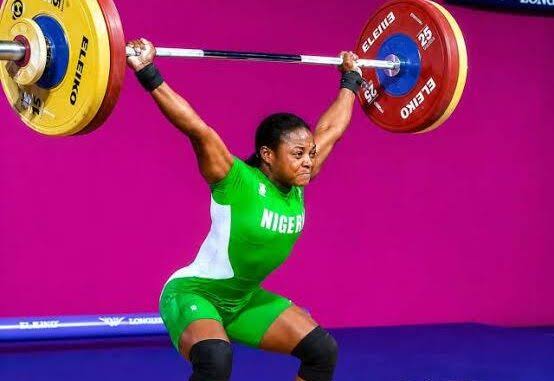
Additional breakthroughs came across the board – Enku Ekuta’s judo bronze ended a 24-year absence from the podium, Kayinsola Ajayi’s 100 m bronze closed a 20-year sprint drought, Ella Onojuvwevwo’s 400m bronze revived the women’s quarter-mile after 32 years, and Onome Omolola Didih dominated the women’s 53 kg weightlifting for gold.
Nigeria collected 24 medals in total—10 gold, seven silver and seven bronze—finishing as the only African nation inside the top 10 and the continent’s clear leader ahead of South Africa, Kenya, Mauritius and Cameroon.
This strong showing followed Birmingham 2022, where Team Nigeria amassed 35 medals including a national-record 12 golds to place seventh and top Africa, boosted by traditional strengths in wrestling and table tennis.
Glasgow’s leaner programme omitted those sports yet still produced historic results and maintained the same overall ranking.
Progress in swimming, with Abduljabar Adama reaching the semifinals, and an encouraging debut for the wheelchair basketball team in the knockout stages further signalled Nigeria’s expanding competitive base.
These achievements, powered by strategic policy from the National Sports Commission, have laid a formidable platform for the next generation of Nigerian athletes.
Persecondnews reports that the centenary Commonwealth Games will be staged in Ahmedabad (Amdavad), India, in 2030, exactly 100 years after the inaugural event in Hamilton, Canada.
India, host of the 2010 Games in Delhi, secured the rights ahead of Nigeria’s Abuja bid and plans a programme of 15–17 sports for the landmark edition.
The 2030 Games offer Team Nigeria a golden chance to build on Glasgow’s record-breaking momentum and chase even greater success on the Commonwealth’s biggest centenary stage.