

By Omoyeni Ojeifo
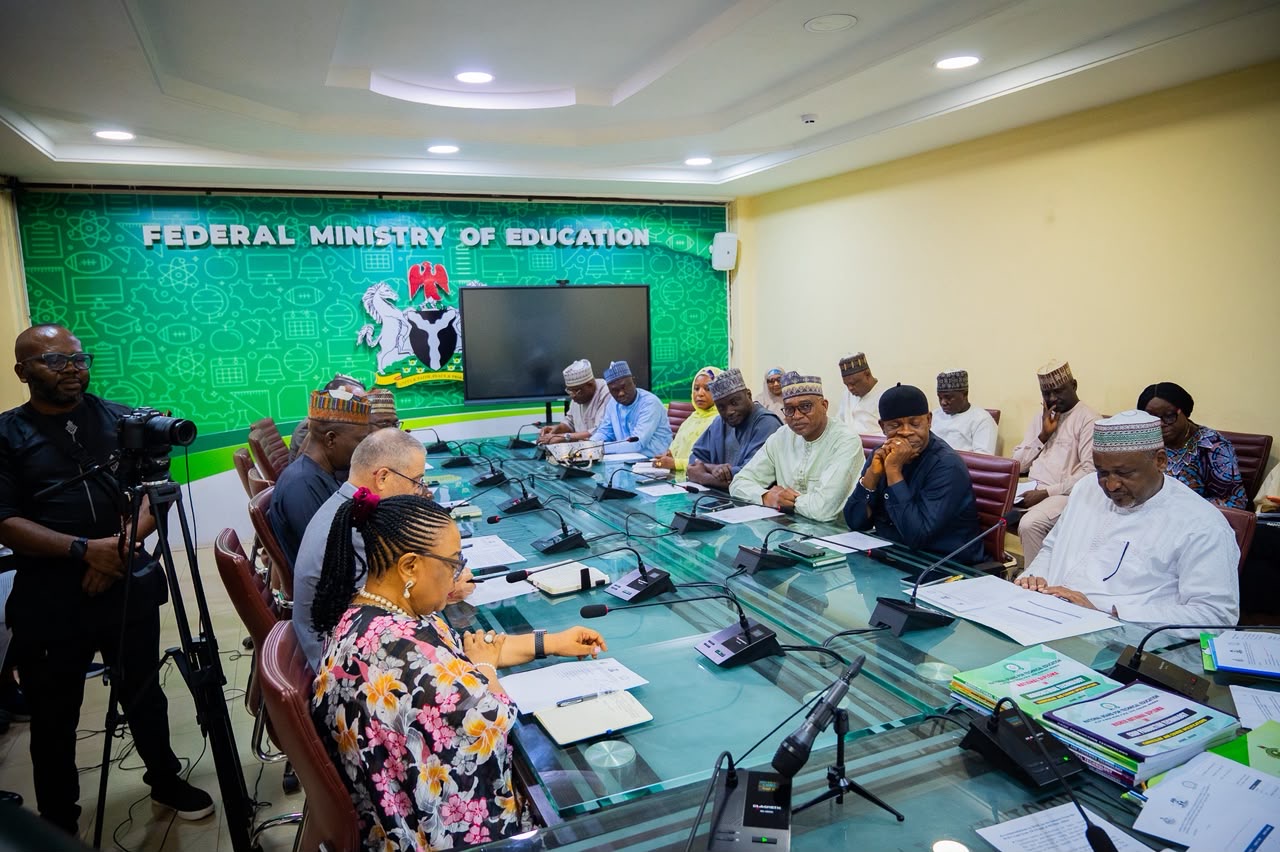
Nigeria’s heavy reliance on informal employment is driving the Federal Government’s move to restructure the National Technical Education Board (NBTE) and strengthen technical skills development.
Dr. Maruf Tunji Alausa, the Minister of Education, noted that the exercise would reposition NBTE to effectively drive Nigeria’s Technical and Vocational Education and Training (TVET) system.
The restructuring is expected to strengthen the agency’s institutional capacity, internal processes and operations while making technical education more responsive to the skills needs of the Nigerian economy.
Alausa disclosed that the exercise involves a comprehensive assessment of NBTE with KPMG, according to a statement by Ikharo Attah, Special
Adviser( Media and Communications), obtained by Per Second News on Wednesday.
He said: “KPMG is developing a functional organisational structure and operational framework to improve NBTE’s leadership, supervision and coordination of institutions under its mandate.
“The engagement would identify institutional gaps and recommend improvements to NBTE’s internal mechanisms, organisational structure and operational processes.”
According to the minister, the findings will provide a clearer framework for aligning NBTE’s structure and operations with its statutory responsibilities and the Federal Government’s broader reforms.
“Effective institutions responsible for supervising technical education are critical to achieving President Bola Ahmed Tinubu’s vision of a skilled, productive and globally competitive Nigerian workforce.”
The Minister stressed that NBTE must ensure polytechnics, monotechnics and other technical institutions produce practical skills capable of supporting national development.
Alausa further revealed that the Ministry considers polytechnic education an integral part of the broader TVET ecosystem, with skills development remaining central to its reforms.
“Everything about the polytechnic is technical and vocational education and training. It is all about skills. We are simply discussing skills,” Alausa said.
He stressed that the approach informed the ongoing review of polytechnic curricula and development of National Occupational Standards to align training with practical skills and industry requirements.
“The curriculum review, supported with ₦1 billion from Tertiary Education Fund, (TETFund), produced 27 new National Occupational Standards and reviewed four existing standards, bringing the total to 31.
“The standards would establish a clearer skills pathway from artisan-level training through National Certificate, OND and HND programmes.
“The reforms are ultimately designed to ensure technical education produces practical competencies that translate into employment, entrepreneurship and increased productivity, ” he added.
From his industry perspective, Adewale Ajayi of KPMG Africa said the assessment identified challenges confronting Nigeria’s TVET system alongside opportunities for strengthening its structure and effectiveness.
Ajayi noted that about 93 per cent of Nigeria’s workforce is engaged in informal employment, while approximately 12 per cent of young people are not in education, employment or technical training.
He, however, said Nigeria performs strongly in TVET graduate employability, with only Singapore ranking ahead among the markets assessed.
Ajayi also disclosed that more than 55 per cent of existing curricula assessed were outdated, including programmes covering engineering, science, arts and design.
He identified funding constraints and the five-year curriculum review cycle as factors contributing to the challenge, while citing the updated agriculture curriculum as a positive development.
The Minister reaffirmed the ministry’s commitment to building a technical education system anchored on practical competence, industry relevance, employability and productivity.