

The federal government on Wednesday reaffirmed its respect for the Catholic Church, describing it as one of Nigeria’s most important development partners, stressing that President Bola Tinubu remains committed to strengthening engagement with faith-based organisations in addressing the country’s pressing challenges.
Besides, the Tinubu administration assured that the current economic hardship confronting Nigerians is only a passing phase that will ultimately give way to the benefits of ongoing reforms.
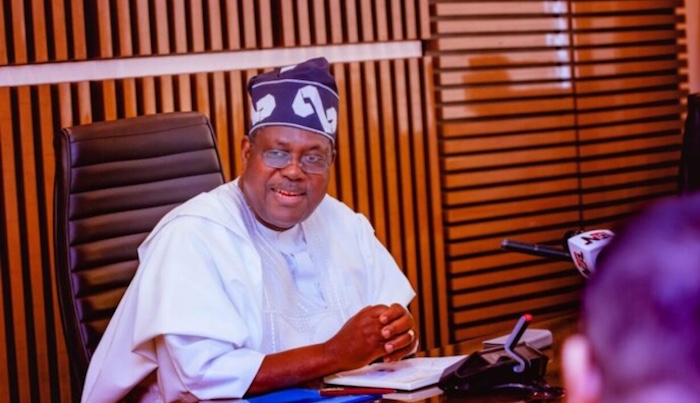
Secretary to the Government of the Federation (SGF), Senator George Akume, in a statement, against the backdrop of recent exchanges between the administration and leaders of the Catholic Bishops’ Conference of Nigeria (CBCN), said the Tinubu administration recognised the invaluable contributions of the Catholic Church in education, healthcare, humanitarian services, peacebuilding and moral leadership.
According to the government scribe, the President continues to welcome honest advice and constructive engagement from religious institutions.
“The federal government has taken note of public reactions following the recent meeting between President Bola Ahmed Tinubu and the leadership of the Catholic Bishops’ Conference of Nigeria (CBCN). We wish to reaffirm our profound respect for the Catholic Church and its enduring contributions to Nigeria’s development through education, healthcare, humanitarian services, peacebuilding and moral guidance,” he stated.
According to the SGF, the government believes that many of Nigeria’s challenges cannot be solved alone, arguing that partnerships with faith communities, traditional institutions, civil society organisations, the private sector and citizens remain indispensable to national development.
“Many of the challenges confronting our nation require partnership. Faith communities, traditional institutions, civil society, the private sector and citizens all have indispensable roles to play in promoting peace, strengthening social cohesion and advancing national development. Constructive engagement between government and these institutions is therefore not only welcome but essential,” Akume said.
During a recent meeting at the Presidential Villa, the bishops had expressed concern over worsening economic hardship, insecurity, democratic governance and the shrinking political space.
The controversy deepened after the former Archbishop of Abuja, Cardinal John Onaiyekan, defended the bishops’ position on television, insisting they were merely fulfilling their responsibility to “speak truth to power” and reflecting the genuine concerns of Nigerians rather than engaging in partisan politics.
His remarks drew sharp responses from senior government officials and supporters of the administration, triggering a public debate over the current administration’s response to criticism vis a vis the Church’s role in holding the government accountable.
But Akume said that the president as well as himself and his office would continue consultations with the leadership of the Catholic Bishops’ Conference, other faith-based organisations and relevant stakeholders on issues raised during the meeting with the president, with a view to deepening collaboration in the national interest.
Akume noted that discussions between Tinubu and the bishops were candid, respectful and constructive, covering concerns over insecurity, economic hardship, education, public services, electoral credibility, political pluralism and religious freedom.
While acknowledging that there were differences in the assessment of some issues, he said such disagreements should not be interpreted as a breakdown in relations between both sides.
He explained that both parties equally recognised some progress recorded by the administration, including the implementation of the student loan scheme as well as recent successes by security agencies in securing the release of abducted schoolchildren and teachers.
On the economy, Akume admitted that many Nigerians were experiencing severe hardship, but maintained that the reforms being implemented by the Tinubu administration were necessary to correct longstanding structural distortions and place the economy on a sustainable path.
He described the current pains as temporary, saying the government was investing massively in infrastructure, agriculture, power, healthcare and social intervention programmes to cushion the impact of the reforms and create the foundation for long term prosperity.
According to him, investments in major projects such as the Lagos Calabar Coastal Highway, the Sokoto Badagry Super Highway, rail transport, nationwide road construction and the transformation of Abuja’s road network were expected to stimulate economic activities and improve connectivity across the country.
Besides, he pointed out that the government was expanding food security initiatives through improved agricultural inputs, tractors and institutional support under the National Agricultural Land Development Agency (NALDA), while reforms in the electricity sector and health system were equally being pursued.
Defending the administration’s economic direction, Akume insisted that there was increasing evidence that the reforms were beginning to yield positive results.
“There is growing evidence that these reforms are yielding results. The foreign exchange market is becoming more stable, inflationary pressures are moderating, macroeconomic fundamentals are strengthening and investor confidence is returning,” he said.
He added that official data also pointed to sustained economic growth, moderation in headline inflation and easing food prices, stressing that the next phase of the reforms would focus on translating macroeconomic gains into lower living costs, quality jobs, improved public services and broader economic opportunities.
Akume listed the Social Investment Programmes, the Nigerian Consumer Credit Corporation (CreditCorp), the Nigerian Education Loan Fund (NELFUND), support for business start ups and Conditional Cash Transfers among initiatives designed to ensure that ordinary Nigerians benefit directly from the reform agenda.
On security, the SGF acknowledged that the ultimate measure of government performance remained the safety of citizens, admitting that every life lost to terrorism, banditry, kidnapping and other violent crimes was regrettable.
He, however, said the government was strengthening the country’s security architecture through the establishment of four new Army divisions in Benue, Kwara, Taraba and Edo states, reforms in intelligence gathering, logistics, recruitment, personnel welfare and technology, as well as the creation of the Office of Homeland Security.
Akume also used the opportunity to dismiss claims that the Tinubu administration was promoting a one party state, insisting that the government remained committed to constitutional democracy, political pluralism and the independence of the Independent National Electoral Commission (INEC).
He pointed to the registration of 21 political parties by INEC as evidence that Nigeria’s democratic space remained open and competitive.
“The federal government is neither seeking nor in support of a one party state. President Tinubu’s administration remains deeply respectful of the legal autonomy and constitutional responsibilities of the Independent National Electoral Commission in the spirit of true democracy,” he stated.
The SGF added that the administration would continue to welcome sincere advice from respected national institutions, stressing that no responsible government should ignore legitimate concerns expressed by its citizens.
Emmanuel Addeh and Olawale Ajimotokan
Follow us on: