

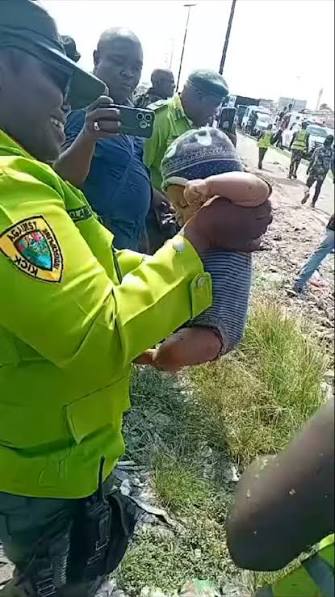
Another child has been rescued from a junkyard in the Alakija area of Lagos during an enforcement operation aimed at clearing illegal structures along the Lagos–Badagry Expressway.
The child was discovered at the junkyard during the exercise, adding a fresh dimension to concerns surrounding the conditions in which children may be living or spending time around unregulated settlements and business premises along the major highway.
The enforcement operation was reportedly focused on removing illegal structures and clearing parts of the expressway corridor that had been occupied or used for activities outside approved planning regulations.
The discovery of the child, however, has raised questions about the welfare and protection of minors found within such environments.
Junkyards and other informal settlements along major transport corridors can expose children to hazardous conditions, including heavy machinery, vehicular movement, sharp metal objects, environmental pollution and other safety risks.
The latest rescue also underscores the need for enforcement agencies to go beyond the demolition or removal of illegal structures by ensuring that vulnerable persons, particularly children, are identified and referred to appropriate authorities for protection and welfare support.
Details surrounding the identity of the child, the circumstances that led to the child being found at the Alakija junkyard and whether any individual has been arrested or questioned were not immediately available.
Authorities are expected to establish whether the child was living at the location, visiting the premises or had been brought there for other reasons.
The Lagos–Badagry Expressway remains one of the state’s major transport corridors, connecting Lagos with communities towards the Badagry border.
Over the years, portions of the corridor have faced challenges involving illegal structures, informal commercial activities, roadside trading and other forms of unauthorised development.
The enforcement exercise is therefore expected to continue as authorities seek to restore compliance with planning and environmental regulations along the route.
However, the rescue of the child places an additional responsibility on relevant agencies to ensure that enforcement operations do not overlook the humanitarian circumstances of people affected by the clearance.
Child protection authorities may also need to determine whether the rescued child has parents or guardians who can be safely located and, where necessary, provide appropriate temporary care and social support.