

Maritime
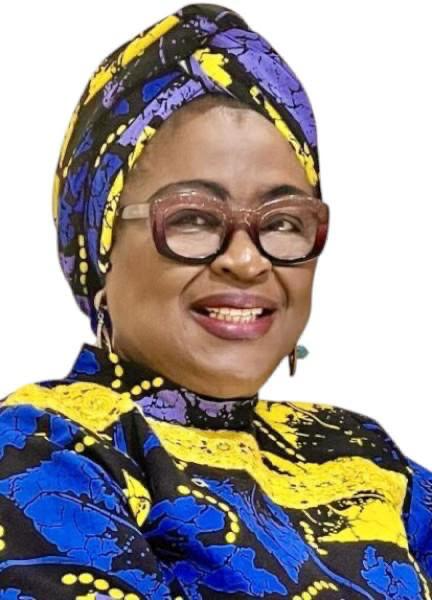
A leading Blue Economy expert, Dr. Felicia Chinwe Mogo, has urged African governments and private sector operators to embrace Environmental, Social and Governance (ESG) principles as the foundation for building globally competitive and investment-ready maritime economies.
Mogo made the call during a high-level international webinar held ahead of the Strategic Green Maritime and Blue Economy Executive Management Training Workshop scheduled for Oct. 14 to Oct. 16 in Accra, Ghana.
The webinar, attended by policymakers, regulators, investors, development practitioners and maritime professionals across Africa, focused on strategies for transforming the continent’s vast marine resources into commercially viable and environmentally sustainable investments.
Speaking on the theme of sustainable Blue Economy development, Mogo said Africa’s maritime future would depend less on the abundance of its ocean resources and more on its ability to develop bankable projects that align with global investment standards.
She said ESG had become the language of international investment, noting that governments and businesses that failed to integrate environmental sustainability, sound governance and social responsibility into maritime development risked losing investment opportunities.
“Environmental, Social and Governance frameworks are no longer optional; they are becoming the language of investment.
“Countries and businesses that fail to integrate ESG into their maritime development strategies risk being left behind in the emerging global Blue Economy,” she said.
According to Mogo, investors now prioritise projects that demonstrate transparent governance, environmental stewardship and measurable social impact.
She said this trend made ESG integration critical for attracting long-term financing into ports, fisheries, coastal infrastructure, shipping, marine tourism and other ocean-based industries.
Mogo also called for stronger collaboration among governments, private investors, development finance institutions and coastal communities to unlock the continent’s Blue Economy potential.
She urged African countries to move beyond fragmented infrastructure development and adopt integrated business models capable of generating multiple revenue streams, creating jobs and improving economic resilience.
Drawing lessons from countries such as Seychelles and Indonesia, Mogo said credible governance systems, strategic planning and ESG-compliant financing had enabled them to mobilise innovative funding instruments, including Blue Bonds.
She noted that Africa possessed similar opportunities but needed stronger institutional coordination, improved project preparation and enhanced investment readiness to attract sustainable financing.
Earlier, Prof. Chidi Magnus Onuoha, a United Nations-accredited expert on climate change and green economics, described the Blue Economy as Africa’s next frontier for economic transformation.
According to him, the continent’s vast marine resources can drive inclusive economic growth, industrialisation and employment if sustainably managed.
The webinar formed part of a pre-workshop knowledge series preparing stakeholders for the Executive Management Training Workshop on “Navigating the Future of Maritime Sustainability for African Development.”
It followed an inaugural session led by maritime policy expert Dakuku Peterside, which positioned Green Maritime as a strategic business imperative capable of enhancing competitiveness rather than merely satisfying regulatory requirements.
While the first webinar explored the strategic importance of Green Maritime, the latest session focused on translating policy ambitions into commercially viable and investment-ready projects through ESG integration, strategic partnerships and effective governance.
A major outcome of the webinar was a proposal to dedicate a session during the October workshop to practical project development.
The session will guide participants in converting marine resources into bankable business models capable of attracting investors and development finance.
Participants are expected to work with an international consortium of experts to identify viable investment opportunities, strengthen ESG compliance, develop financing strategies and improve project implementation frameworks.
The workshop will also feature live project clinics where governments, businesses, entrepreneurs and project developers will present projects for technical review and strategic guidance.
Speaking at the close of the webinar, the convener, Sam Nwosu, described the initiative as a deliberate transition from policy dialogue to implementation.
According to him, the webinar series has progressively built a roadmap for sustainable maritime development by first establishing Green Maritime as a competitive business strategy before advancing to governance, investment and project development.
“By October, participants will move beyond theory to practical project development, equipped with expert guidance, strategic partnerships and the tools needed to structure bankable projects, mobilise investment and deliver measurable impact,” he said.
Participants described the webinar as timely, saying it reinforced the need for bold leadership, innovation, institutional capacity and strategic partnerships to position Africa’s maritime sector for sustainable growth and global competitiveness.
The October executive workshop is expected to bring together policymakers, regulators, maritime authorities, investors, development finance institutions, academics and private sector leaders from across Africa.
The organisers said the initiative was creating a continental community of practice committed to repositioning Africa’s maritime sector as a globally competitive, investment-ready and sustainability-driven driver of economic growth.
F.O
Tags: ESG Felicia Chinwe Mogo