

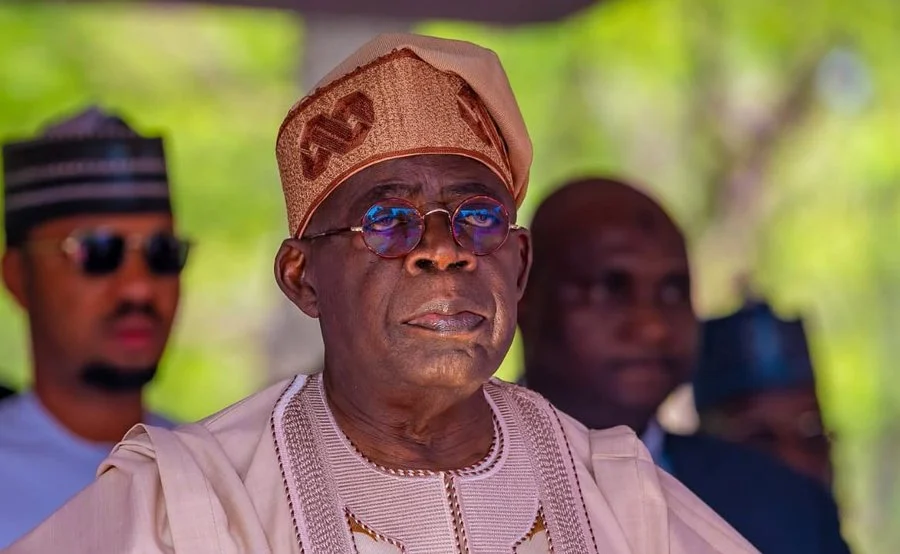
President Bola Tinubu has said military action alone cannot bring lasting peace to the North Central, stressing the need to address the underlying causes of violence through development and economic opportunities capable of improving livelihoods and strengthening communities in the region.
Tinubu said force could suppress violence but would not resolve the grievances that fuel conflicts in the region, including competition over land and water, climate change and desertification, unresolved land-use disputes, weak local dispute-resolution mechanisms and the availability of illicit weapons.
According to the President, addressing only the symptoms of insecurity without tackling its root causes would leave the region vulnerable to renewed violence.
Speaking through the Secretary to the Government of the Federation, George Akume, at the 2026 North-Central Regional Security Summit in Benue on Monday, Tinubu said the theme, “Collaborative Approach to Strengthening Security and Regional Stability,” underscored the need for stronger cooperation among governments, security agencies and communities.
He said no single security agency, level of government or community could effectively tackle insecurity in isolation, noting that criminal elements often operate across state and local government boundaries, while security responses are sometimes undermined by rivalry, duplication of efforts and inadequate information sharing.
According to him, his administration has deliberately strengthened the country’s security architecture by improving collaboration among the armed forces, the Nigeria Police Force and intelligence agencies.
Tinubu, however, said military operations alone could not address the conditions that allow violence to take root, stressing that security measures must be accompanied by efforts to resolve longstanding social, economic and environmental challenges.
“Force can suppress violence, but it cannot resolve the grievances that produce it. Competition over land and water, the presence of climate change and desertification, unresolved questions of land use, weak local dispute resolution, and the easy availability of illicit weapons. These are the conditions in which violence takes root,” the President stated.
He warned that focusing only on the symptoms of insecurity without addressing its root causes would leave the country repeatedly confronting the same challenges.
The President said the government’s response must therefore be “developmental as well as kinetic”, combining security operations with measures aimed at improving livelihoods, resolving disputes and expanding economic opportunities.
As part of the developmental approach, Tinubu said the government, through the Ministry of Livestock Development, was pursuing the transition from open grazing to modern, settled livestock production.
He said the initiative was designed to protect farmlands, improve the income of pastoralists and reduce one of the major triggers of conflict between farmers and herders in the region.
“An approach that protects farmlands, raises pastoral income, and removes the principal trigger of conflict,” the President said.
Tinubu also highlighted investments in irrigation, mechanised agriculture, rural roads and access to credit under the Renewed Hope Agenda, saying the measures were intended to transform the region’s vulnerabilities into opportunities for economic growth.
He said strengthening agricultural production and rural infrastructure would not only improve livelihoods but also contribute to greater stability by providing residents with sustainable economic opportunities.
The President urged development partners and private investors to increase their presence in the North Central, arguing that security and economic investment were mutually reinforcing.
According to him, every factory established, farm expanded and young person employed in the region contributes to its security by creating legitimate sources of livelihood and reducing conditions that could make people vulnerable to criminal recruitment.
Tinubu encouraged investors to look beyond the security challenges facing the region and recognise its economic potential.
“I encourage you to look at the North Central, not only as a place in need of assistance, but as a place of opportunity worth committing to,” he said.
The President maintained that sustained investment, job creation and agricultural development would complement security operations and help build the foundation for lasting peace across the North Central region.