

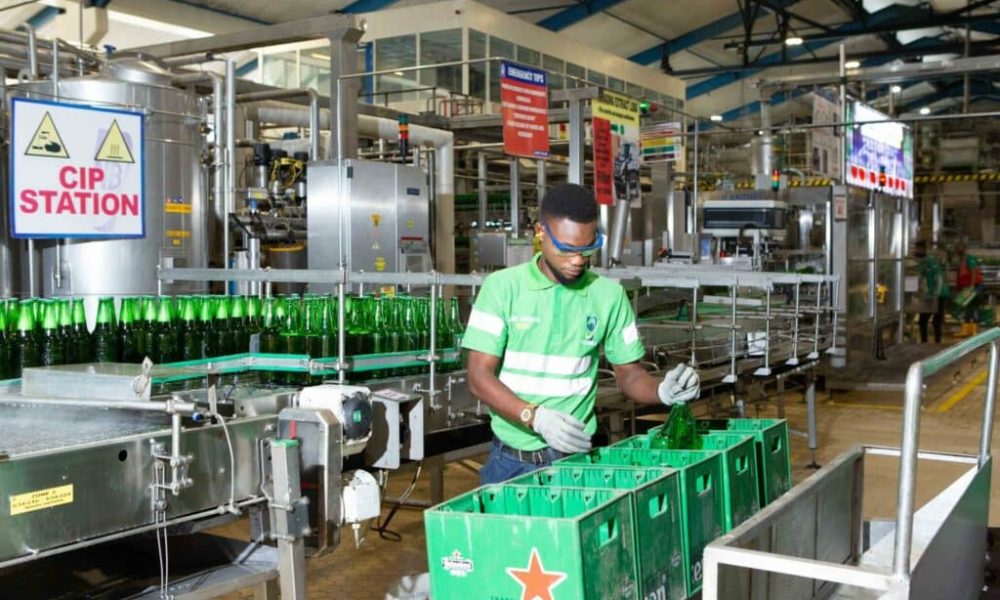
Nigerians spent an estimated N1.41 trillion on beer, malt and spirits in the first six months of 2026, highlighting the resilience of the country’s formal brewing industry despite changing consumer preferences and a challenging economic environment.
The figure is based on the half-year financial statements of Nigerian Breweries Plc, International Breweries Plc and Guinness Nigeria Plc, which together account for about 90 per cent of Nigeria’s formal brewing market.
The combined revenue reflects sustained consumer demand across alcoholic and non-alcoholic beverage categories, supported by price increases, product diversification and continued investments in production and marketing.
Nigerian Breweries Maintains Market Lead
Nigerian Breweries, the country’s largest brewer, posted N803.7 billion in revenue during the first half of 2026, representing a 9 per cent increase from N738.1 billion recorded in the corresponding period of 2025.
International Breweries generated N342.1 billion, remaining broadly flat compared with N341 billion reported a year earlier.
Meanwhile, Guinness Nigeria, now under the ownership of the Tolaram Group following Diageo’s exit, recorded the fastest revenue growth among the three companies, with turnover rising 11.8 per cent to N265 billion.
Industry analysts said the results demonstrate that brewers have successfully maintained sales despite a gradual decline in traditional beer consumption among younger Nigerians.
READ ALSO; Benue juice factory, beer brewery ready for production
Price Increases Boost Revenue
The revenue growth was largely driven by price adjustments introduced by the three companies in March 2026 in response to rising production costs, inflation and higher raw material expenses.
Combined revenue for the second quarter (April to June) rose to N696 billion, compared with N640 billion in the same period of 2025, representing nearly 9 per cent growth.
The companies noted that while seasonal demand patterns, including Christian and Muslim fasting periods, temporarily softened beer consumption, demand improved later in the quarter.
Profitability Improves
The industry’s financial performance also improved significantly, with combined profit before tax rising to N269.4 billion, compared with N217.5 billion in the first half of 2025—an increase of nearly 24 per cent.
The stronger earnings reflected improved pricing, lower finance costs and easing pressure from foreign exchange losses and raw material expenses that had weighed heavily on the sector over the past two years.
Nigerian Breweries posted a pre-tax profit of N156.3 billion, with its pre-tax margin improving to 19.4 per cent, up from 17.9 per cent a year earlier.
International Breweries recorded the strongest improvement in profitability, reporting N74.8 billion in pre-tax profit and expanding its pre-tax margin to 21.9 per cent after successfully reducing raw material costs.
Guinness Nigeria also strengthened its earnings, increasing its pre-tax margin from 10.1 per cent to 14.5 per cent, aided by lower borrowing costs and reduced foreign exchange-related expenses following improved naira stability.
The results signal a significant recovery for Nigeria’s brewing industry after the severe foreign exchange shocks experienced in 2023 and 2024 following the adoption of a more flexible exchange rate regime.
READ ALSO; Beer, wine, imported vehicles, others to cost more as FG introduces new taxes
Consumer Preferences Evolving
Despite the improved financial performance, brewers continue to contend with changing drinking habits, particularly among younger consumers.
Industry observers say younger Nigerians are increasingly shifting from traditional lager beer to spirits such as whiskey and gin, wines, ready-to-drink alcoholic beverages and non-alcoholic alternatives.
To remain competitive, brewers have expanded their product portfolios beyond conventional beer offerings.
Guinness Nigeria, for instance, continues to strengthen brands such as Captain Morgan, Gordon’s, Orijin, Smirnoff Ice, Malta Guinness and Dubic Malt as part of its diversification strategy.
Investment in Growth Continues
The three brewing companies maintained strong investment momentum during the period.
Collectively, they spent N130.6 billion on advertising and marketing, with Nigerian Breweries accounting for N71.9 billion, International Breweries spending N42.6 billion, and Guinness Nigeria allocating N16.1 billion.
They also invested N103.3 billion in capital projects aimed at expanding production capacity and improving operational efficiency.
International Breweries led capital expenditure with N56.2 billion, followed by Nigerian Breweries with N30.3 billion and Guinness Nigeria with N16.8 billion.
Analysts said the sustained investments underscore the industry’s long-term confidence in Nigeria’s beverage market despite macroeconomic challenges and evolving consumer behaviour.
Investors Remain Cautious
Shares of Nigerian Breweries have declined about 11 per cent over the past six months and currently trade around N74, giving the company a market capitalisation of approximately N2.1 trillion.
Guinness Nigeria has performed strongly on the Nigerian Exchange, rising 221 per cent over the past year and 7 per cent in the last six months. The company recently declared a dividend of N7 per share and has a market value of about N823 billion.
Meanwhile, International Breweries has fallen roughly 27 per cent over the past six months despite its improved profitability and is currently valued at approximately N1.65 trillion.
Market analysts said investors remain cautious as they assess whether the industry’s improved profitability can be sustained amid changing consumer preferences, inflationary pressures and broader economic uncertainties.