

Business
By Anthony Isibor
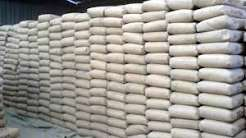
WHEN a prominent businesswoman recently paid for 200 bags of cement in May, she believed that she had taken a prudent step to protect the cost of a farm project she planned to commence in August.
The businesswoman, who lives abroad. paid down for the cement months before construction was scheduled to begin. But what appeared to be a smart move against rising cement prices has now become a source of frustration.
When work eventually started on the farm, the supplier delivered only a portion of the cement paid for. He subsequently stopped further deliveries, insisting that the price of cement has risen substantially since the woman made the payment.
The seller wants her to pay the difference before he releases the remaining bags of cement. The woman, however, insisted that she had already paid for the agreed quantity and should not be asked to bear the cost of the subsequent price increase.
The disagreement has dragged on, slowing construction and leaving the project virtually stalled.
The woman’s experience is a reflection of the uncertainty confronting Nigerians attempting to build, renovate, rent or invest in property amid sharp movements in the price of cement and other building materials.
From ₦7,000 to as much as ₦15,000, the price of cement has undergone a dramatic escalation.
Available market data show that a 50-kilogramme bag that sold for about ₦7,000–₦7,500 in late 2025 rose to approximately ₦9,300–₦9,700 in January 2026. By July, prices rose to between ₦13,000 and ₦15,000 in several parts of the country.
The scale of the increase has put cement beyond the reach of many individuals and businesses whose projects are designed around significantly lower prices.
The Federal Competition and Consumer Protection Commission, FCCPC, which has been investigating the cement market, has also drawn attention to the striking difference between Nigerian prices and those in some other African markets.
According to preliminary findings from media reports, a 50kg bag sells for about ₦7,344 in Nairobi, Kenya, and ₦6,528 in Tanzania.
The comparison has intensified questions about why cement should be so expensive in Nigeria, a country with substantial limestone deposits and significant domestic production capacity.
For consumers like the businesswoman, however, the debate over the reasons for the increase has little meaning. The consequence is straightforward: projects that were financially viable a few months ago can suddenly become unaffordable.
Cement is one of the fundamental inputs in Nigeria’s construction industry. Its price therefore has implications beyond the cost of a bag of cement.
A sharp increase affects virtually every stage of the building project, from foundations and columns to blocks, plastering, flooring and other concrete-related works.
Victor Ameh, Managing Director of Legendary Foreshore Construction, according to a post in Legit,ng said in July that cement prices of between ₦13,500 and ₦15,000 were placing considerable pressure on construction companies.
For developers, the choices are increasingly difficult. They can absorb the additional cost and accept lower margins; slow down or suspend projects; reduce the scale of developments; or transfer the additional cost to prospective buyers and tenants.
None of these options is particularly attractive in an economy already struggling with high inflation and weak purchasing power.
The Real Estate Developers Association of Nigeria, REDAN, has warned that some developers are scaling back projects, delaying delivery and reconsidering investments because of escalating construction costs.
There is also concern that prolonged cost pressure can encourage some builders to compromise on the quality of materials in the attempt to keep projects within budget.
This will turn a price problem into a construction-quality and public-safety issue.
The impact of cement prices does not end at the construction site. It eventually reaches the housing market. When the cost of constructing a building rises, developers generally have to recover the additional expenditure. For landlords, this can translate into higher rents when the property is completed or when existing rents are reviewed.
REDAN has reported that annual rent for a self-contained apartment in Abuja, for instance, has risen from around ₦400,000 to between ₦800,000 and ₦1.5 million, with similar pressures being reported in Lagos.
While rent increases have several causes, including land prices, financing costs, labour, utilities, demand and general inflation, construction costs are an important component.
The relationship is particularly significant for new developments. A developer who spends substantially more on cement, steel, blocks, roofing materials and labour cannot simply ignore the increase when calculating the eventual price of the property.
Thus, the cement crisis contributes to a wider affordability problem: expensive cement makes houses more expensive to build, expensive houses put upward pressure on rents and selling prices, and higher housing costs reduce the amount of disposable income available to households.
The effects extend beyond conventional property developers. Small contractors, block makers, artisans and building-material dealers are exposed to price volatility because they operate with limited working capital.
A contractor who quotes a fixed price for a job based on cement at ₦10,000 per bag can find himself making losses if the price climbs to ₦14,000 before the project is completed.
Block makers face the same problem. Higher cement prices increase production costs, forcing them either to increase block prices or accept shrinking margins.
The consequences can ripple through the economy. A house construction project supports masons, carpenters, electricians, plumbers, painters, transporters, suppliers and other workers. When projects are postponed because their owners can no longer afford materials, activity across these businesses can decline.
For a country seeking to reduce its housing deficit and stimulate economic activity through infrastructure and construction, persistent volatility in the price of a critical building material is therefore a broader economic concern.
The latest crisis is also notable because it is not the first time the government has confronted cement manufacturers over pricing.
In February 2024, Housing Minister Ahmed Dangiwa criticised cement manufacturers over repeated price increases. Government subsequently reached an informal understanding with major producers around prices of approximately ₦7,000–₦8,000 per bag.
In February 2025, Works Minister David Umahi gave manufacturers a one-week ultimatum to reduce cement prices to ₦7,000, warning that he would escalate the matter to President Bola Tinubu.
On the same day, BUA Group Executive Director Kabir Rabiu said the company did not believe cement should sell for more than ₦7,000 anywhere in Nigeria.
Yet prices continued to rise.
By April 2025, market data cited by the Financial Derivatives Company put the average price at about ₦9,700, representing a 15 per cent increase in one month.
In June 2026, Umahi again demanded a reduction, this time announcing that formal discussions with manufacturers would begin on July 1.
The repeated interventions have, however, raised a fundamental question: why have government warnings and negotiations failed to produce a lasting reduction in cement prices?
The July engagement was expected to provide another opportunity for government and manufacturers to address the problem.
But the central dispute remains unresolved. Manufacturers have consistently pointed to rising production and operating costs.
Among the factors cited are energy costs, the depreciation of the naira, the cost of imported machinery and spare parts, and transportation and logistics.
Cement production is energy-intensive, while Nigeria’s exchange-rate volatility makes imported equipment and components more expensive. Transportation costs are also affected by fuel prices, road conditions and the distance between manufacturing plants, distribution centres and markets.
Aliko Dangote, in defending the economics of cement production in 2025, said a significant proportion of the company’s turnover goes to government through taxes and other payments.
Manufacturers have therefore resisted the suggestion that high retail prices are simply the result of excessive profit-taking. But regulators are increasingly asking a different question: do the costs being cited fully explain the prices Nigerians are paying?
In August 2026, the commission summoned Dangote Cement, BUA Cement and Holcim Building Materials, following a three-month investigation into the cement market.
This represents a significant shift from previous government interventions.
The earlier approach relied largely on negotiations, appeals and threats. The FCCPC’s investigation is backed by statutory powers and is examining whether the pricing structure is justified by actual production costs and whether there are competition concerns in the market.
The commission’s preliminary findings reportedly found no obvious cost-based justification for the size of the gap between Nigerian cement prices and those in comparable markets.
The investigation is still ongoing, meaning no final conclusion should yet be drawn about whether manufacturers have violated competition law. But the probe has brought the structure of Nigeria’s cement industry firmly into the centre of the debate.
Some analysts argue that the explanation goes beyond forex and energy.
Agora Policy, in a February 2026 analysis, described Nigeria’s cement market as a spatially fragmented oligopoly, arguing that regional market dominance and control of important inputs have weakened the competitive pressure that would ordinarily be expected from a market with substantial production capacity.
Nigeria deliberately encouraged domestic cement production over the years, partly to reduce dependence on imports and conserve foreign exchange. The policy succeeded in developing substantial local production capacity.
But critics argue that self-sufficiency in production has not automatically translated into affordability for consumers.
If domestic producers have enough capacity, the theory goes, competition should eventually place downward pressure on prices.
That is not what consumers are experiencing however. Architects and engineers have consequently called for greater price transparency throughout the supply chain, scrutiny of import restrictions and stronger action against any cartel behaviour if the FCCPC investigation establishes evidence of coordination.
There is also, however, another interpretation. Soji Adeniji, Chairman of the Lagos Chamber of Commerce and Industry’s Engineering and Construction Group, has argued that the July price spike reflected a temporary supply shortage rather than a permanent shift in manufacturers’ baseline prices.
The competing explanations, structural market power on one hand and temporary supply constraints and legitimate cost pressures on the other, are now at the heart of the debate.
One of the most uncomfortable questions for the industry is why Nigerians should pay substantially more for cement than consumers in some neighbouring or comparable African markets.
Nigeria has limestone deposits, large cement plants and an established domestic industry. The country has also spent years pursuing policies designed to encourage local manufacturing and reduce imports. The expectation was that increased domestic capacity would eventually bring stability and affordability.
Instead, consumers have witnessed another cycle of price increases. That raises questions not only about manufacturers but also about distribution, transportation, taxes, energy costs, market concentration, foreign exchange exposure and government policy.
For the businesswoman, the outcome cannot come soon enough. Her farm construction has been slowed by a disagreement over a cement order made months earlier.
For thousands of other Nigerians, the problem takes different forms: a house that cannot be completed, a building project postponed indefinitely, a contractor struggling to meet a quotation, a block maker raising prices or a prospective tenant confronted with a rent he can no longer afford.
The cement crisis has therefore evolved beyond the price of a single 50kg bag. It has become a question about housing affordability, business viability, employment, investment and the credibility of Nigeria’s industrial policy.
The government has intervened repeatedly. Manufacturers have offered explanations. Analysts have questioned the structure of the market. Consumers continue to bear the immediate cost.
The FCCPC investigation could provide the clearest test yet of these competing claims.
If manufacturers’ cost arguments are substantiated, the focus may shift towards reducing energy, logistics, foreign-exchange and other structural costs.
If, however, the investigation establishes that market concentration or anti-competitive practices are contributing substantially to the prices, stronger regulatory action could follow.
Until then, the uncertainty remains. And for Nigerians planning to build, the simple question; “How much is a bag of cement?” has become much more consequential than it used to be.
A.I
Aug. 31, 2026
Tags: Ahmed Dangiwa Anthony Isibor Cement price crisis Kabir Rabiu Real Estate Developers Association of Nigeria REDAN Soji Adeniji