

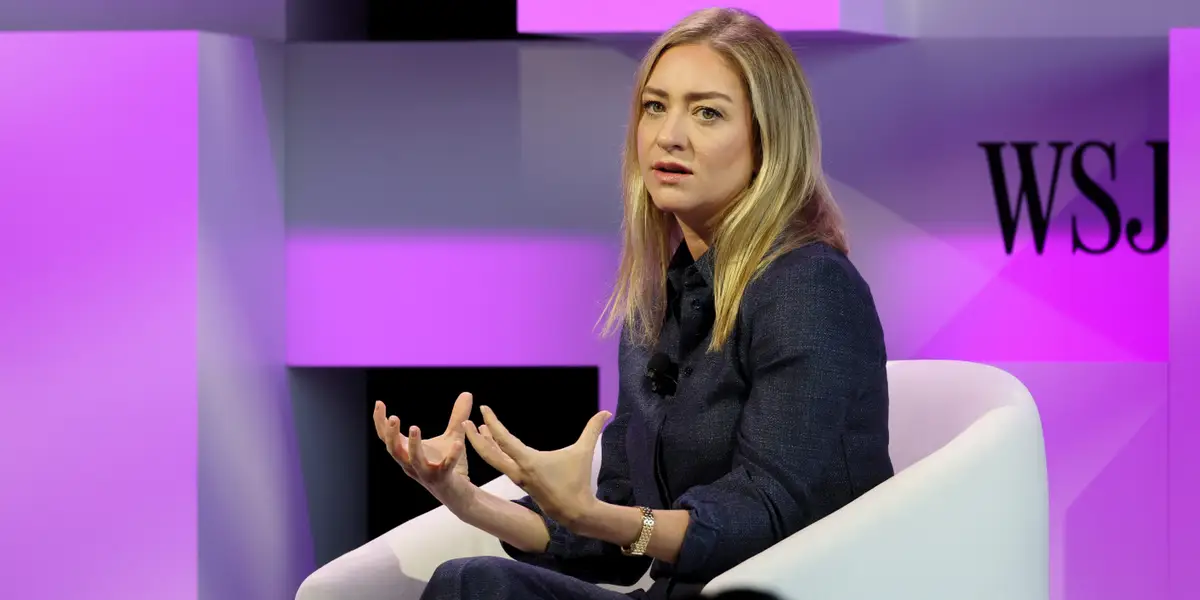
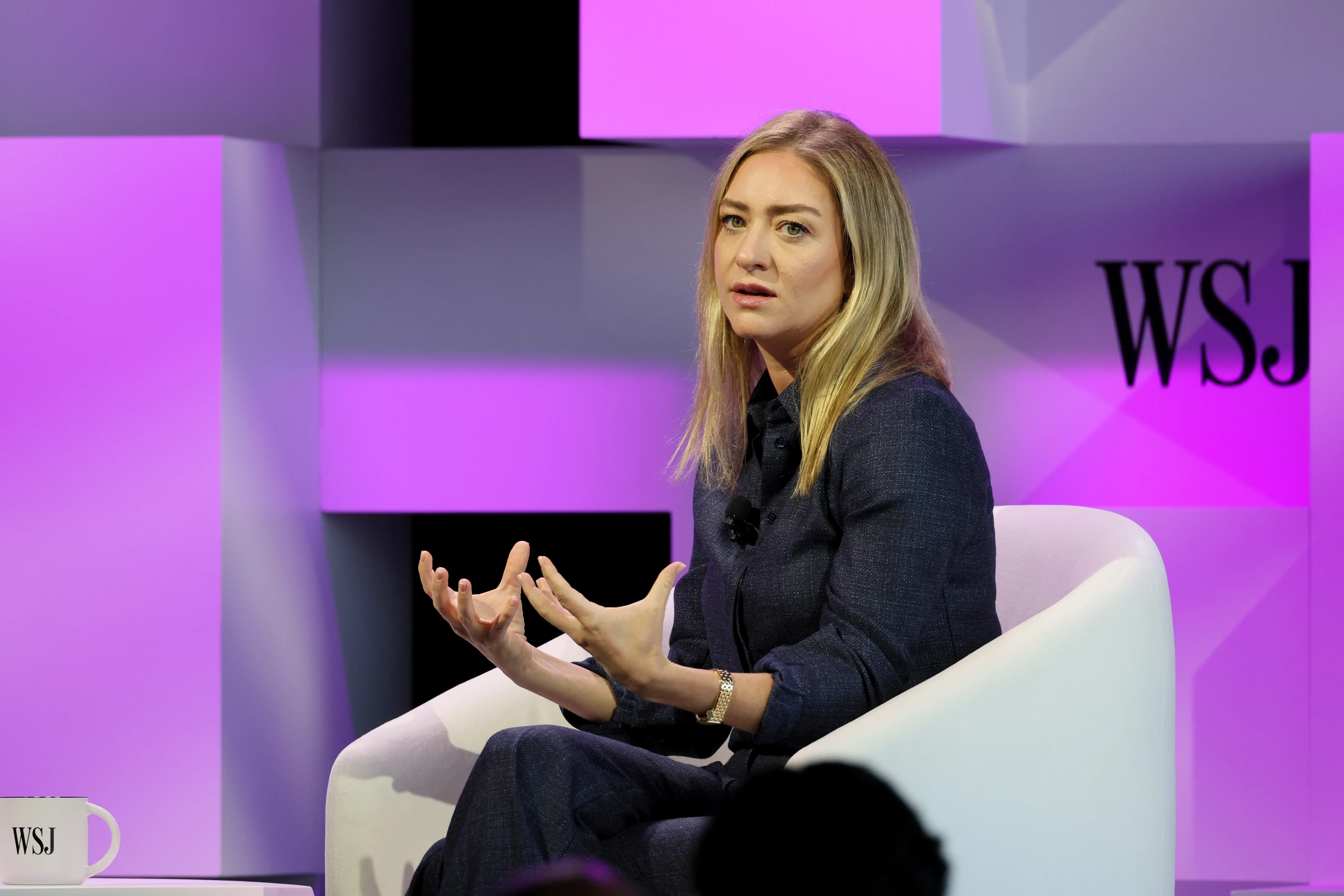
Bumble’s buzz is sounding familiar.
When Whitney Wolfe Herd left Tinder to found Bumble, she positioned the new rival as Tinder’s antithesis.
“I always felt that for me as a woman, I always had to wait around,” she told The New York Times in 2017. So, women would have to message first, and they’d have 24 hours to do it.
The app enjoyed early success in the mid-2010s and again during the COVID-19 pandemic. Then came the industry’s tightening, the stock’s sinking, and a widespread feeling of online dating malaise. While competitors like Hinge rose in the ranks, Bumble changed from a progressive darling to a stodgy also-ran.
On Tuesday, Bumble officially gave up on its founding principle. It allowed men to message first, a feature that had gradually loosened since the 2024 release of Opening Moves — a product overhaul that let men send the first “move” by replying to a prompt on a woman’s Bumble profile. It also extended the countdown for messaging a new match from 24 hours to 72 hours.
Bumble argues that it isn’t changing its principles. In a press release announcing the change, Wolfe Herd said that the move “isn’t a departure from our founding vision, but rather an evolution of it.” Bumble didn’t respond to a request for comment.
But shedding the distinguishing feature of having women message first begs the question of how Bumble plans to differentiate itself from Tinder. Or any competitors.
Bumble’s Tinderification
Wolfe Herd worked hard to differentiate Bumble at launch. While she avoided bashing Tinder — “I still hold equity in the company. It’s my baby,” she told Time in 2015 — she flexed Bumble’s women-first approach and comparatively quick growth. She also sued Tinder, alleging sexual harassment, in a case that was later settled.
These days, though, Tinder and Bumble look almost identical.
Both are built on the basic swiping mechanism: right to match, left to skip. If two users swipe right, they chat and set up a date. That’s a mechanism some users have expressed fatigue with.
What set Bumble apart, then, was its women-message-first ethos. The company chipped away at that with Opening Moves in 2024. Then, it tested a reversal earlier this year, making women the only first-movers once again in Australia and Mexico.
With Tuesday’s shift, the company has abandoned the founding rule altogether.
Bumble and Tinder are sinking — Tinder even more so. The analytics firm Appfigures found that Tinder’s daily active users declined 14.14% year-over-year, while Bumble’s declined 9.22%.
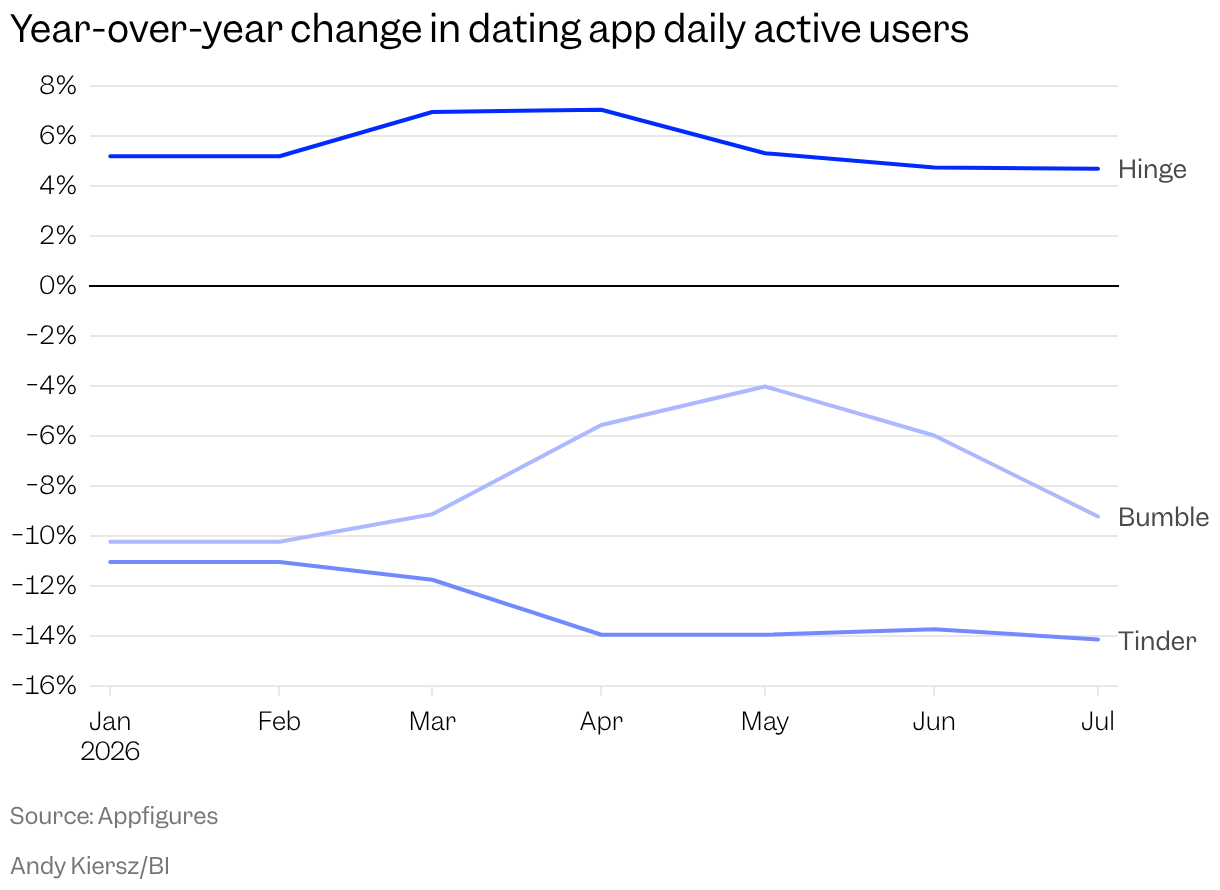
Tinder has a higher perch to fall from; it’s the world’s biggest dating app. Tinder is also part of Match Group, which includes the well-performing Hinge, helping shield the stock from some of the damage. Match Group’s stock is up 16.08% so far this year; Bumble’s is down 23.37%.
Bumble is trying to keep its women-first sheen.
“I have been recommitting myself as I returned as CEO, even more than ever before, to making Bumble better for women,” Wolfe Herd wrote on Instagram in February.
Its Bumble BFF app — notably, not for dating — has been trumpeted as an answer to Gen Z women’s friendship woes. The company has focused on rebranding the BFF app since Wolfe Herd returned.
But there are some signs that Bumble’s namesake dating app is slipping among women. Time spent per daily female user has dropped for three straight months from the year earlier, plummeting 48% in July, Appfigures said. That measure rose for both Tinder and Hinge in May and June, the firm said.
Meanwhile, Bumble and Tinder’s launches are starting to look the same. Both want to get you dating IRL. Both want to use AI to ease the experience (but not replace dating entirely).
One area where Bumble and Tinder most tightly compete: bad reviews. 72% of Bumble’s new reviews are one star, the data analytics firm Apptopia found. That barely edges out Tinder, which Apptopia found had 71% new one-star reviews.
Throwing spaghetti at the wall
Bumble’s big promise to investors is that a shiny AI makeover is imminent. A new app, a new experience.
However, investors (and users) are waiting with bated breath. Last August, Wolfe Herd told The Wall Street Journal that Bumble had plans to begin testing an early version of an AI dating app by the fall. She told investors in November that Bumble was eyeing a mid-2026 launch.
Spoiler: It didn’t happen.
In May, Bumble pushed back the launch to the end of the year. By August, that was further delayed into 2027 due to a “data migration delay.”
Following August’s earnings call, Raymond James analyst Andrew Marok wrote that Bumble’s delays are “leaving us with real doubts about the credibility of the Tech Stack 2.0 timeline and, by extension, the entire AI-relaunch narrative underwriting a re-acceleration.”
Still, Bumble has a Hail Mary: killing the swipe. Wolfe Herd hyped up the company’s forthcoming swipe-killer in May, calling it “revolutionary for the category.”
What is it? We don’t know. Wolfe Herd said that she wasn’t disclosing the big bet “for competitive purposes.”
Read the original article on Business Insider