

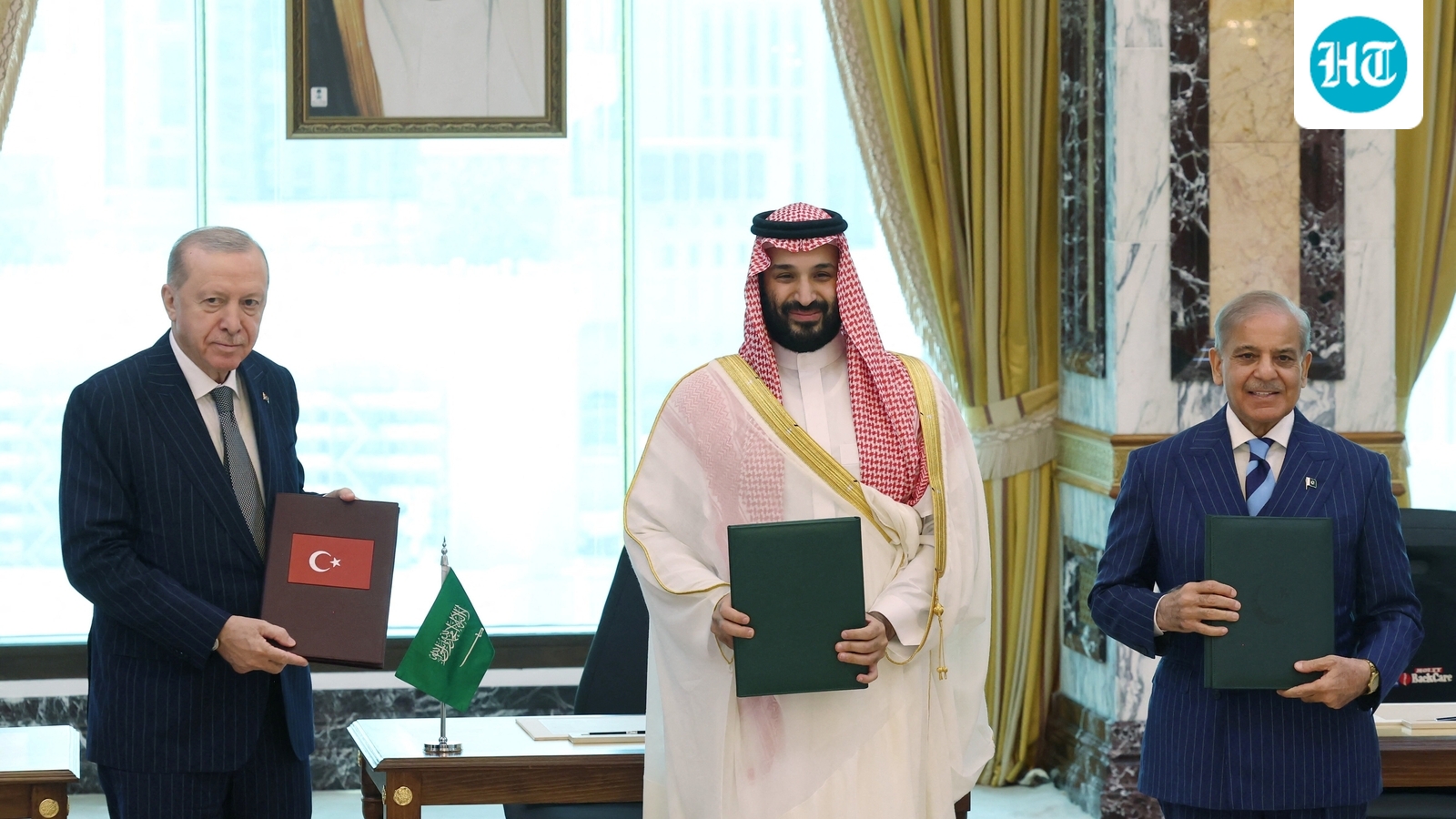
Pakistan, Saudi Arabia and Turkey have signed a major defence agreement on Friday, known as the “Mecca Joint Defence Agreement”, as regional security concerns rise amid ongoing tensions in the Middle East. The deal is aimed at strengthening military cooperation and improving coordination between the three countries.
“The Agreement is intended to strengthen collective deterrence against any act of aggression, and stipulates that any armed attack against any one of the three States shall be regarded as an attack against them all. It further provides for the enhancement of all aspects of defence cooperation among the three States,” the Pakistan foreign ministry said in a statement, according to news agency AP.
Also read | India reacts to Turkey-Pakistan-Saudi defence deal: ‘Closely following the development’
The agreement does not mention specific military commitments or obligations for each country. However, it aims to strengthen collective security and promote peace, stability and security in the region and beyond.
The deal comes as Saudi Arabia, Turkey and Pakistan face growing concerns over regional conflicts and security challenges.
Strategic importance of Saudi Arabia, Turkey and Pakistan
- Turkey has NATO’s second-largest military and has developed a strong defence industry.
- Saudi Arabia is the most powerful Gulf country, home to Islam’s holiest sites and one of the world’s biggest oil exporters.
- Pakistan is the only nuclear-armed Muslim-majority country.
Long history of defence cooperation
The new agreement builds on existing military ties between the three countries.
Pakistan has provided training and technical support to Saudi forces for decades. Turkey and Pakistan have also cooperated through defence exchanges, including warships and training aircraft.
In 2023, Saudi Arabia agreed to buy Turkish drones in what Ankara described as its largest defence export deal.
Pakistan has also deployed troops, fighter jets, drones and an air-defence system to Saudi Arabia as part of wider security cooperation.
The agreement comes after years of conflict and instability in the Middle East. Several countries in the region have faced cross-border attacks, missile strikes and drone attacks.
Saudi Arabia has faced security challenges affecting its oil exports and development plans, while Turkey and Pakistan have also sought to prevent conflicts from affecting their security and economies.
(With inputs from agencies)