

Business
THE President of the Alumni Association of the National Institute, AANI, Ambassador Emmanuel Obi Okafor, has called for a secure, stable and enabling environment to unlock the vast potential of Nigeria’s Orange Economy, describing security as a fundamental prerequisite for entrepreneurship, innovation, investment and sustainable national development.
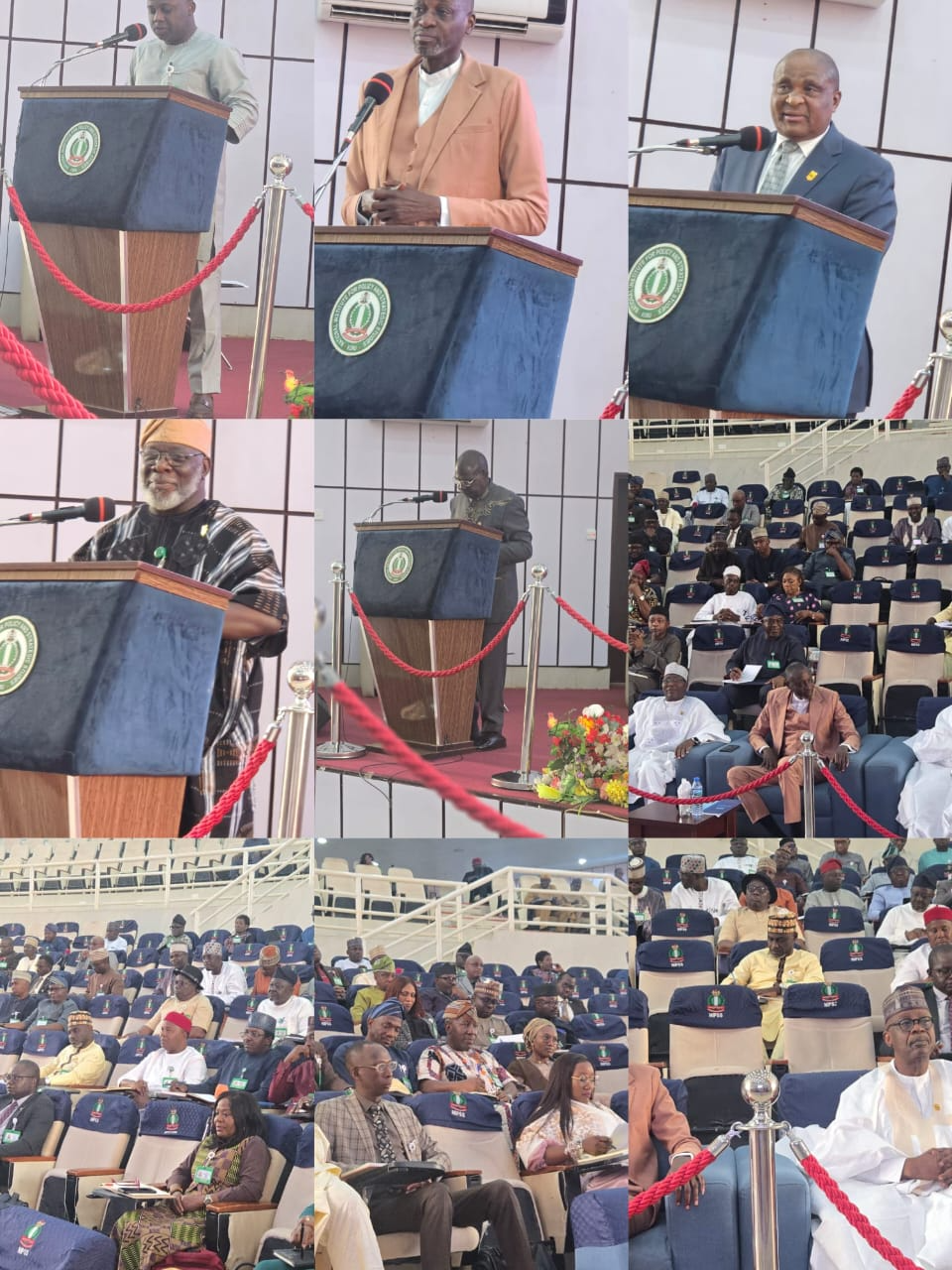
Ambassador Okafor made the call at the 5th Distinguished AANI Alumni Lecture, held at the National Institute for Policy and Strategic Studies (NIPSS), Kuru, Plateau State. The lecture, themed “The Orange Economy and Entrepreneurship for Sustainable Development in Nigeria: Security as a Primary Enabler,” brought together policymakers, academics, security experts, development practitioners, members of the AANI community and participants of the Senior Executive Course 48.
In his welcome address, the AANI President, who is the chairman of the Alumni Lecture Series, described NIPSS as more than a premier institution for policy and strategic studies, stressing that it remains a unique national platform where strategic thinking is cultivated, critical perspectives are exchanged and commitment to national service is strengthened.
He noted that the Distinguished AANI Alumni Lecture Series reflects AANI’s commitment to deploying the collective experience, expertise and intellectual capital of its members in addressing critical national challenges and contributing to Nigeria’s development.
Ambassador Okafor observed that Nigeria’s creative industries, including music, film, fashion, literature, publishing, visual arts and digital content creation, possess enormous potential to stimulate economic growth, create employment, promote entrepreneurship, strengthen Nigeria’s global cultural influence and provide opportunities for its youthful population.
He, however, emphasised that the potential of the sector could only be fully realised through sustained investment in skills development, infrastructure, access to finance, digital connectivity, innovation and intellectual property protection, all of which require a secure and predictable operating environment.
The AANI President therefore urged policymakers to embrace a broader and more developmental conception of national security—one that goes beyond the traditional emphasis on territorial defence and physical security to encompass economic opportunity, entrepreneurship, education, human capital development, social inclusion and the protection of creative enterprise as essential components of sustainable national security.
In his remarks, the Director-General of NIPSS, Professor Ayo Omotayo, described the Distinguished AANI Alumni Lecture Series as one of the Institute’s enduring intellectual traditions for promoting evidence-based policy discourse and stimulating practical responses to Nigeria’s development challenges.
Professor Omotayo observed that Nigeria possesses immense creative talent and entrepreneurial energy but stressed that these assets could only translate into sustainable economic transformation where the requisite institutional and security conditions exist.
He noted that “ideas require institutions, innovation requires investment, entrepreneurship requires confidence, and confidence flourishes only where security prevails.” He further described security as “the invisible infrastructure upon which economic transformation depends,” and called for coherent policies, effective institutions and stronger partnerships to create an enabling environment for the growth of Nigeria’s creative economy.
Delivering the keynote lecture, Rear Admiral Emmanuel O. Jaiyeola (Rtd.), mni, described the Orange Economy as one of Nigeria’s most promising pathways to inclusive and sustainable development.
He explained that the Orange Economy, driven by creativity, culture, innovation and intellectual property, offers significant opportunities for employment generation, economic diversification, youth empowerment, cultural preservation and social inclusion.
The keynote speaker identified Nigeria’s large youthful population, rich cultural diversity, abundant creative talent and rapidly expanding digital ecosystem as strategic advantages capable of positioning the country as a major global player in the creative economy.
He, however, identified inadequate infrastructure, limited access to finance, weak intellectual property protection, skills deficits, policy fragmentation and insecurity as major constraints to the sector’s development.
Describing insecurity as “the most pervasive constraint,” Rear Admiral Jaiyeola called for stronger collaboration among government institutions, the private sector, educational and training institutions, creative industry stakeholders and development partners. He also advocated increased investment in digital infrastructure, entrepreneurship development, skills acquisition, intellectual property protection and other critical enablers of the creative economy.
Contributing to the discussion, Comrade Issa Aremu, mni, Director-General of the Michael Imoudu National Institute for Labour Studies (MINILS), underscored the enormous potential of the Orange Economy to generate employment and livelihood opportunities for Nigeria’s large and growing youthful population.
Comrade Aremu drew particular attention to the security vulnerabilities within the informal sector, where a significant proportion of creative and entrepreneurial activities take place. He advocated the formalisation of the informal sector as an important step towards improving security, regulation, access to finance, social protection and institutional support for entrepreneurs and creative practitioners.
He further called for stronger collaboration between stakeholders in the creative economy and the Federal Ministry of Arts, Culture and the Creative Economy, stressing the need for a coordinated policy framework that would enable the sector to realise its full economic and developmental potential.
Comrade Aremu also highlighted the growing importance of the digital space to the Orange Economy and advocated greater attention to the protection of online operations and creative assets. He urged relevant stakeholders to explore applicable international frameworks, including the Geneva Convention and other relevant international instruments, in strengthening the protection of digital activities and intellectual property in an increasingly interconnected global environment.
While acknowledging the seriousness of Nigeria’s security challenges, Comrade Aremu cautioned against viewing the situation exclusively through the prism of insecurity. He stressed the importance of also recognising and amplifying the progress being made by government and security agencies in addressing the country’s security challenges, noting that a balanced assessment is essential to sustaining public confidence and encouraging continued efforts towards national stability.
In his Contribution to the discourse Professor John Wade, mni provided additional perspectives on the relationship between entrepreneurship, creativity, security and national development.
He emphasised the need for an integrated approach in which the development of Nigeria’s creative economy is supported by appropriate institutional structures, skills, infrastructure, investment and security. His intervention reinforced the importance of moving beyond policy formulation to effective implementation, coordination and measurable outcomes.
The lecture was attended physically and virtually by a diverse audience and featured robust contributions from the keynote speaker, discussants and participants. The deliberations highlighted the interconnectedness of security, entrepreneurship, youth employment, digital innovation, cultural enterprise and sustainable development.
An interactive session followed, during which participants examined practical policy options for leveraging Nigeria’s Orange Economy to generate employment, promote innovation, empower young people, formalise creative enterprises, diversify the national economy and strengthen social cohesion and national security.
The 5th Distinguished AANI Alumni Lecture reaffirmed the shared commitment of NIPSS and AANI to advancing evidence-based policy dialogue, strengthening the interface between knowledge and public policy, and generating practical recommendations for harnessing Nigeria’s vast creative potential in support of inclusive, secure and sustainable national development.
Engineer Ifeanyi Jude Ngama, mni
National Publicity Secretary
Monday, 10th August, 2026.
A.I
Aug. 11, 2026
Tags: AANI Ambassador Emmanuel Obi Okafor Rear Admiral Emmanuel O. Jaiyeola (Rtd.)