

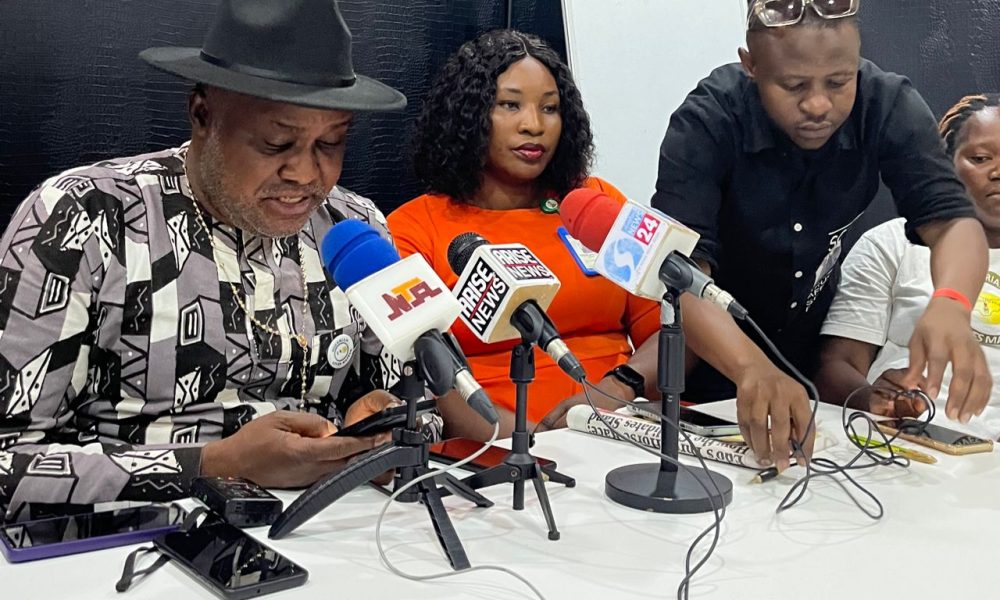
The Human Rights Writers Association of Nigeria (HURIWA) has challenged President Bola Ahmed Tinubu and Vice President Kashim Shettima to publicly clarify their positions on a reported statement by Islamic cleric Sheikh Sani Jingir that a Muslim-Muslim presidency is ideal because Muslims constitute the majority of Nigeria’s population.
The civil rights advocacy group said the alleged statement raises questions that go beyond the current political debate, arguing that it touches on Nigeria’s constitutional structure, the principle of equal citizenship and the delicate religious balance that has historically shaped the country’s politics.
In a statement signed by its National Coordinator, Comrade Emmanuel Nnadozie Onwubiko, on Tuesday, August 11, 2026, HURIWA described the reported declaration as an “outrageous assault” on Nigeria’s pluralistic character and demanded an unequivocal response from the two highest-ranking political office holders in the country.
The group’s principal concern, however, was not only the reported comments attributed to Jingir but what it described as the “deafening and inexplicable silence” from the Presidency.
According to HURIWA, the absence of an immediate public response from President Tinubu and Vice President Shettima creates room for speculation about whether the Presidency rejects, tolerates or politically benefits from the religious argument being advanced.
READ ALSO; HURIWA supports DSS appeal against life sentence for convicted Ansaru commanders, demands tougher punishment
HURIWA warned that silence from the Presidency could be interpreted by sections of the public as tacit approval, political convenience or even endorsement, unless the President and his deputy expressly distance themselves from the reported position.
The group therefore demanded that Tinubu and Shettima make their position known, particularly on the question of whether religious numerical strength should determine political leadership in Nigeria.
Constitutional question
At the heart of HURIWA’s argument is the constitutional principle that political citizenship in Nigeria is not determined by religious affiliation.
The organisation maintained that Nigeria belongs equally to Christians, Muslims and adherents of other faiths, stressing that no religious group possesses a constitutional claim to political supremacy.
It argued that the Nigerian Constitution does not establish either an Islamic or Christian state, but provides a constitutional framework within which citizens are entitled to political rights regardless of their religious identity.
HURIWA said any attempt to equate numerical religious majority with political entitlement could undermine the principle of equal citizenship and deepen existing divisions in an already polarised society.
“Democracy is not religious majoritarianism,” the organisation declared, insisting that numerical superiority in religious affiliation should not translate into superior citizenship or an exclusive claim to political power.
The group also reiterated its longstanding opposition to a same-faith presidency, arguing that its position is based not on hostility toward Islam or Christianity but on the need for inclusion, balance, trust and national cohesion in a country where religion remains a highly sensitive political fault line.
The 2027 warning
HURIWA’s statement takes on an added political dimension as Nigeria moves closer to the 2027 general elections.
The organisation warned that inflammatory religious rhetoric, if left unchecked, could contribute to heightened tensions during the election period, particularly in areas where religious and political identities frequently overlap.
It expressed concern that continued propagation of what it described as religiously divisive narratives could be exploited by political actors, street gangs or armed groups seeking to mobilise supporters along religious lines.
HURIWA specifically warned of the possibility of religiously motivated violence and disturbances in parts of northern Nigeria, including potential attacks on Christian voters, although it did not provide evidence that such attacks were already being planned.
The warning underscores a broader concern over the potential interaction between political mobilisation, religious identity and insecurity ahead of the 2027 elections.
READ ALSO; HURIWA faults N150m sanctions against PDP BoT, says ruling threatens justice
Nigeria has previously witnessed electoral violence and communal conflicts in which political, ethnic and religious grievances have sometimes become intertwined. HURIWA argued that the country’s security challenges make it particularly important for political and religious leaders to avoid rhetoric capable of deepening those fault lines.
Who is above the law?
Beyond demanding a political response from Tinubu and Shettima, HURIWA also called on law-enforcement and regulatory agencies to clarify how Nigerian law applies to statements allegedly capable of promoting religious hatred, hostility or discrimination.
The group specifically questioned whether agencies such as the Department of State Services and the Nigeria Police Force would investigate the reported comments attributed to Jingir.
HURIWA asked whether the same legal standards that apply to ordinary citizens should also apply to influential religious figures, politicians and other powerful personalities.
The organisation argued that failure to enforce the law impartially could create the perception that prominent individuals are protected from accountability because of their social, political or religious influence.
“There must be no sacred cows,” HURIWA said, calling for equal application of laws relating to hate speech, incitement and religious discrimination.
Tinubu and Shettima have not, in the statement issued by HURIWA, been quoted as endorsing Jingir’s alleged position. Consequently, the advocacy group’s interpretation of presidential silence as possible “tacit approval” remains an allegation rather than an established fact.
HURIWA nevertheless insists that the issue has become too politically sensitive for silence to continue.
The organisation said the President and Vice President were elected and appointed to serve all Nigerians rather than a particular religious constituency and urged them to reaffirm their commitment to equal citizenship and the Constitution.
It warned that political leaders should be building bridges across religious and ethnic divisions at a time when terrorists and criminal networks continue to exploit communal fault lines.
The group consequently called on Tinubu and Shettima to publicly reject what it described as religious supremacy and make clear that no faith has a superior claim to Nigeria’s presidency.
As the country gradually moves toward the 2027 electoral cycle, the controversy could become another test of how political leaders, religious authorities and security agencies respond to rhetoric touching on Nigeria’s deeply entrenched religious sensitivities.