

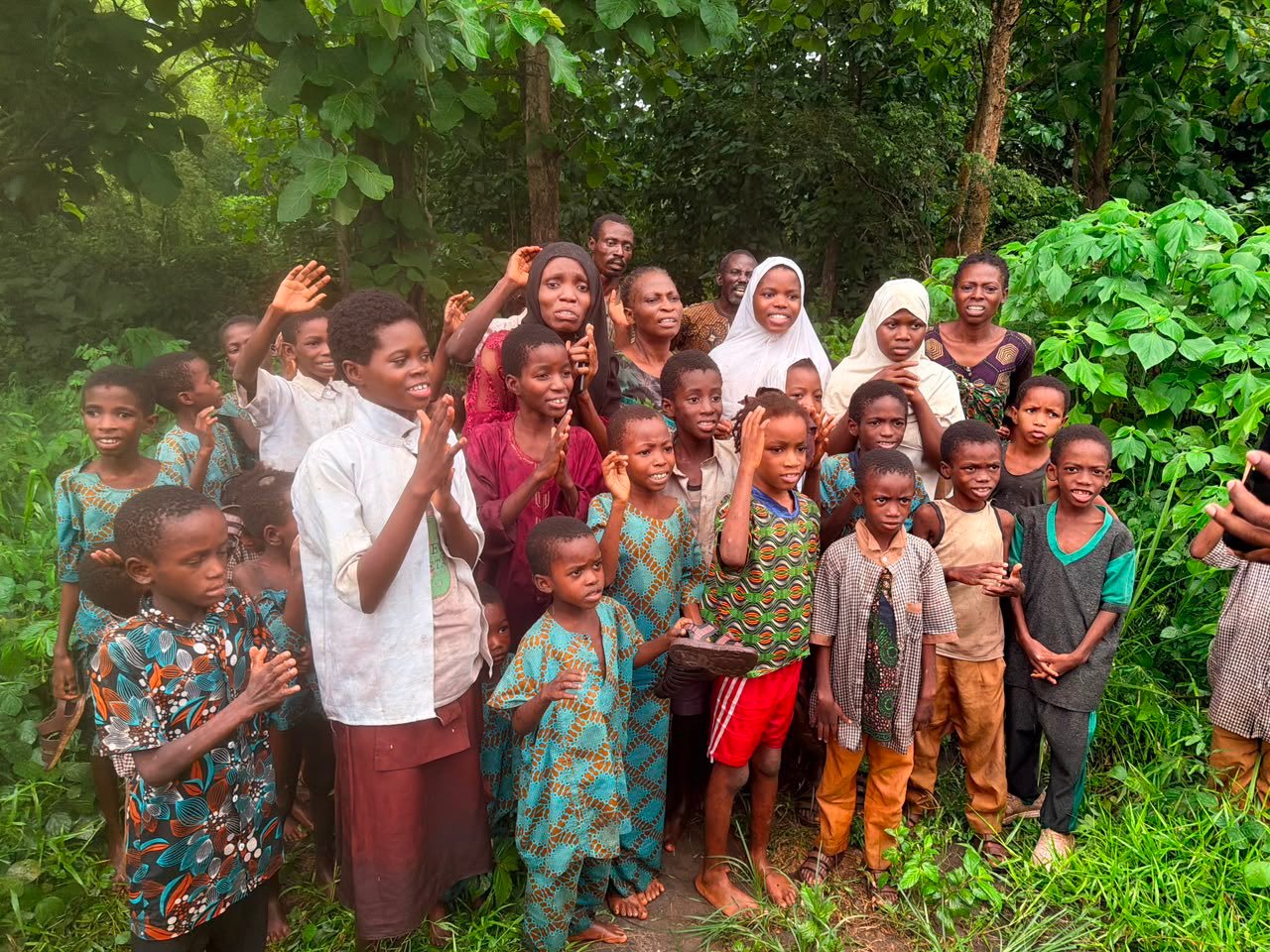
To educate Nigerians on reasons for the delay in rescuing Oriire schoolchildren and teachers from their abductors, the General Officer Commanding (GOC) 2 Division, Major General Chinedu Nnebeife, has said that the topography of the Oyo forest was a major hurdle that prevented the military and the vigilantes from swiftly going after the kidnappers to rescue the pupils and their teachers as expected.
He said that the structure of the forest prevented the military from deploying air surveillance to identify the location of the kidnappers, the pupils, and their teachers inside the forest, saying the air surveillance team did not see anyone inside the forest.
The senior army officer stated that this prompted the military to abandon the rescue strategy, a development that further slowed down the rescue mission.
According to him, the development made the military opt for a ground rescue operation, which took many hours and days to identify the abductor’s location and rescue the teachers and the schoolchildren from the forest.
Nnebeife disclosed this on Monday inside the State House in Ibadan, the Oyo State capital, during the formal handover of the rescued victims to the Governor, Seyi Makinde.
He said the operation commenced immediately after security agencies received reports of the abduction on May 15, with the deployment of drone teams, Nigerian Air Force surveillance aircraft, troops, intelligence personnel, local hunters, and vigilantes.
“Because of the nature of the forest, how thick it is, we had drone teams and we had the Nigerian Air Force following up. But in some of those areas, if you are under that place, you can’t even see the rays of sunlight.
“The Air Force flew, they couldn’t see anything, the drone team also flew, but we didn’t get anything from those operations. It had to become a ground operation. If it has to be ground, you have to go deep into the forest,” Nnebeife added.
The Army commander revealed that the decision to rely on ground operations came at a high cost, as one officer was killed while another soldier sustained a serious gunshot wound that left him with a broken arm during one of the rescue missions.
Despite the casualties, he said the military sustained the operation, reinforcing troops and expanding the mission into a coordinated multi-agency offensive.
Nnebeife explained that as the operation became increasingly complex, he assumed direct command from the Garrison Commander to coordinate personnel, intelligence assets, and operational resources drawn from different security formations.
He said the operation brought together personnel from the Office of the National Security Adviser, the National Counter Terrorism Centre, Defence Headquarters Special Forces, the Nigerian Army, Nigerian Navy, Nigerian Air Force, Nigeria Police Force, Department of State Services (DSS), Nigeria Security and Civil Defence Corps (NSCDC), National Intelligence Agency (NIA), as well as local vigilantes and hunters.
According to him, the mission extended beyond rescuing the victims to identifying and dismantling the terrorist network responsible for the abduction.
He said troops focused on tracking the group’s kingpins, disrupting their logistics network and cutting off their supply routes within the Oyo National Park and surrounding communities.
The GOC further disclosed that intelligence operations were extended beyond Oyo State, with security agencies tracing suspected collaborators and members of the kidnappers’ network in states including Adamawa and Kwara.
He noted that the strategy mounted sustained pressure on the criminal syndicate and eventually weakened its operational capacity.
According to him, security forces ultimately blocked the kidnappers’ major logistics corridor around Ashamu, depriving them of supplies and escape routes, a move that compelled them to release the victims unconditionally.
“At the last phase of the operation, we blocked their major logistics route, and that finally put pressure on them. It was then they became willing to release the victims unconditionally. But we are not giving up on them. It’s not just about the release; we must ensure that the terrorists operating in that region are completely dismantled,” he said.
Nnebeife also credited intelligence gathered from a key suspect arrested with the assistance of the Oyo State Government for accelerating the final phase of the operation.
He revealed that the suspect was airlifted by helicopter into the operational area, where he provided critical information that enabled security forces to identify the terrorists’ camps and advance the rescue mission.
The GOC maintained that while the successful rescue marked a major breakthrough, military operations would continue until all members of the terrorist network operating within and around the Oyo National Park are apprehended and neutralised.