

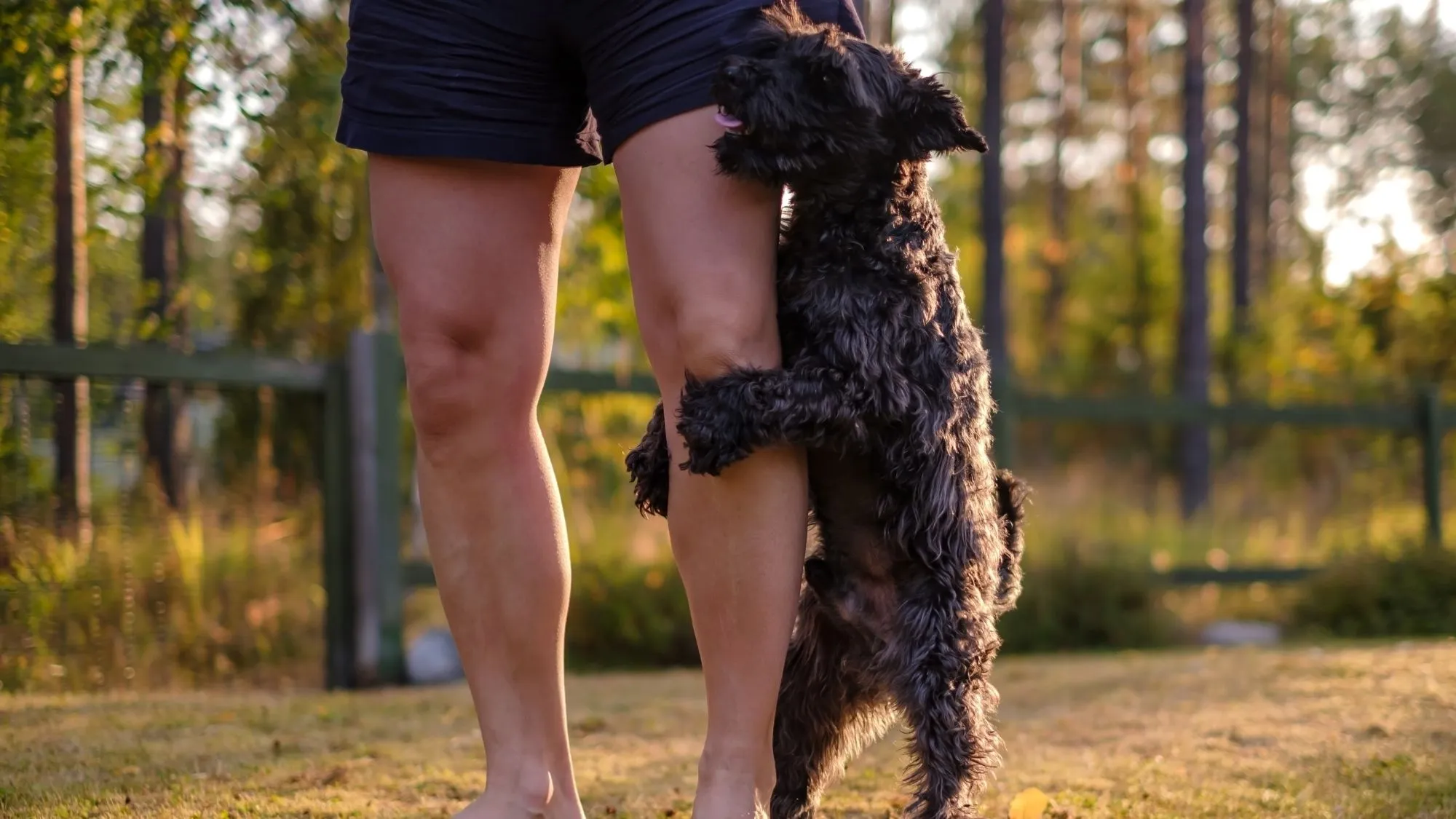
Every dog owner has been there: at the dog park, on the guest’s leg, on the couch cushion. It’s awkward for the humans. The dog couldn’t care less.
Dog humping is one of those behaviors that people instinctively try to shut down without ever stopping to ask why it’s happening, which means they’re usually addressing the wrong thing entirely. According to Marc Bekoff, professor emeritus of ecology and evolutionary biology at the University of Colorado and a longtime ethologist, humping is a natural dog behavior, and the context matters enormously. Who’s doing it, who’s on the receiving end, where they are, what just happened before it started—all of that changes what the behavior actually means.
Bekoff and a group of citizen scientists collected data on 312 mounting-and-humping encounters across roughly 40 dogs at local dog parks. What they found complicates the usual assumptions. Males accounted for 58% of the incidents and females 42%. Size made no meaningful difference.
For the vast majority of encounters—about 65%—the best explanation researchers could land on was that the humper had simply ended up in a position where a reflex took over. Play accounted for 26% of incidents. Dominance, despite being the go-to explanation most people reach for, explained only about 9%.
The Real Reason Dogs Hump, According to Animal Behavior Experts
The dominance read is also the one most likely to be wrong, according to board-certified veterinary behaviorist Dr. Karen Sueda of VCA West Los Angeles Animal Hospital, who told Vetstreet that mounting a person’s leg is generally not an attempt to dominate. It’s a displacement behavior—something dogs do when conflicting emotions spike, and they need somewhere to go.
A new visitor to the house, an overstimulating afternoon at daycare, the weird mix of excitement and anxiety that comes from getting scolded: any of these can trigger a stress response that shows up as humping. The fix most owners reach for, neutering, doesn’t always work. Testosterone can persist in a dog’s body for up to six weeks post-surgery, and for dogs who had already started humping before the procedure, the behavior may have nothing to do with hormones by that stage. It’s just something they learned to do
Some dogs, though, are just enthusiastic about it across the board. Bekoff recounts the story of Reggie, a dog described by his owner as a humper of “anything, anyone, and anytime—water bowl, beach ball, other dogs from different orientations, and human legs.” When rejected, Reggie would shrug and try somewhere else. Bekoff notes that some dogs on the receiving end may also be inviting the behavior through signals imperceptible to humans—visual, auditory, or olfactory cues that the dogs clearly read but the owners do not.
The usual response—the nervous laugh, the apology, the redirect—skips the one step that might actually explain anything. Bekoff’s position is that the answer lives in the context: what happened right before, who the dog targeted, and what the relationship between the two dogs looked like. Reggie’s owner never cracked it. But then again, Reggie never really seemed to need an explanation.