


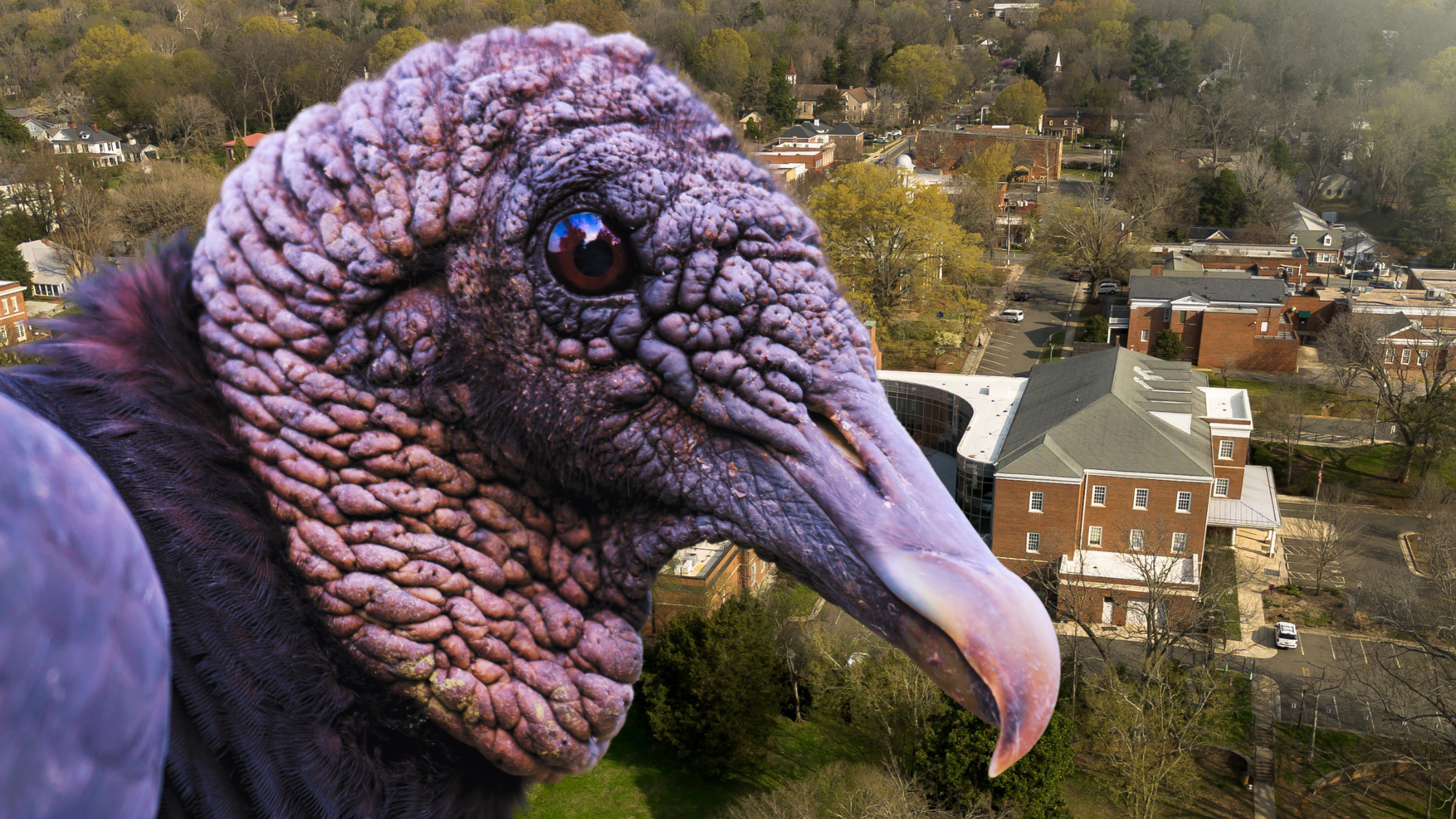
A flock of vultures moving into the neighborhood sounds like a bad omen. For a growing number of homeowners across the United States, it’s just a normal day.
Black vultures have been expanding their range north for years, and the result is showing up on driveways, windshields, and rooftops in the form of droppings that residents describe as foul-smelling and corrosive over time, as the Wall Street Journal reports. Hillsborough, North Carolina, has become something of an epicenter, with complaints piling up from people who never signed up to live next to a roost.
Bryan Watts, director of the Center for Conservation Biology at William & Mary, told Fox News Digital that the birds don’t need much encouragement to settle in. “Feeding vultures can attract a following of hundreds, and more importantly, can create a bond to the site that is very hard to break,” he said. Once they’re locked onto a spot, they can spend long stretches loafing around, which only adds to the mess once the property damage starts.
According to Watts, the birds go after windshield wipers, car trim, and roof shingles, drawn to the smell or texture. Some have turned aggressive toward pets and livestock too. Either way, someone ends up paying for it.
You Can’t Touch the Vultures, Even If They Cover Your Car in Vulture Poop
Here’s what most people don’t realize. Black vultures are still federally protected under the Migratory Bird Treaty Act of 1918, the same law that covers hundreds of other migratory species. That means homeowners can’t legally kill or remove one without a depredation permit from the U.S. Fish and Wildlife Service, and skipping that step can carry a fine of up to $15,000. The bird leaving droppings on your car has more legal protection than your car does.
The online reaction has split predictably. One Reddit user defended the birds outright: “They are nature’s cleanup crew, and they help keep the world from becoming a much nastier place.” Others insist the vultures show up uninvited regardless of who’s feeding them. “We have a ton of vultures living in the pine trees behind our house in South Carolina,” one commenter wrote. “None of us feed them.”
For now, the legal route mostly involves hazing, not removal—loud noises, fake decoy carcasses, and a lot of patience. There’s no quick fix, and the vultures don’t seem especially worried about that.