

Federal and local authorities are conducting a criminal investigation focused on the former sheriff of New York City and his possible involvement with one of the world’s largest tobacco companies, according to documents and a person with knowledge of the matter.
As part of the inquiry, federal prosecutors issued a number of subpoenas on Thursday, at least some of which sought records related to the global firm British American Tobacco and two of its subsidiaries, Reynolds American, also known as R.A.I., and R.J. Reynolds Tobacco Company, according to the records and the person.
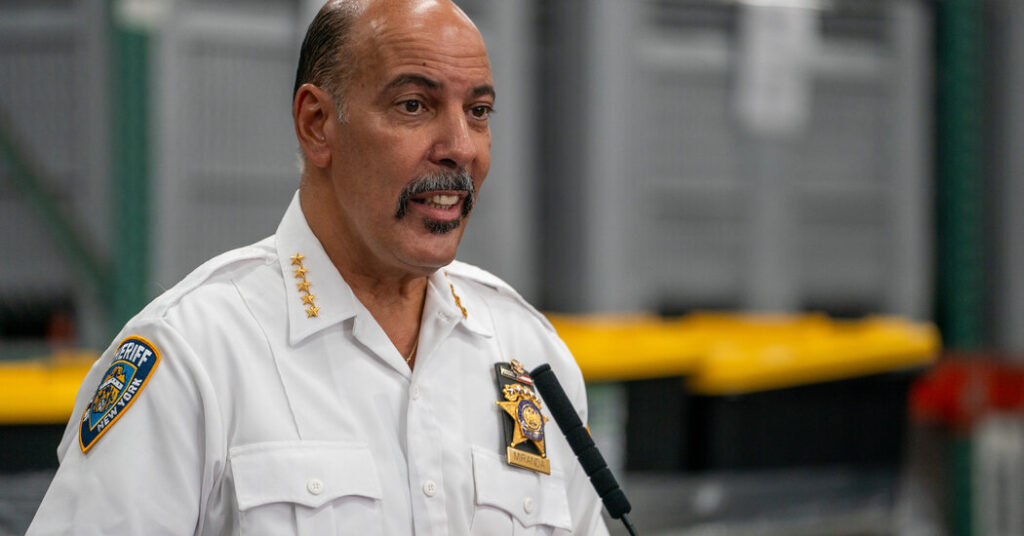
At least one of the subpoenas, a copy of which was obtained by The New York Times, was focused on the former sheriff, Anthony M. Miranda, who was appointed by former Mayor Eric Adams, Mr. Miranda’s good friend. Served on one of Mr. Miranda’s former aides, it listed nearly a dozen possible crimes under investigation, including federal program fraud or bribery, wire fraud, money laundering, witness tampering and interstate travel in aid of racketeering.
Also on Thursday, F.B.I. agents and city investigators searched the Queens home of Mr. Miranda and seized his electronic devices during another search in Puerto Rico, two additional people said.
All of the people spoke on condition of anonymity to discuss an active investigation.
The subpoena obtained by The Times sought communications with Mr. Miranda; his wife, Sylvia; and their two adult sons. It also sought records related to R.A.I. and other unnamed tobacco companies involving “actual or proposed regulation, legislation” and “menthol cigarettes, e-cigarettes, tobacco taxes, cannabis and/or vapes.”
But it was not clear precisely what conduct prosecutors were examining and why they believed it might amount to one or more of the crimes listed in that subpoena. It also was unclear whether the inquiry would result in any charges against Mr. Miranda, any of his family members or anyone else.
British American Tobacco reported making more than $34 billion in revenue worldwide in 2025 and sells Camel and Newport cigarettes as well as Vuse vapes and Velo tobacco pouches.
Mr. Miranda did not respond to several calls seeking comment. A spokesman for the tobacco companies did not immediately respond to a request for comment.
The subpoenas were issued by prosecutors from the U.S. attorney’s office for the Southern District of New York, who also obtained the search warrants. Other materials obtained by The Times indicate that the prosecutors were working with the F.B.I., the Internal Revenue Service and the City Department of Investigation.
Representatives of the department, the F.B.I. and the prosecutor’s office declined to comment, as did a spokeswoman for the I.R.S.
A spokesman for the mayor’s office, Sam Raskin, said in a statement that the administration was aware of the federal investigation.
“This administration is committed to transparency and accountability,” the statement said. “We will await any findings and conclusions as the legal process runs its course.”
The New York City Sheriff’s Office is the city’s primary civil law enforcement agency, serving court orders like evictions and protection orders, enforcing cigarette licensing and taxes and investigating deed theft.
During the administration of Mayor Adams, Mr. Miranda led an aggressive push to shut down smoke shops selling illegal cannabis and tobacco products. His role in the effort, which the city called Operation Padlock to Protect, led to the Department of Investigation’s inquiry.
It resulted in the seizure of cash and safes from Mr. Miranda’s office and examined whether he and others acting on his behalf had solicited donations for his police fraternal organization from targeted shops in exchange for protection against raids.
No charges were brought and it was unclear whether the current federal investigation was related to the earlier inquiry.
But the seizure of counterfeit and other contraband e-cigarettes, which was one of the goals of Operation Padlock to Protect, was welcomed by tobacco companies.
A primary goal for Reynolds in the United States in recent years has been to stop the flood of illicit e-cigarettes from pouring into the country. The Food and Drug Administration authorized only a handful of flavored e-cigarettes in May.
Up to then, the fruit- and dessert-flavored vapes in many convenience stores were unauthorized and comprised nearly 70 percent of the U.S. market, which is valued at about $9 billion, said Tadeu Marroco, the British American Tobacco chief executive, in an earnings call last month.
Reynolds has filed a formal petition with the F.D.A., urging the agency to step up enforcement, and has also filed a Federal Trade Commission case — backed by federal officials — seeking to have illicit vapes blocked at U.S. ports of entry.
The subpoenas issued in New York requested documents related to e-cigarettes as well as proposed regulation related to menthol cigarettes.
Reynolds American has faced a number of proposals in New York City, New York State and from the F.D.A. that would ban the sale of menthol cigarettes, including Newport, Reynolds’ leading brand. Public health advocates have documented that tobacco companies marketed menthol cigarettes heavily to Black people and that their minty flavor makes it more palatable for young people to start smoking.
None of the proposed bans has passed, including in the face of heavy lobbying at the federal level.
In recent weeks, The Times reported that Reynolds executives donated $5 million to a super PAC backed by President Trump two days before a meeting with him at his golf club in Jupiter, Fla. At that meeting, tobacco executives expressed dissatisfaction with the F.D.A.’s policies related to e-cigarettes, and Mr. Trump complained to top health officials, including Robert F. Kennedy Jr.
Within days, the F.D.A. unveiled a policy allowing a new class of flavored e-cigarettes on the market. Fallout from the rushed policy included the resignation of Dr. Marty Makary, the F.D.A. commissioner, and a lawsuit filed Tuesday by public health groups.
British American Tobacco, Reynolds’ parent company, recently resolved its obligations under a $629 million settlement reached in 2023 with the Department of Justice over claims that the company violated trade sanctions when it sold cigarettes in North Korea. During a three-year term following the settlement, the company was ordered to put in place an enhanced compliance program.
Dana Rubinstein contributed reporting.