

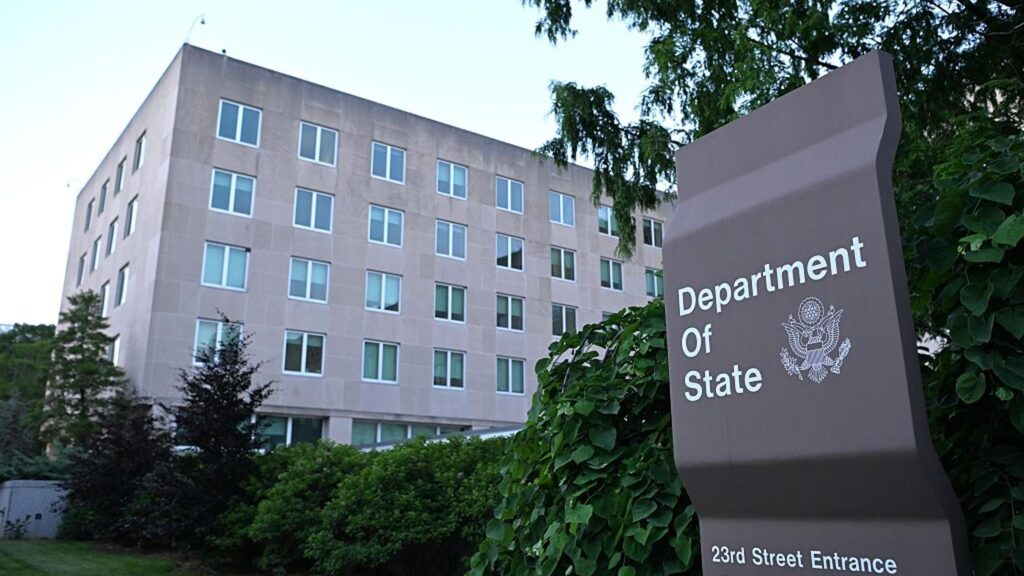
The State Department is considering imposing a bond for certain visa applicants, adding to the Trump Administration’s efforts to sharply restrict immigration.
The agency didn’t immediately respond to TIME’s questions about the amount of the possible bond or which visa applicants it would be imposed on. But The Wall Street Journal reported, citing people familiar with the plans, that the discussions have focused on placing a bond amounting to $100,000 on some green-card applicants.
“President Trump has made clear that those who wish to immigrate to the United States must be financially self-sufficient,” State Department spokesperson Tommy Pigott said in a statement to TIME. “The Trump administration is restoring the basic expectation that immigrants to the United States should contribute to our society more than they take from it. Under Secretary Rubio’s leadership, the Department of State is putting that principle into action.”
Pigott said that the agency is considering requiring a bond for “certain visa applicants—those who are otherwise ineligible for a visa because they are likely [to] become a public charge.” He added that the bond would be “a way to demonstrate they have access to the funds needed to support themselves.”
“This commonsense solution serves a dual purpose—preserving public assistance resources for hardworking Americans while giving applicants who have the resources to pay their own way another option to demonstrate their self-sufficiency and qualify for a U.S. visa,” he said.
Since returning to the White House for a second term, President Donald Trump has taken a number of actions to crack down on both legal and illegal immigration. His Administration has intensified efforts to restrict a number of legal pathways to immigration. In an unprecedented move, his Administration has also initiated steps this year to strip more than two dozen naturalized Americans of their citizenship.
A proposed rule from the Department of Homeland Security that was released to the public last month revealed that the agency is seeking to significantly raise the cost of filing a form that immigrants have to submit to apply for citizenship. The proposal sparked concerns among immigration advocates, who argued that it would place naturalization out of reach for immigrants who may not have the financial means to pay the increased fees.
The Trump Administration also unveiled plans this past fall to charge companies $100,000 each year for H-1B visas, which immigration experts feared would hinder employers from hiring skilled workers from other countries. But last month, a federal judge struck down the Administration’s fee, voiding the policy “in its entirety.”
Another, more sweeping effort by Trump to impose restrictions was also rejected in the courts last month. On June 30, the Supreme Court upheld birthright citizenship, dealing a blow to the Trump Administration’s efforts to significantly restrict the 150-year-old constitutional guarantee. That same day, the Department of Justice told its staffers that the agency will “prioritize the investigation and prosecution of birth tourism schemes,” claiming that “the American system is exploited each year by thousands of foreigners who travel to the United States under false pretenses to give birth and secure citizenship for their child.