

President Bola Tinubu on Thursday declined assent to two bills passed by the National Assembly, citing constitutional concerns and defects that require correction before the proposed legislation can become law.
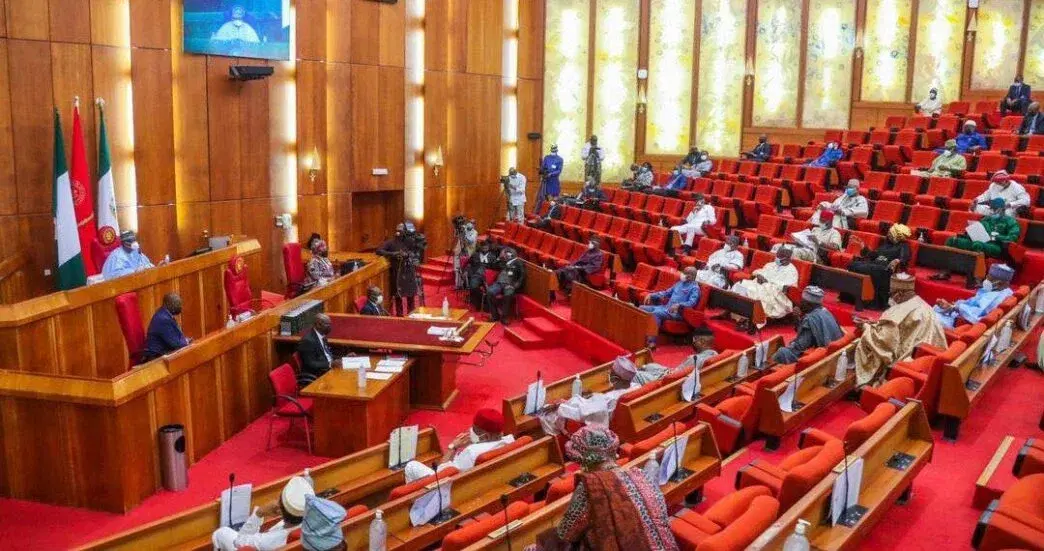
The Senate was notified of the president’s decision through two separate letters read on the floor of the chamber by Senate President Godswill Akpabio.
The affected bills are the Raw Materials Research and Development Council (Amendment) Bill, 2026, and the Chartered Institute of Purchasing and Supply Management of Nigeria Bill.
In both letters, Tinubu said he was withholding assent in line with Section 58(4) of the 1999 Constitution (as amended), which empowers the president to decline assent to bills and return them to the National Assembly with observations for reconsideration.
Explaining his decision on the Raw Materials Research and Development Council (Amendment) Bill, the president said the proposed law contained structural and drafting deficiencies that needed to be addressed.
He noted that the bill’s long title did not adequately reflect its principal objective of promoting the development, protection, and processing of Nigeria’s raw materials.
Sponsored
According to him, the title should clearly state that the amendment seeks to provide for the development and protection of Nigeria’s raw materials while also supporting local manufacturing and processing industries.
Tinubu also identified inconsistencies in Section 2 of the bill, saying it presented the council’s functions as legislative objectives instead of operational responsibilities.
He explained that legislative objectives are meant to outline policy goals and not the specific functions of an agency, adding that the bill mixed up the two concepts.
The president further observed that provisions relating to value addition to raw materials were inserted between sections dealing with the council’s finances and annual accounts, making the amendment difficult to follow.
“These erroneous insertions make the bill incoherent and difficult to comprehend within the context of the principal act. Accordingly, the bill as currently proposed is disjointed,” he stated.
Tinubu also withheld assent to the Chartered Institute of Purchasing and Supply Management of Nigeria Bill, saying some of its provisions sought to give the institute powers beyond its statutory mandate.
SPONSORED