

On a sunny Friday morning, a group of nine people gathered at an exercise corner in one of Singapore’s public housing blocks.
Clad in workout wear and sneakers, some rolled their shoulders and stretched their calves. Others stood together in small circles, chatting beneath the morning sun.
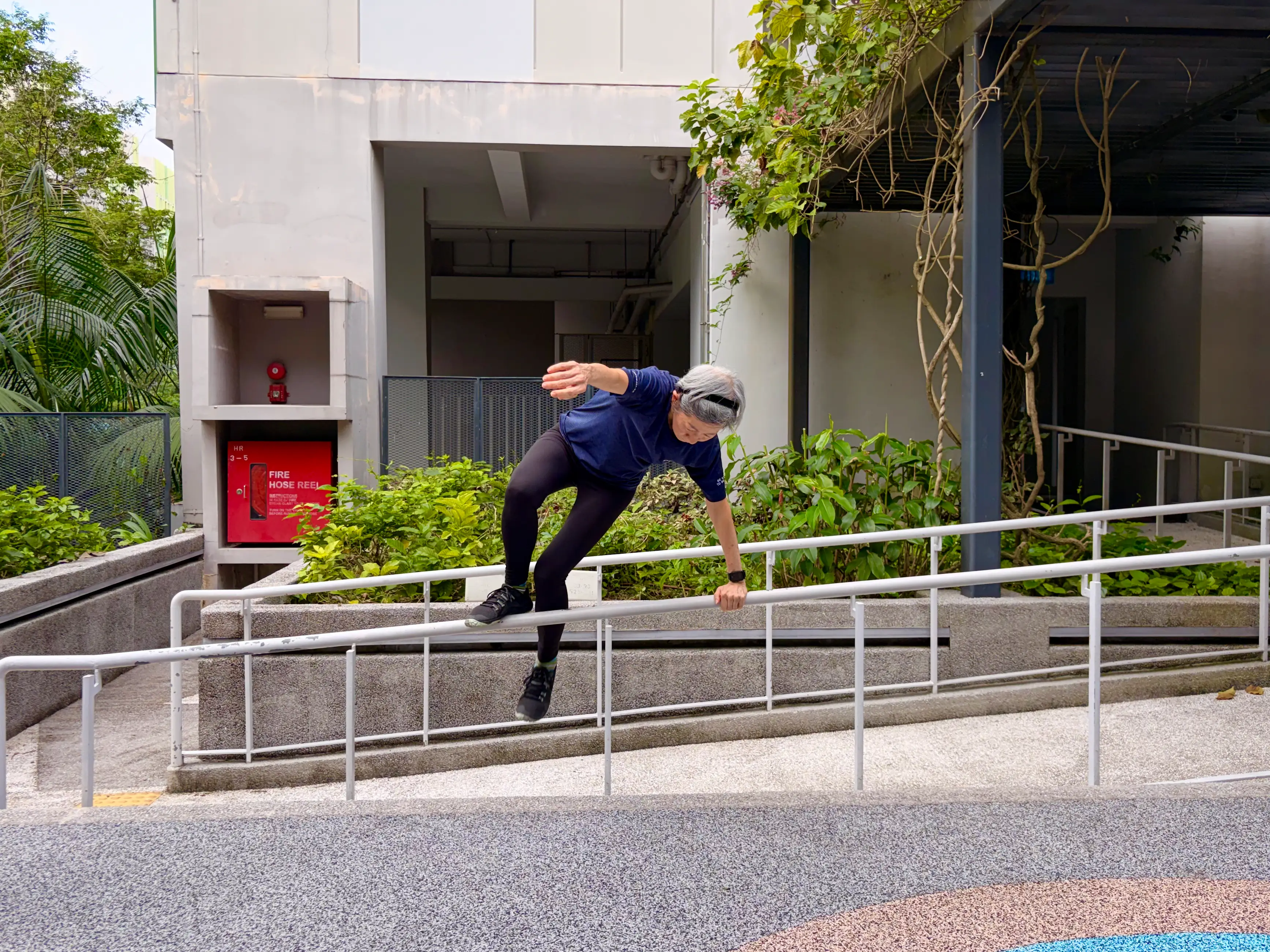
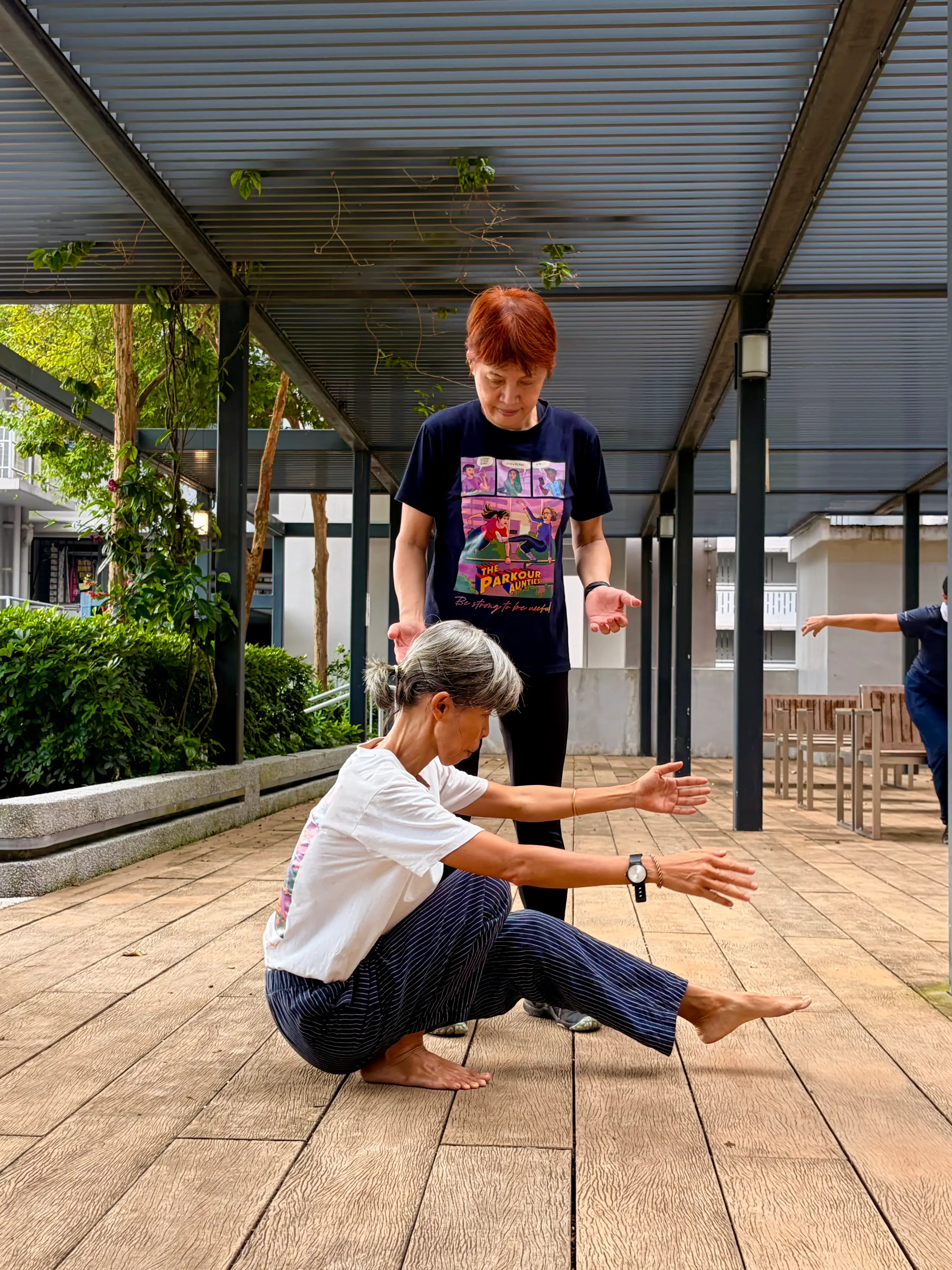
Over the next hour and a half, the conversation continued flowing as they hopped across concrete ledges, climbed over whatever stood in their way, and practiced navigating obstacles around the buildings. At one point, they took turns vaulting over a railing, drawing cheers from the rest of the crew with each successful attempt.
There wasn’t a teenager in sight. Instead, everyone in this parkour class was in their 50s, 60s, and 70s.
Finding his footing
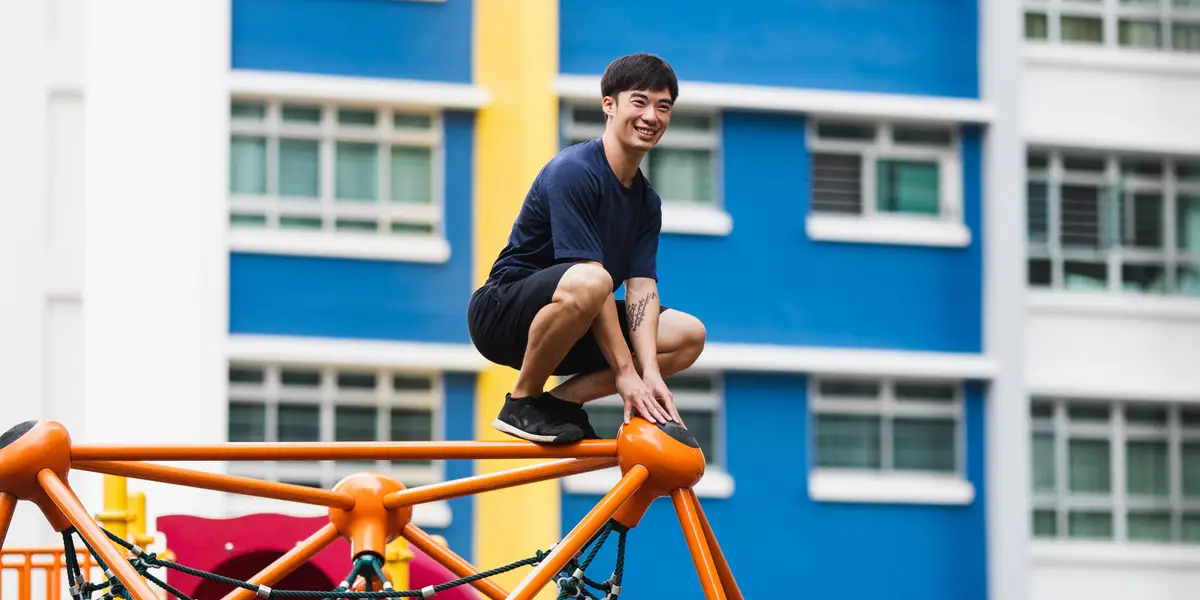
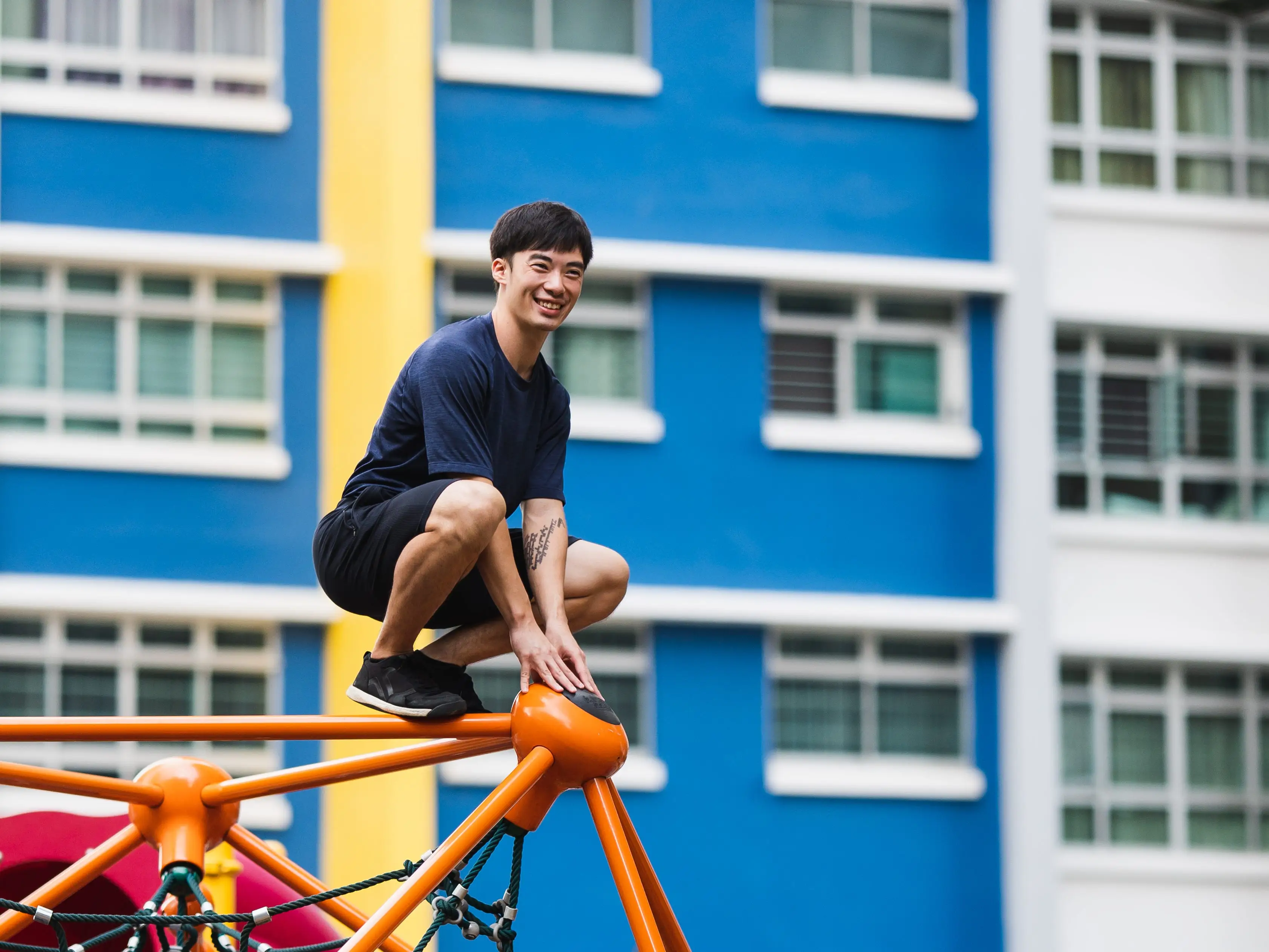
The morning session was one of seven classes that Tan Shie Boon, a parkour coach and founder of Movement.sg, teaches each week across Singapore.
Parkour is often associated with young athletes performing daring jumps and flips as they weave through urban landscapes. But over the past several years, Tan has carved out a niche teaching parkour to older adults.
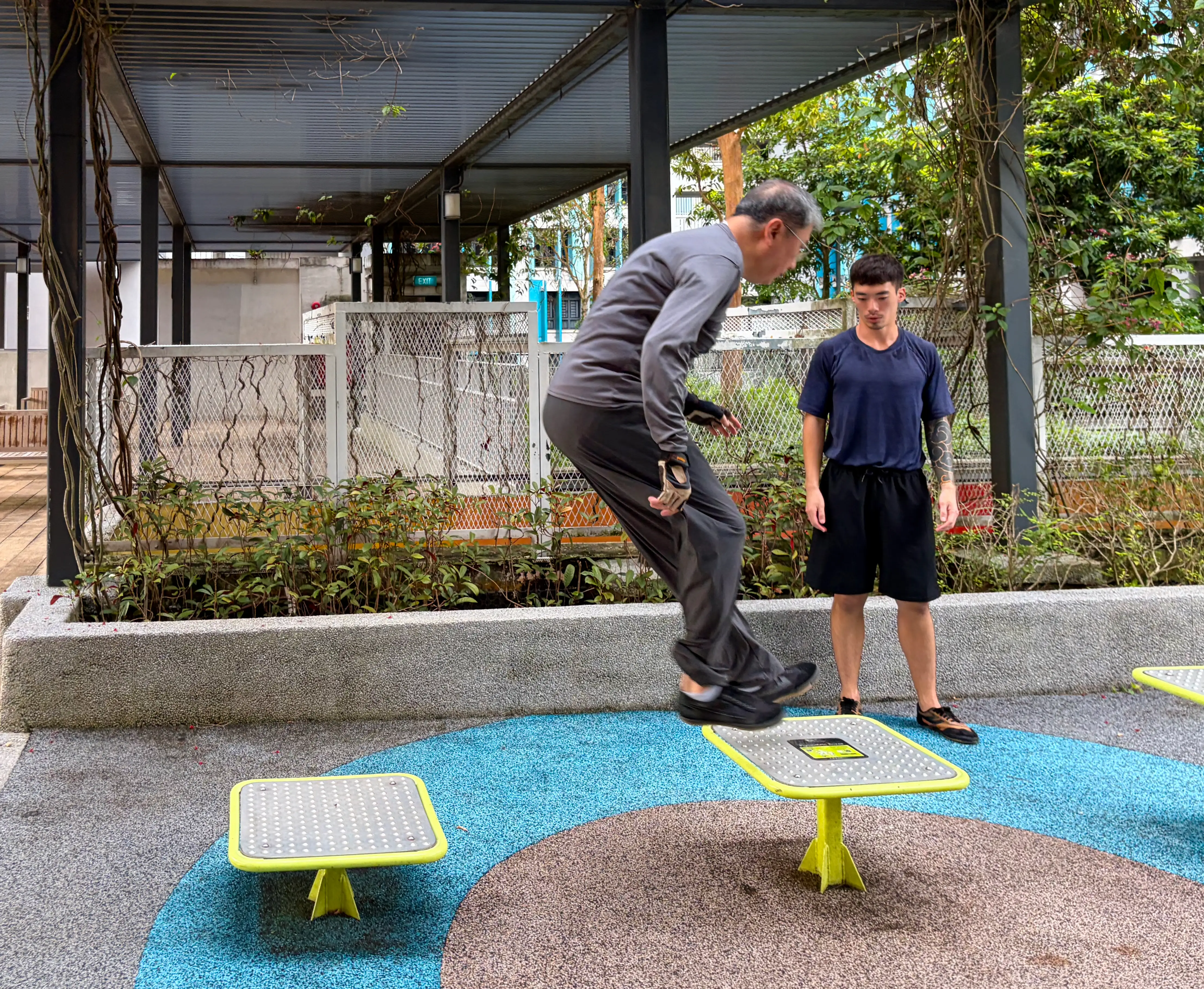
Instead of flashy stunts, Tan wants his students to learn how to navigate obstacles, recover their balance, and most importantly, get up safely if they fall.
It’s a skill set he considers essential, given that falls are the leading cause of injury among adults ages 65 and older, according to the CDC.
“It’s a problem that is very prevalent,” Tan, 34, told Business Insider. “To me, it’s almost ridiculous that people overlook this.”
Tan’s path to this career was long and winding. As a student, he thought he’d pursue computer science, but the plan never felt quite right. At his brother’s suggestion, Tan enrolled at a local arts school to study dance.
It was there that his interest in parkour began to take root. A workshop led by visiting practitioners from France gave him his first real exposure to the discipline.
“Something about how they carry themselves kind of aligned with how I wanted to live my life,” Tan said. “They’re very free-spirited, and they are very dedicated.”
At a time when he felt constrained by both society and his dance training, parkour, in contrast, felt powerful and liberating.
“With parkour, I felt like I could be myself,” Tan said.
Tan left the arts school and worked odd jobs to pay for his training at the now-defunct ADD Academy Singapore, a parkour school founded by that same French group. He became an instructor in 2015.
Making the leap
Tan’s focus on teaching older adults, however, came about by chance.
In 2017, he met a then-64-year-old woman at a food court while waiting in line. She asked him what he did for a living, and became intrigued when he said he was a parkour coach. She had never heard of the discipline.
“I showed her videos, and she asked me if this could help her with her balance. I said, absolutely, because we practice balancing a lot,” Tan said. The pair met the following day and began training together.
She told him she couldn’t walk without a trolley cart for stability, fearing she would otherwise fall. After several months of training, Tan said, she became increasingly confident moving around unaided.
A local news outlet picked up on her story, and the media attention brought a wave of inquiries from retirees across Singapore.
“That was when I realized that, hey, this could be a thing,” Tan said.
Tan isn’t the only coach adapting parkour for older adults. Similar programs have emerged in the US, including PK Move’s PK Silver program in Northern Virginia and Parkour Generations Boston.
Some of the people who reached out back then are still training with Tan today. Among them is Sarah Wang, 61, a retired preschool teacher. Intrigued by the news coverage, she decided to give it a try in 2018 and has been attending Tan’s classes ever since.
Wang said she enjoys that no two sessions are exactly alike. Each location offers a different environment to navigate.
“You can test yourself and challenge yourself,” Wang said. Outside of Tan’s classes, walking is her primary form of exercise.
About six months after Wang signed up, her friend Ling Ying Ying followed suit.
Ling, who attends classes twice a week, told Business Insider that she has noticed improvements in her strength and mobility.
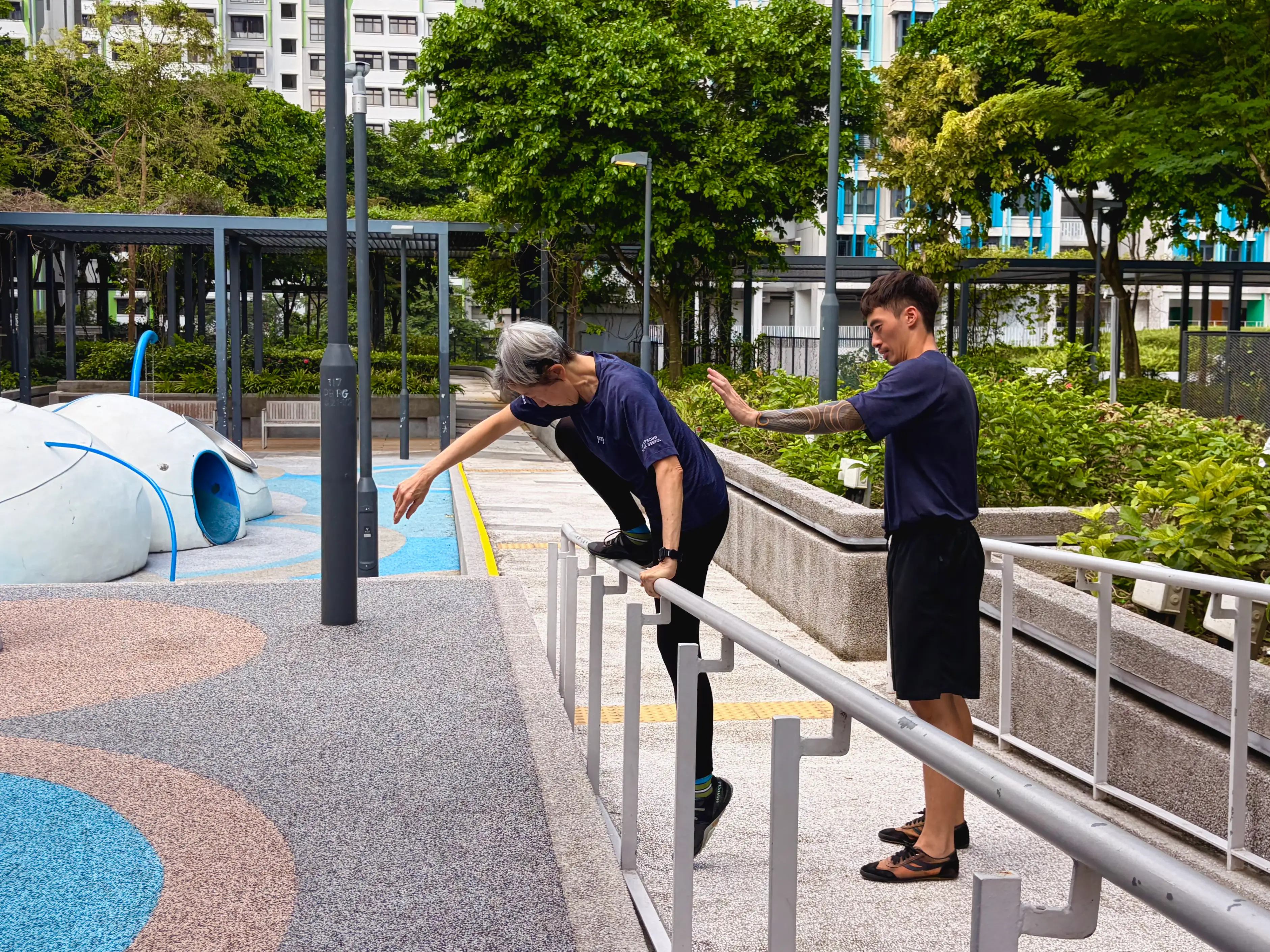
“When I first started the class, I actually had problems going down the stairs. I had to go down sideways because walking down normally caused pain in my knees,” Ling, 66, said. “After I started parkour, my knees became stronger.”
There is a growing scientific interest in adapting parkour principles for older adults, Shawn Soh, an assistant professor at the Singapore Institute of Technology, told Business Insider.
Benefits include “improvements in agility, lower-limb strength, dynamic balance, postural control, coordination, and environmental awareness,” said Soh, who is trained in physiotherapy and specializes in ortho-geriatric care.
It can also improve what researchers call falls efficacy — a person’s confidence in maintaining balance, recovering from a stumble, and getting up safely after a fall, he added.
However, Soh cautioned that the training carries risks. Older adults, particularly those with osteoporosis or low bone density, may be more susceptible to fractures. He added that sprains, strains, bruising, and falls are all possible, and that higher-intensity movements can place greater demands on the heart and cardiovascular system.
“Older adults should understand their own health status, medical conditions, and physical capabilities before starting any new activity,” Soh said.
Tan said his classes are designed with those differences in mind.
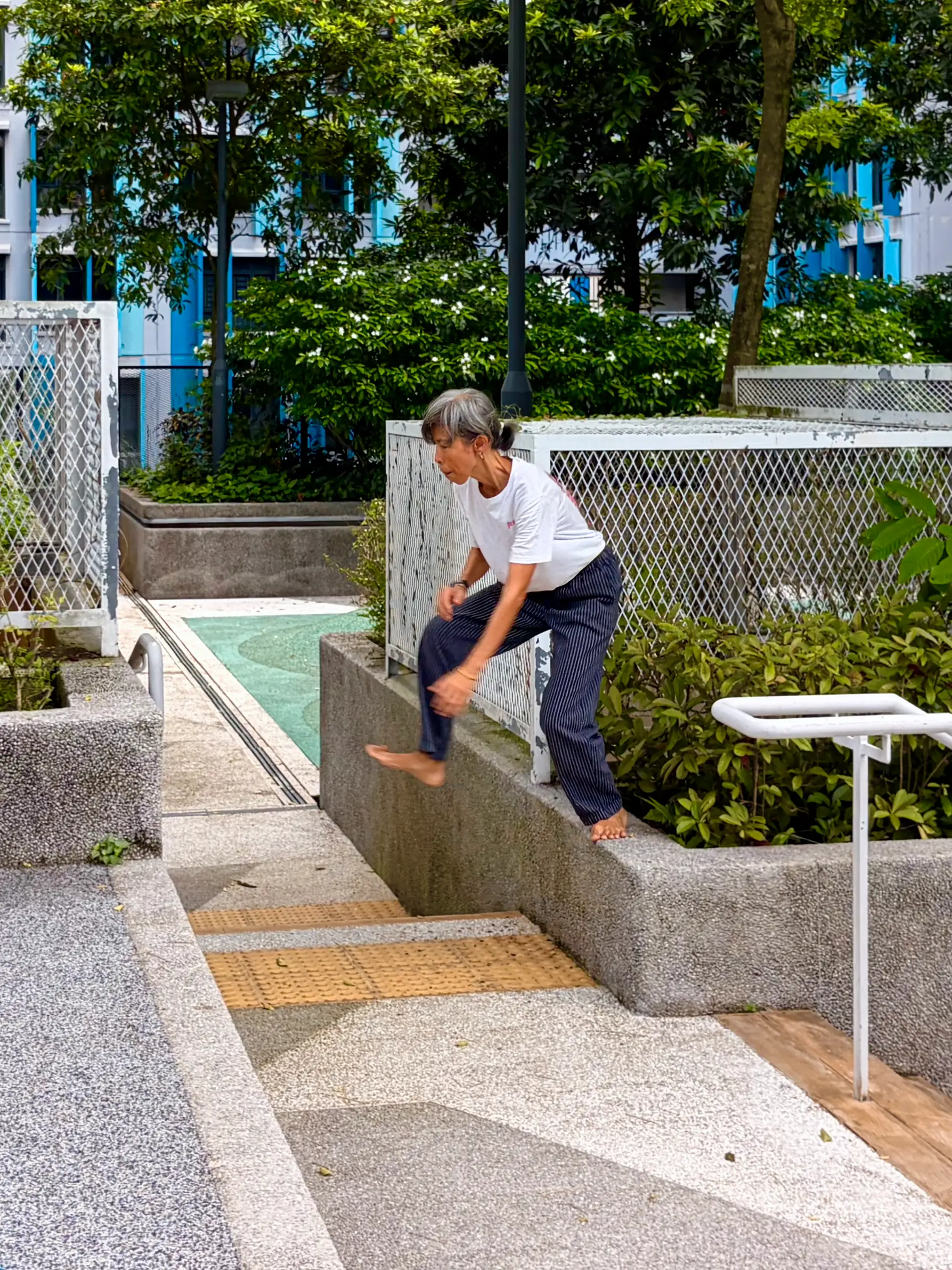
While teaching parkour to seniors may sound risky, Tan said he guides participants through movements at their own pace. Exercises can be modified for those who are less confident or have mobility limitations, he added.
Going the distance
Tan now runs the business by himself. Each 90-minute class costs 35 Singapore dollars, or about $26, and most classes draw between four and 12 participants.
The work is enough to sustain him, though he said he earns less than when he previously ran another parkour coaching business with partners.
“I don’t live a lifestyle where I spend a lot, so it’s enough,” Tan said.
“Managing a team is very difficult,” he added. “I much prefer my life now.”
Tan hopes that, one day, some of his longtime students will become coaches themselves. For now, though, he says the lessons often flow both ways.
“If I grow old, I want to be like them,” he said. “They prove to me that they have the never-say-die spirit.”
Read the original article on Business Insider