

I’ve come to expect pushback on my columns from readers who disagree. I enjoy the back-and-forth. Occasionally, however, I encounter a response so off the wall that I am too speechless to dive into the fray. This happened a few weeks ago, when I wrote about the rising socialist faction stirring up Democratic politics.
“Why are you calling them socialists?” some readers demanded.
Feebly, I responded, “Because they call themselves socialists.” It’s literally in the name of their organization: Democratic Socialists of America.
But isn’t there a difference between the Union of Soviet Socialist Republics and democratic socialism? That was the question from readers who were scandalized by my remark that “aging Gen Xers who thought that socialism had been decisively refuted by the fall of the Berlin Wall have been refuted ourselves” as DSA members won primary after primary.
Indeed, if we start with the word “democratic,” those differences are interesting to consider.
I stand by my assertion that the Soviet Union’s demise cast a long pall over the word “socialism” — at least for those who had not already recoiled from the purges, famines and censorship. I grew up on the Upper West Side, one of the remaining redoubts of socialism in the Reagan era, and watched as the toppling of the Berlin Wall crushed the last hopes that central planning could work. Encountering a socialist holdout in the 1990s was as quaint as finding someone who still believed in alchemy.
This makes the current renaissance all the more remarkable. Yet what’s also striking is how little the movement resembles the socialists I remember from my youth.
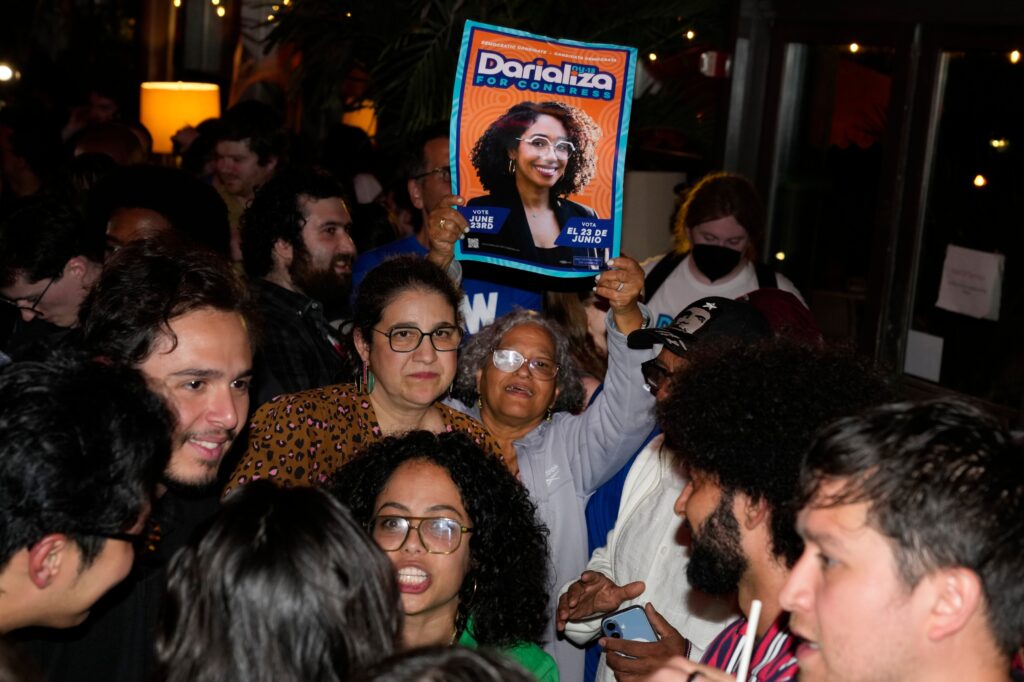
Sure, you can see the common ancestry in spots — notably Darializa Avila Chevalier, who last month won the Democratic nomination for New York’s 13th Congressional District, and whose now-deleted tweets occasionally sounded borderline Leninist. New York Mayor Zohran Mamdani, a member of the DSA, promoted a plan for government-owned grocery stores that certainly gave off old-school socialist vibes.
But broadly, the party seems far from traditional socialists — doctrinaire, immersed in the deep lore of the movement, obsessed with details of their proposed systems. The DSA’s platform seems curiously sparse by contrast, more of a vibe than a five-year plan.
Note that Mamdani couched his grocery proposal as a pilot project and has now delayed it. Other DSA members have proved similarly flexible — after all, Avila Chevalier deleted those old tweets. On the campaign trail, democratic socialist Janeese Lewis George, who is likely to be the next mayor of D.C., coyly described her plans for a new business tax as closing “loopholes” and talked about funding ambitious social spending not by seizing the means of production, or even taxing the rich, but by cutting costs and leveraging “our federal dollars.”
That’s some comfort to Democrats who might want a few more government programs, but don’t actually want the government to nationalize their Chevy Tahoes. They can insist that the socialists aren’t really socialists under the old meaning of the word; really, they’re just good progressives who want social democracy — you know, a Scandinavian-style welfare state.
That’s not really true — the DSA candidates who have recently elbowed establishment Democrats aside want something more transformational than a bigger safety net. But one could argue that it’s functionally true of how socialists will govern, because there’s little appetite outside of progressive primary voters for radical change, or the taxes to pay for it. In fact, we seem to be experiencing something of a tax revolt.
Operationally, the differences between old-style socialism, democratic socialism and social democracy are pretty much moot in modern America. If there was ever a moment when any of those systems could have worked here, that moment has passed.
Socialism was at its most appealing when many people lived much closer to subsistence, public works were spotty and public benefits barely existed. Social democracy was easiest to implement in the postwar boom when solidarity was high, populations were young and growing, and productivity and wages were rising briskly. Governments could skim off the top of that increase to fund new programs, while still leaving a little extra in every paycheck.
Today’s America is an aging society with a looming entitlement crisis and wage growth that is not even outpacing inflation. Any big expansion of the welfare state will mean significantly curtailing the disposable income of the middle class.
(“Tax the rich!” I hear someone murmur. But no European welfare state is funded mostly by taxing the rich; those nations are funded by broad middle-class taxation. Rates higher than the top U.S. federal rate often kick in at income levels of $80,000 to $100,000 in some countries, which also may have hefty consumption taxes and social insurance contributions.)
The rise of the neo-socialists reflects frustrated older dreams of a European-style social democracy. Obamacare was the high-water mark of that hope, but its architects lacked a mandate for the requisite taxes or true disruption of the status quo, so they settled for modest patches rather than comprehensive reform. Disappointed socialists have decided we must transform existing political and economic frameworks, rather than working inside them.
That was also the understanding of the socialists of yore. The difference is that they were clearer about what that would entail — which is why they never got very far politically.