

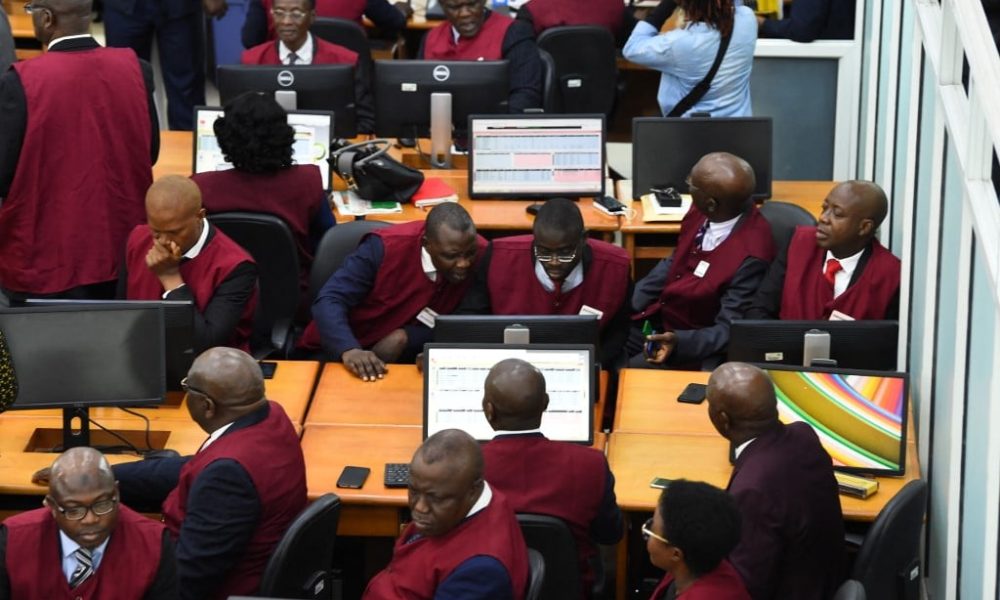
As the NGX hits record highs, investors are questioning whether the market is embarking on a new phase of continuous growth or approaching the boundaries of its extraordinary performance.
By Arthur Eriye
In 2026, Nigeria’s stock market has emerged as one of the most remarkable performers globally. From Lagos to London, investors are paying attention as the Nigerian Exchange (NGX) achieves record-breaking returns, driven by banking recapitalisation, enhanced corporate earnings, improved macroeconomic stability, and a resurgence of interest from foreign investors.
The NGX All-Share Index has recently surpassed 246,000 points, elevating the total market capitalisation to approximately ₦158.8 trillion, with investors contributing around ₦1.76 trillion within a single week. This rally has bolstered the market’s impressive year-to-date gains and solidified Nigeria’s status among the top-performing equity markets worldwide.
However, the market’s remarkable rise has prompted a crucial question: Will the rally persist, or is the bull market nearing a turning point?
This question is becoming increasingly significant not only for investors but also for policymakers, pension fund managers, and foreign portfolio investors who are cautiously returning to Nigeria after a prolonged period of restraint.
A Market Driven by Reform
In contrast to earlier rallies that were primarily fueled by speculation, the current increase is supported by more robust macroeconomic fundamentals.
The Central Bank of Nigeria’s reforms in foreign exchange have enhanced market liquidity, external reserves have risen to over $52 billion, inflation has started to ease from its recent highs, and investor confidence has improved.
These reforms have alleviated one of the major concerns for international investors—the capacity to enter and exit the Nigerian market without enduring lengthy foreign exchange restrictions.
READ ALSO: Zenith Bank leads brokers’ buy ratings as analysts turn bullish on banking stocks
As confidence has grown, capital has slowly flowed back into financial assets.
Recent data from Bloomberg has positioned Nigerian equities as the top-performing stock market worldwide in dollar terms for 2026, with returns surpassing 67 percent, outpacing numerous developed and emerging markets.
Banks Are Leading the Charge
The banking sector is the primary force behind this bull market.
The current recapitalisation initiative has significantly shifted investor expectations.
Banks are acquiring new capital, enhancing their balance sheets, and reporting strong profits, bolstered by rising interest rates and increasing non-interest income.
Tier-one banks have emerged as the leading contributors to the market, driving much of the recent trading activity.
Recent surges in major banking stocks have added over ₦849 billion in market value within a single trading session, underscoring the sector’s increasing impact on overall market performance.
In addition to earnings, investors are progressively recognizing Nigerian banks as long-term beneficiaries of economic reforms, financial inclusion, and the expansion of digital banking.
Pension Funds Are Providing Stability
In contrast to earlier market surges that were largely dependent on foreign investors, the current rally is bolstered by strong domestic institutional investors.
Nigeria’s pension assets, which have now surpassed ₦32 trillion, represent one of the most significant sources of long-term investment capital.
Pension fund administrators are consistently raising their allocations to equities, which ensures steady liquidity and diminishes the market’s reliance on unpredictable foreign portfolio flows.
This backing from domestic institutions has enhanced the market’s resilience in times of global uncertainty.Nigeria’s equity market seems to be transitioning into a new phase.
The initial stages of the rally were primarily fueled by enhanced sentiment and macroeconomic reforms.
READ ALSO: NGX loses N581 billion as market slump extends to fourth straight session
The forthcoming phase will hinge on whether corporate earnings can continue to support higher valuations and if reforms lead to more robust economic growth.
Historical trends indicate that bull markets typically conclude not due to rising prices, but rather when earnings, liquidity, or confidence start to decline.
At present, none of these foundational elements has shown a decisive break.
Corporate profits remain strong. Pension funds are still contributing liquidity. Foreign investors are slowly making a comeback. Macroeconomic conditions are more stable compared to a year ago.
These elements imply that the rally may still have potential for further growth.
Nevertheless, following one of the most impressive performances in the exchange’s history, the period of easy gains may have come to an end. The next phase of the bull market is likely to favor disciplined investors who prioritize quality companies over mere momentum.
For Nigeria, the implications go beyond stock valuations. A sustained bull market would enhance corporate fundraising, deepen domestic capital markets, and bolster investor confidence in the nation’s economic reforms.
Thus, the critical question is not whether Nigerian stocks can maintain their rally, but whether the broader economy can produce the growth necessary to support it.
Foreign Investors Are Returning
For a significant portion of the last three years, foreign involvement in Nigerian equities has been limited due to uncertainties surrounding exchange rates and restrictions within the foreign exchange market.
That pattern is slowly changing.
Enhanced foreign exchange liquidity, a more market-oriented exchange rate, and improved macroeconomic stability have prompted offshore investors to reevaluate Nigerian assets.
In recent quarters, capital importation has surged, with portfolio investments representing a considerable portion of the inflows, indicating that international investors are beginning to recognize the value in Nigerian equities.
But Risks Are Emerging
Despite the prevailing optimism, analysts caution that markets seldom progress in a linear fashion.
The valuations of numerous blue-chip stocks have surged significantly, raising concerns that certain segments of the market might be outpacing their underlying fundamentals.
Profit-taking has already appeared intermittently.
In June, investors experienced a loss of ₦13.3 trillion in market value amid a correction, despite the market achieving a gain of ₦44.8 trillion in the first half of the year. This incident highlighted the volatility that often accompanies a robust bull market.
The Bigger Picture
Nigeria’s equity market seems to be transitioning into a new phase.
The initial stages of the rally were primarily fueled by enhanced sentiment and macroeconomic reforms.
The forthcoming phase will hinge on whether corporate earnings can continue to support higher valuations and if reforms lead to more robust economic growth.
Historical trends indicate that bull markets typically conclude not due to rising prices, but rather when earnings, liquidity, or confidence start to decline.
At present, none of these foundational elements has shown a decisive break.
Corporate profits remain strong. Pension funds are still contributing liquidity. Foreign investors are slowly making a comeback. Macroeconomic conditions are more stable compared to a year ago.
These elements imply that the rally may still have potential for further growth.
Nevertheless, following one of the most impressive performances in the exchange’s history, the period of easy gains may have come to an end. The next phase of the bull market is likely to favor disciplined investors who prioritize quality companies over mere momentum.
For Nigeria, the implications go beyond stock valuations. A sustained bull market would enhance corporate fundraising, deepen domestic capital markets, and bolster investor confidence in the nation’s economic reforms.
Thus, the critical question is not whether Nigerian stocks can maintain their rally, but whether the broader economy can produce the growth necessary to support it.