

Tensions between Russia and other European nations have grown as NATO leaders convened for their summit in Turkey, with the Kremlin directing extra hostility at countries that back Ukraine in the war with Russia, while showering positive words on President Trump.
Some European NATO members that stridently support Ukraine — like Finland and the Baltic nations of Lithuania, Latvia and Estonia — feel particularly insecure, worried that the United States under Mr. Trump might not come to their aid in the event of a Russian attack.
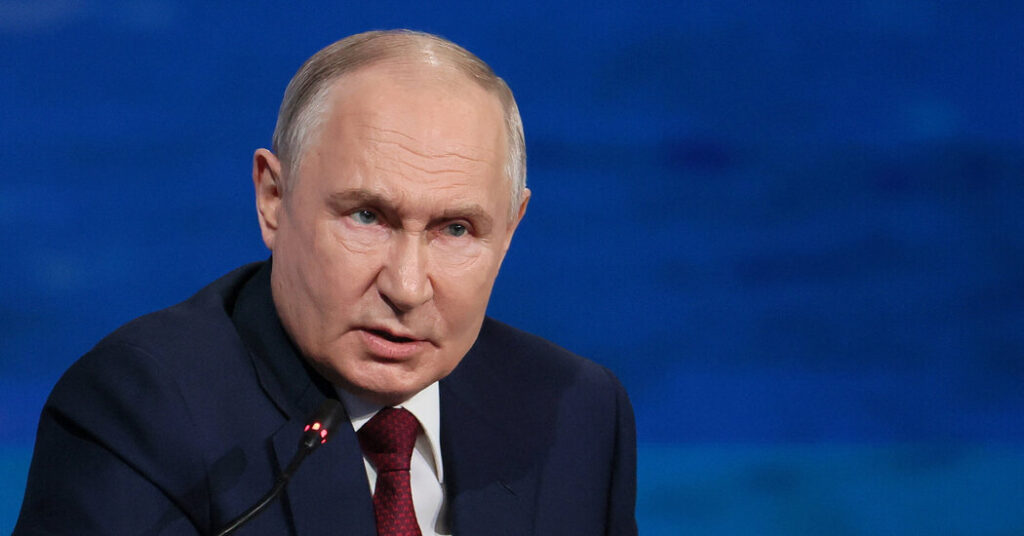
On Friday, President Vladimir V. Putin of Russia made a veiled threat, accusing European nations of trying to prolong the war and saying they were celebrating Ukrainian attacks that have left civilians dead.
“We must also analyze the involvement of each of them in actual combat operations,” Mr. Putin said, addressing his military commanders. “We need this analysis to make responsible decisions in the future. In any case, we may need it.”
Days later, Russia’s foreign intelligence service, known as the S.V.R., put out a statement accusing the British government of being behind a Ukrainian attack on a museum in Sevastopol, a city on the Black Sea, that houses a famous panorama depicting a battle from the Crimean War.
The British government did not respond to a request for comment about the accusation.
There has also been tension on Russia’s northwestern border with Finland and the Baltics.
Last month, Finnish lawmakers voted to remove a Cold War-era ban on nuclear weapons, which would allow NATO allies to take the weapons through the country or host them there. Finland, which shares an 830-mile border with Russia, joined NATO in 2023 in response to Moscow’s full-scale invasion of Ukraine.
A spokeswoman for Russia’s foreign ministry, Maria Zakharova, said the move “creates genuine threats to Russia’s national security” and would require Moscow to respond with political and military steps.
She said “blind Russophobia” in Finland had prevailed “over the pragmatic common sense that we had always believed to be characteristic of the Finns.”
Lithuania, a NATO member that, along with Poland, shares a border with Russia’s Kaliningrad region, is considering lifting its own nuclear ban.
About eight months ago, Finland and the Baltic nations withdrew from the Ottawa Treaty, a 1997 agreement that bans antipersonnel land mines, realizing the weaponry would be crucial to blunting a Russian advance on their territory.
In May, Russia’s foreign intelligence service accused Latvia of planning to host Ukrainian drone launchers and said membership in the alliance would not protect the small nation.
Latvia denied the accusations, accusing Moscow of mounting a disinformation campaign, and warned the following month that Russia was preparing “military provocations” in the Baltics and Poland.
Stephen Castle contributed reporting from London.