
Spain vs Argentina FIFA World Cup final: Messi's new record, Martinez's 11 saves, a 38-game streak


Spain defeated Argentina 1-0 in extra time on Sunday to win the FIFA World Cup 2026 final, as Ferran Torres scored the winner and Luis de la Fuente be…

 1/10
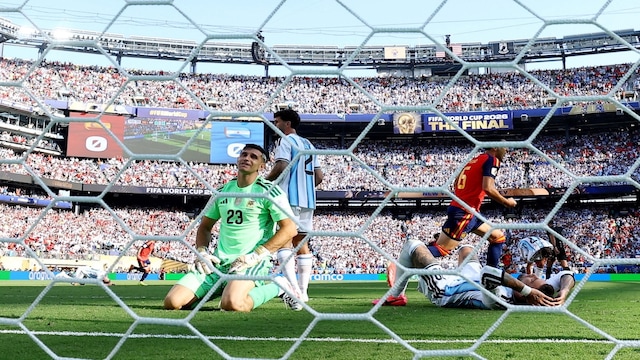
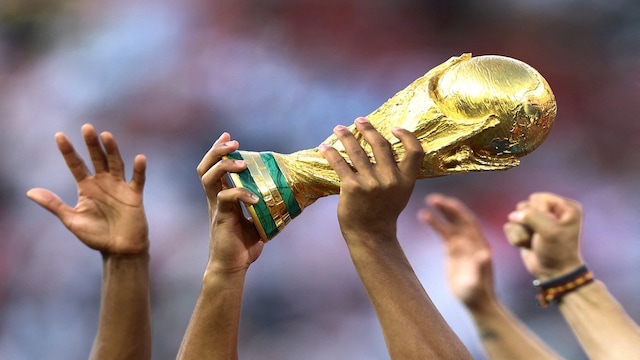
1/10Champions Again | Spain has won the FIFA World Cup for the second time, this time in a more dominant fashion than in 2010. Argentina rarely threatened for most of the 120 minutes as Spain controlled the final. The match featured a red card, a tense stalemate, and a dramatic extra-time winner, sealing Spain’s title with a 1-0 victory over Argentina on Sunday.
 2/10
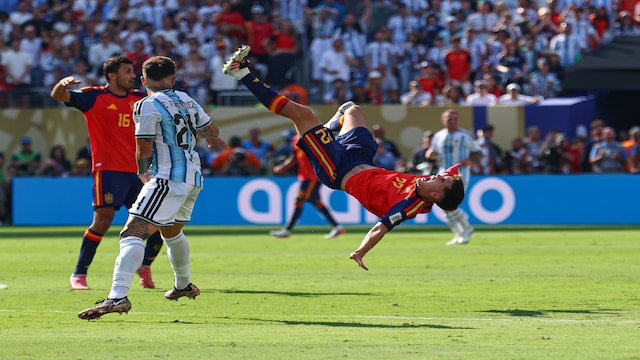
2/10Zero Shots | Argentina became only the third team in 900 World Cup matches since 1966 to record zero shots during regulation, following Costa Rica against Brazil in 1990 and Spain in 2022. Spain dominated possession, patiently probing before its 20th shot found the net. Argentina’s lone shot of the match came in the 117th minute, when Messi’s effort struck Spain’s Mikel Merino in the face.
 3/10
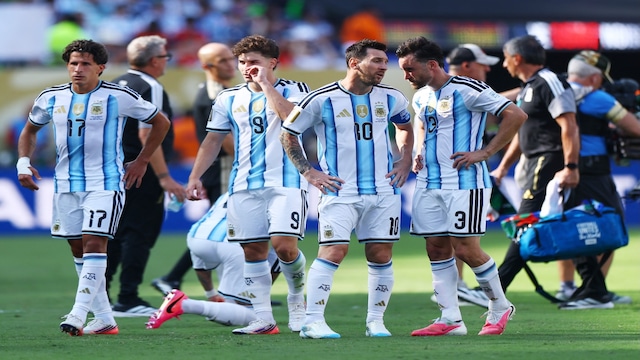
3/10Red Card Returns | Enzo Fernández was sent off for a second yellow card in first-half stoppage time after fouling Spain defender Pau Cubarsí. He became the first player shown red in a World Cup final since Dutch defender Johnny Heitinga in 2010, also against Spain. Fernández’s dismissal was the sixth red card in World Cup final history.
 4/10
4/10Extra-Time Habit | This was Argentina’s third trip to extra time at the 2026 World Cup, making it the first team ever to reach extra time three times in one tournament. Argentina avoided a penalty shootout throughout the event. It marked the 14th extra-time game in the nation’s World Cup history; Argentina had advanced in 11 of the previous 13.
 5/10
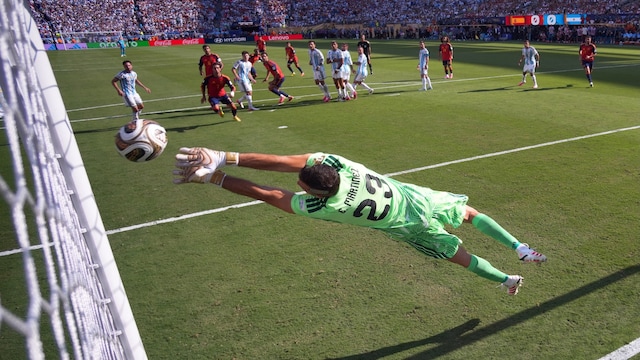
5/10Martínez’s Wall | Goalkeeper Emiliano Martínez made 11 saves against Spain, the most recorded by any goalkeeper in a World Cup final since at least 1966. His biggest test came late in regulation, when Lamine Yamal’s free kick from 20 yards stayed on target. Martínez also starred in Argentina’s 2022 title win and has started since 2021.
 6/10
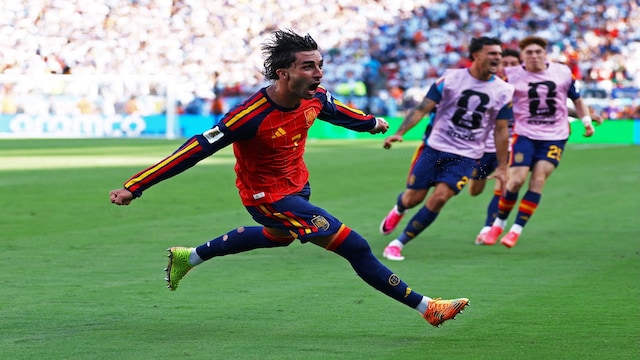
6/10Late Breakthrough | Spain has played nine World Cup matches that reached extra time but scored only twice in that stretch: Andrés Iniesta in the 2010 final and Ferran Torres on Sunday. Torres became the fifth substitute to score in a World Cup final, the first since Germany’s Mario Götze delivered a similar extra-time winner in 2014.
 7/10
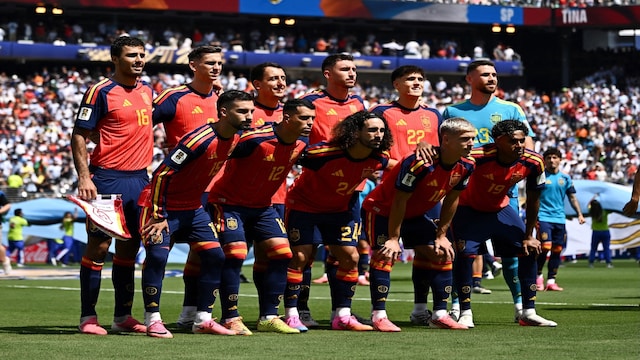
7/10Records Broken | Spain conceded just one goal across the entire 2026 tournament, the fewest ever by a World Cup-winning team, while goalkeeper Unai Simón recorded seven clean sheets, a new tournament record. Nineteen-year-olds Lamine Yamal and Pau Cubarsí became the fourth and fifth teenagers to play in a World Cup final, following winners Pelé, Giuseppe Bergomi, and Kylian Mbappé.
 8/10
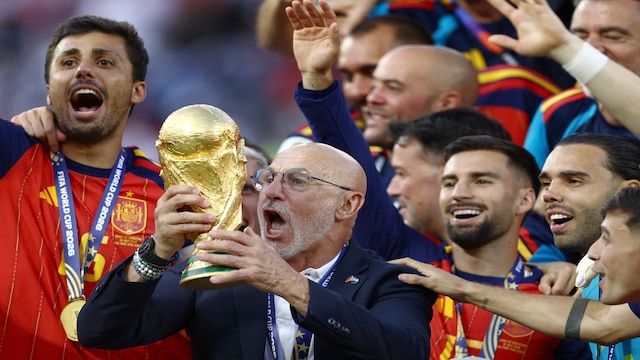
8/10Double Crown | Luis de la Fuente, 65 years and 28 days old, became the oldest coach to win a World Cup, surpassing countryman Vicente del Bosque’s mark of 59 years and 220 days, set in 2010. Spain also became the first nation to hold both the men’s and women’s World Cup titles at once, having won the Women’s World Cup in 2023.
 9/10
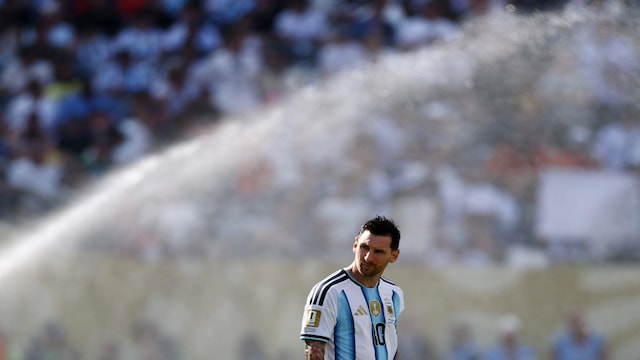
9/10Messi’s Milestone | At 39 years and 25 days old, Lionel Messi became the oldest outfield player to appear in a World Cup final, surpassing Sweden’s Gunnar Gren, who was 37 years and 241 days old in 1958. Substitute Nicolás Otamendi, 38 years and 157 days old, became the second-oldest. Messi also became the second player to appear in three World Cup finals, joining Brazil’s Cafu.
 10/10
10/10Unbeaten Streak | Spain extended its unbeaten run to 38 matches (29 wins, nine draws), the longest in men’s international football history, surpassing Italy’s 37-game streak from 2018-2021. The run began after a March 2024 loss to Colombia; a penalty-shootout defeat to Portugal in the Nations League final counted as a draw. Spain also had a 35-match unbeaten run from 2007-2009, winning Euro 2008 during that stretch.