

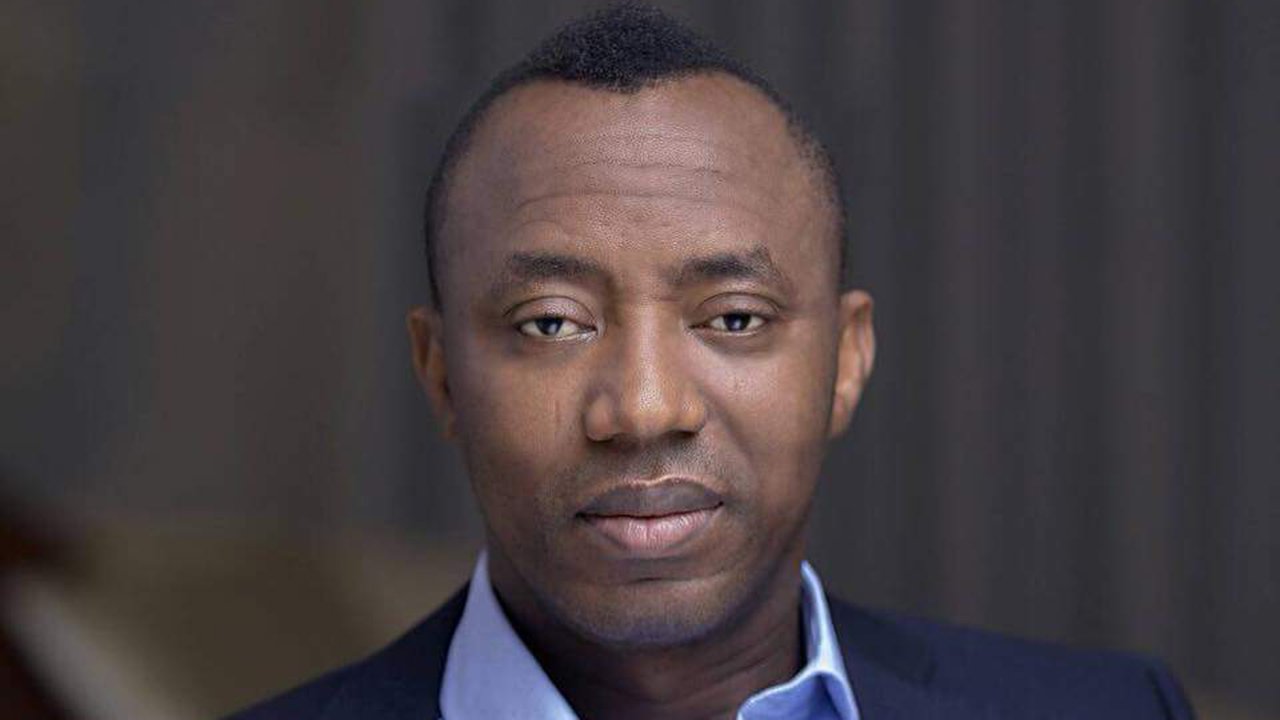
Human rights activist and former presidential candidate of the African Action Congress (AAC), Omoyele Sowore, on Tuesday withdrew his application seeking to subpoena the Director-General of the Department of State Services (DSS), Oluwatosin Ajayi, to testify in his ongoing alleged criminal defamation trial before the Federal High Court in Abuja.
Sowore informed the court that he would no longer insist on the appearance of the DSS chief after concluding that the evidence he intended to obtain could be presented through another official of the security agency.
The decision came after the Attorney General of the Federation and Minister of Justice, Lateef Fagbemi (SAN), challenged the subpoena, arguing that Ajayi was not the appropriate witness to testify on the matter.
Attorney General opposes subpoena
During Tuesday’s proceedings, Fagbemi urged the court to set aside the subpoena issued against the DSS Director-General, maintaining that the document the defence sought to tender was neither written nor signed by Ajayi.
According to the Attorney General, the document in question was a letter sent to Sowore directing him to remove a Facebook post in which he allegedly described President Bola Tinubu as a “criminal.”
Fagbemi argued that the DSS Director-General had no direct involvement in the preparation or issuance of the letter and therefore could not provide relevant testimony regarding its contents or authenticity.
He further informed the court that the letter had already been admitted into evidence on two separate occasions during the trial, making another appearance unnecessary.
The Attorney General also pointed out that the author of the letter, Uwen Davis, had already testified before the court on July 22 on behalf of the defence.
According to him, since the person responsible for writing the document had already appeared and given evidence, compelling the DSS Director-General to testify would serve no useful legal purpose.
Defence raises procedural concerns
Before eventually withdrawing the subpoena request, Sowore’s counsel, Adeyinka Olumide-Fusika (SAN), questioned the Attorney General’s participation in the proceedings.
The senior lawyer argued that another Senior Advocate of Nigeria, Akinlolu Kehinde, was already the counsel on record representing the Federal Government in the case.
Olumide-Fusika maintained that although the Attorney General possesses constitutional powers to appear in any legal matter involving the Federal Government, the defence should have been formally notified before he assumed responsibility for the prosecution.
He insisted that due process required prior notice to avoid any procedural surprises during the trial.
Despite the objection, the Attorney General continued to press his application asking the court to vacate the subpoena served on the DSS Director-General.
Court confirms service on DSS
Earlier in the proceedings, Justice Mohammed Umar was informed by the court registrar that the subpoena had been successfully served on the Director of Legal Services of the Department of State Services.
However, the Federal Government maintained that the DSS Director-General had no personal knowledge of the service and urged the court to set aside the subpoena.
Government counsel also requested that the court direct the defence to proceed with its case without insisting on Ajayi’s appearance, arguing that all necessary documentary evidence was already before the court.
The prosecution maintained that the defence had not demonstrated any legal basis requiring the personal testimony of the DSS chief.
Sowore withdraws application
Following arguments from both sides, Sowore informed the court that he would no longer pursue the subpoena.
He acknowledged that the evidence he intended to obtain from the DSS Director-General could instead be produced through another official of the agency.
The withdrawal effectively resolved the dispute over whether Ajayi should be compelled to appear before the court as a witness.
Justice Mohammed Umar subsequently adjourned the case until August 3 for the continuation of the defence.
The criminal defamation case against Sowore has attracted significant public attention because of its implications for freedom of expression, the limits of political criticism, and the relationship between government institutions and outspoken activists.
The trial is expected to continue with the defence presenting additional witnesses and evidence when proceedings resume next week.