

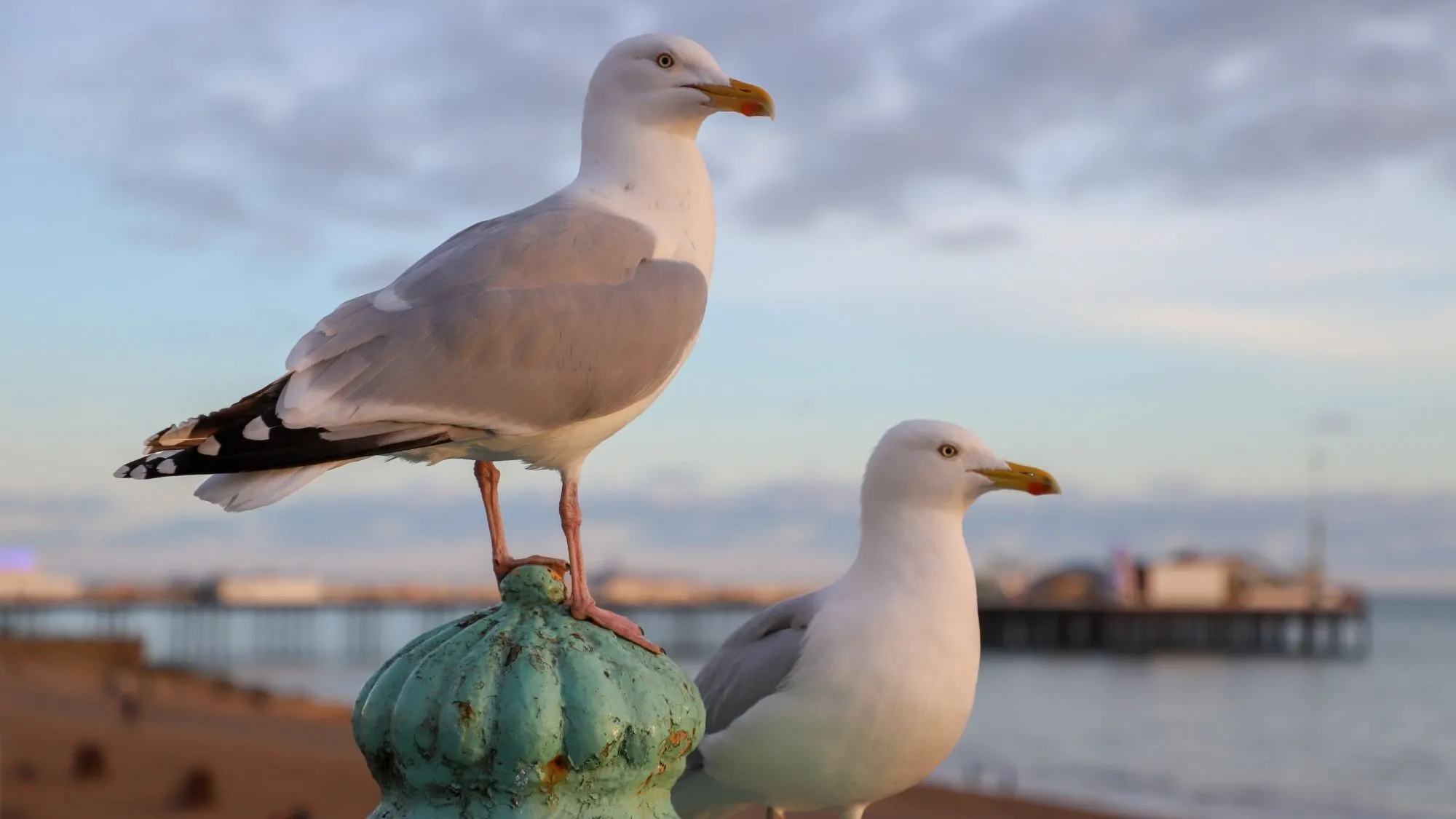
Every summer, England’s south coast deals with seagulls stealing chips, dive-bombing tourists, and generally making a nuisance of themselves. This year, they’re also stumbling into traffic.
Flying ant season has arrived early along the UK coastline, thanks to this summer’s successive heatwaves pushing the insects to swarm ahead of schedule. Seagulls, which will eat anything essentially, have been gorging on them—and the results have been so chaotic that they prompted warnings from both ornithologists and wildlife charities. Coastal towns like Lowestoft and Aldeburgh in Suffolk have seen blankets of gulls staggering around pavements and wandering into roads, seemingly indifferent to oncoming vehicles.
The leading theory is formic acid. Flying ants release it as a chemical defense when threatened, and when a gull eats enough of them in one sitting—which isn’t hard, given that a single bird can consume hundreds in one go, according to Sompting Wildlife Rescue—the accumulated acid appears to affect their coordination. Dr. Viola Ross-Smith of the British Trust for Ornithology told Metro that “the hypothesis is the formic acid is affecting them as ethanol affects us,” leaving birds woozy, unsteady, and apparently unconcerned about traffic.
Seagulls Are Stumbling Around UK Coastal Towns After Eating Too Many Flying Ants
It’s still a hypothesis. Ross-Smith is careful about that. An alternative explanation, according to BBC Science Focus, is that the gulls are so fixated on the food source that they’re simply not registering anything else around them—including cars. “I would really love for someone to test the theory and see if formic acid is making the gulls drunk,” Ross-Smith said.
Whatever the cause, the birds are ending up in the road. A spokesperson for Sompting Wildlife Rescue warned that disoriented gulls are far more likely to become traffic casualties, since they can’t move fast enough to get out of the way. “If you see a gull behaving strangely by the roadside, please slow down and give them space—they might just need a little time to recover,” they said.
For anyone tempted to intervene beyond slowing down, Ross-Smith says there’s generally no need for concern unless a bird looks genuinely ill. The formic acid effects are temporary, and most gulls will right themselves once they’ve stopped eating. Wildlife charities suggest leaving out water nearby, which can help the birds recover faster.
Flying ant season peaks around mid-July, when queen ants emerge to set up new colonies—but this year’s heat has pushed swarms out earlier than usual across Suffolk and beyond. The seagulls have noticed, and the roads haven’t seen the last of them.