

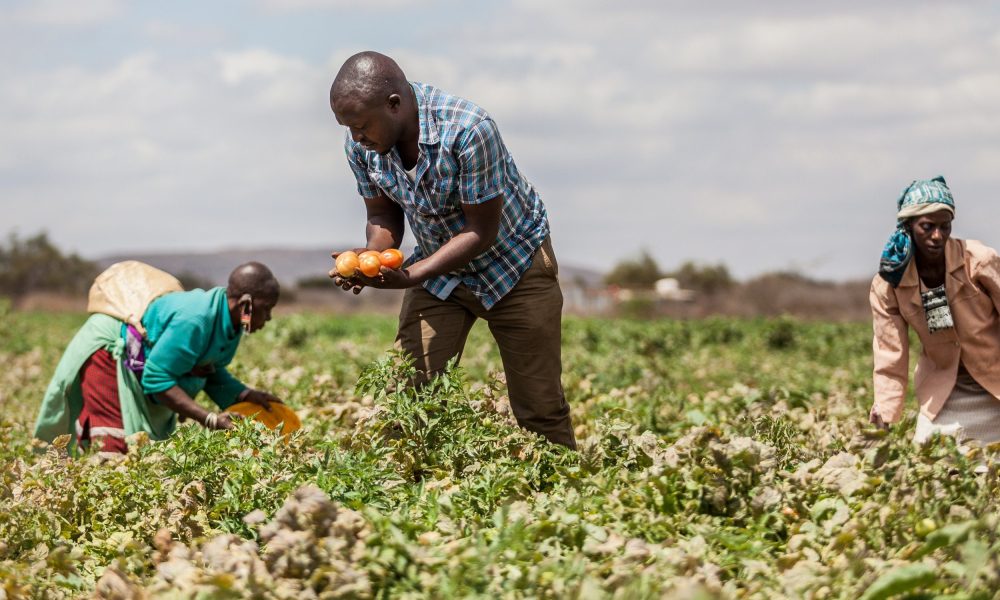
Escalating insecurity across Nigeria’s major agricultural regions is disrupting food production, worsening supply chain challenges and driving millions closer to food insecurity, according to recent reports by food security agencies and industry stakeholders.
Experts warn that persistent attacks by bandits, insurgents and armed groups, alongside recurring farmer-herder conflicts, are forcing farmers to abandon their lands while making the transportation of farm produce increasingly dangerous and expensive.
According to projections by the Famine Early Warning Systems Network (FEWS NET), between 31.8 million and 35 million Nigerians are expected to experience acute food insecurity during the 2026 lean season, highlighting the growing impact of insecurity on the country’s agricultural sector.
Agricultural economists say the country’s food production capacity has been significantly weakened as farmers in the North-West and North-Central regions—Nigeria’s major food-producing zones—continue to face threats of attacks, kidnappings and extortion.
Recent assessments show that the total area cultivated across northern farming communities declined by about eight per cent over the past year as many farmers stayed away from their fields for safety reasons.
The insecurity has also affected access to essential farming inputs. Reports indicate that only 62 per cent of smallholder farmers were able to apply improved seeds and fertilizers during the latest farming season, compared to 81 per cent in previous years.
In the North-East, the humanitarian situation remains severe. More than five million people in Borno, Adamawa and Yobe states are reportedly dependent on food assistance after years of conflict disrupted farming activities and displaced entire communities.
Beyond the farms, experts say the country’s food distribution network has become another major challenge.
Stakeholders at the Chartered Institute of Logistics and Transport (CILT) estimate that Nigeria loses between 30 million and 40 million metric tonnes of food annually due to poor transportation infrastructure, insecurity and post-harvest losses. The resulting economic losses are estimated at between ₦3.5 trillion and ₦5 trillion each year.
Transporting food from major farming communities in the North and Middle Belt to southern markets has become increasingly difficult because of armed attacks on highways, illegal checkpoints, kidnappings and deteriorating road infrastructure.
Industry estimates suggest that as much as 40 per cent of highly perishable agricultural produce spoils before reaching consumers, contributing to rising food prices across urban centres.
In response to the declining agricultural output, the Federal Government has expanded support for farmers through a nationwide fertilizer distribution programme aimed at delivering about 1.1 million metric tonnes of fertilizer, equivalent to roughly 22 million bags of NPK and urea, to boost crop production.
President of the Chartered Institute of Logistics and Transport, Dr. Boboye Oyeyemi, said improving access to farm inputs alone would not solve the food crisis without addressing insecurity.
“We are fighting an interconnected battle. Providing affordable fertilizer addresses agricultural productivity, but farmers must also be able to cultivate their land without fear,” he said.
Security and agricultural experts have called for a coordinated strategy that combines improved rural security with investments in agricultural infrastructure.
Among the recommendations are expanding the Nigeria Security and Civil Defence Corps’ Agro-Rangers unit to provide security for farming communities, developing solar-powered cold storage facilities to reduce post-harvest losses, and strengthening security along major transport corridors to ensure the safe movement of food across the country.
Analysts maintain that unless farming communities are adequately protected and supply chains secured, Nigeria’s efforts to boost agricultural production and improve food security will continue to face significant setbacks, with consumers bearing the burden through higher food prices and reduced availability of essential food items.