

By Joycelyn Ellakeche Adah
Nigeria’s electricity sector is entering a critical regulatory phase, with the judiciary positioned to play a vital role in determining the success of the transition.
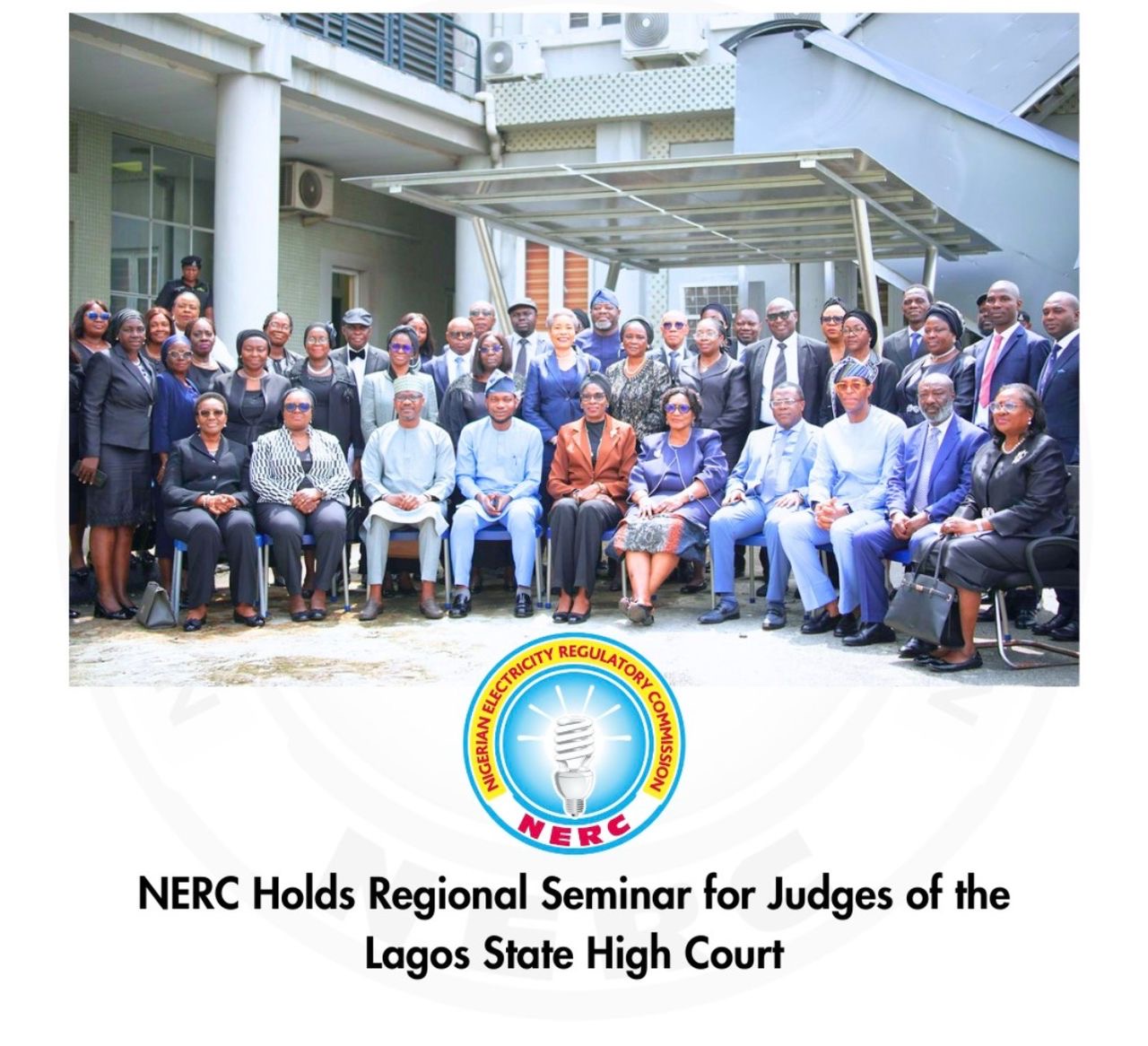
To navigate this shift, the Nigerian Electricity Regulatory Commission (NERC) hosted a regional seminar on Monday for Lagos State High Court judges.
The workshop aimed to deepen the judiciary’s understanding of the legal, regulatory, and commercial realities driving the evolving power market.
This engagement follows major legislative changes, coming just three years after the 2023 constitutional amendment (Fifth Alteration Act) landmark reform decentralized the sector by moving electricity generation, transmission, and distribution from the Exclusive Legislative List to the Concurrent Legislative List, granting states the power to regulate their own electricity markets.
The reform was further strengthened by the enactment of the Electricity Act 2023, which provides the legal framework for states to establish electricity laws, create independent regulators and assume oversight of electricity activities within their jurisdictions.
Since the law came into effect, several states have moved to take advantage of the new framework, with NERC transferring regulatory oversight to states that have fulfilled key legal and institutional requirements.
To assume regulatory authority, states are required to enact their own electricity laws, establish independent regulatory commissions and demonstrate the institutional capacity needed to supervise electricity operators within their territories.
Speaking at the seminar in Lagos, NERC Chairman, Dr. Musiliu Oseni, said the ongoing transition has fundamentally altered the regulatory landscape, making it necessary for judges to understand the technical and legal complexities that now define the industry.
“The objective is to ensure that My Lords are familiar with the intricacies and technical nature of the power sector.”
Industry experts note that the decentralisation of electricity regulation is expected to encourage investment, improve service delivery and allow states to develop solutions tailored to their local energy needs.
Representing the Lagos State Attorney General and Commissioner for Justice, Lawal Pedro (SAN), the state’s Solicitor General, Hameed Oyenuga, described the seminar as a timely intervention.
He noted that regular collaboration between the judiciary and industry stakeholders ensures that court rulings align with the goals of current power sector reforms.
Oyenuga emphasized that for the market to evolve successfully, judges must grasp its day-to-day operational realities.
Also speaking, Justice Atinuke Ipaye, Administrative Judge of the Lagos Judicial Division, who represented the Chief Judge of Lagos State, Justice Kazeem Alogba, urged participants to actively engage resource persons and take advantage of the opportunity to deepen their knowledge of the changing electricity landscape.
Participants at the seminar received presentations on key issues shaping the future of the Nigerian Electricity Supply Industry (NESI).
NERC Commissioner for Legal, Licensing and Compliance, Dafe Akpeneye, examined the legal and regulatory implications of transitioning to a decentralised electricity market, while the Commission’s Vice Chairman, Dr. Yusuf Ali, delivered a presentation on tariff regulation in an increasingly decentralised power sector.
The seminar, themed “Nigeria’s Electricity Market in Transition: Law, Regulation and the Courts,” kicks off a nationwide series of regional engagements by NERC.
Through these sessions, the regulator aims to strengthen judicial capacity and ensure that courts and industry stakeholders are aligned on the laws guiding the country’s electricity reforms.