

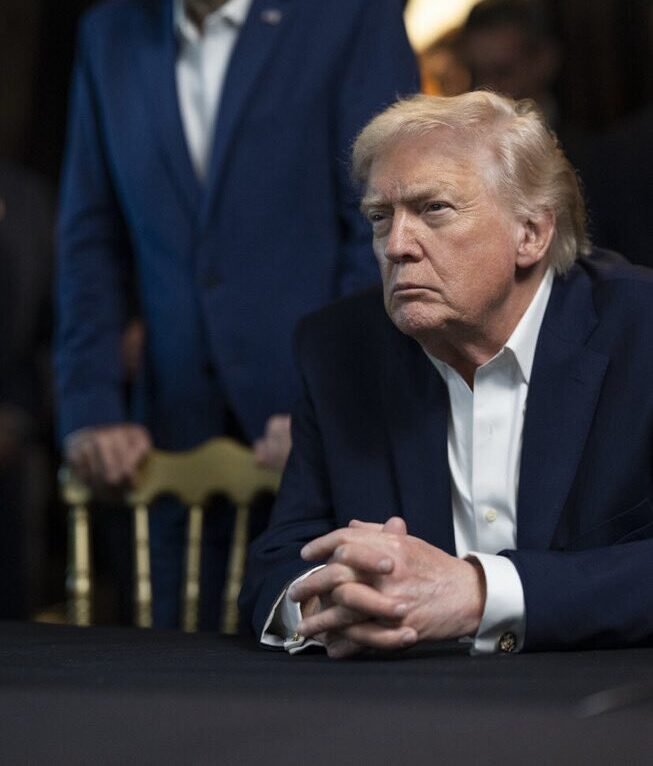
Oil prices surged more than 5%, hitting a two-week high after U.S. President Donald Trump declared that the memorandum of understanding aimed at ending the conflict with Iran was “over,” reigniting concerns over potential disruptions to Middle East oil supplies.
Brent crude futures rose $3.82, or 5.15%, to $77.98 a barrel by 0832 GMT, while U.S. West Texas Intermediate crude gained $3.70, or 5.25%, to $74.14 a barrel. Both benchmarks reached their highest levels since June 23.
The gains followed a roughly 3% rally yesterday after the United States revoked the general licence authorising the sale of Iranian crude.
Speaking ahead of a NATO summit in Ankara, Trump said the interim agreement intended to end the war between the United States, Israel and Iran had collapsed, adding that he had no interest in engaging with Tehran.
The latest escalation came after the U.S. said its airstrikes were launched in response to Iranian attacks on three commercial vessels transiting the Strait of Hormuz, according to U.S. Central Command.
Iran’s Revolutionary Guards, in turn, said they targeted U.S. military sites in Bahrain and Kuwait early on Wednesday.
Oil prices had retreated to pre-war levels after the United States and Iran signed a truce last month, prompting traders to build large short positions in crude futures on expectations that prices would continue to decline.
Those expectations were driven by prospects of additional Middle East oil supplies returning to the market.
Although Iran denied responsibility for the attacks on the commercial vessels, Qatar blamed Tehran, including for an attack on a Qatari liquefied natural gas tanker that was struck by a drone, causing a fire in its engine room.
The attacks have renewed concerns over tanker traffic through the Strait of Hormuz, a key shipping route that handled about one-fifth of global energy supplies before the conflict erupted in late February.
Since the conflict began, countries have relied on stockpiles to offset supply disruptions.
Meanwhile, U.S. crude oil inventories declined again last week, market sources said on Tuesday, citing data from the American Petroleum Institute. Analysts surveyed by Reuters had expected crude stockpiles to fall by about 2.4 million barrels in the week ended July 3.