

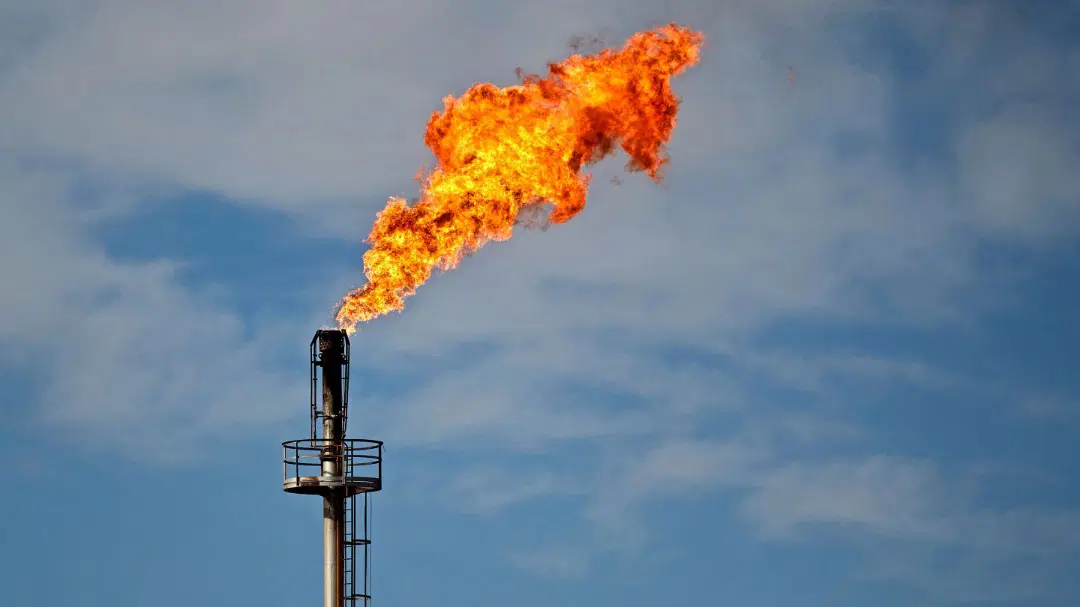
Despite the Federal Government’s gas flaring penalties and efforts to curb the practice, Nigeria lost an estimated 62,400 gigawatt-hours (GWh) of potential electricity generation from flared gas between 2024 and 2025, representing an 18.6 per cent increase from 50,800 GWh recorded during 2022 and 2023.
The losses come as the global oil and gas industry shifts from flaring associated gas to capturing and commercialising it for power generation, industrial use and exports.
Data obtained from the National Oil Spill Detection and Response Agency (NOSDRA) showed that the value of gas flared during the period stood at $2.2 billion, while defaulting operators, including International Oil Companies (IOCs) and National Oil Companies (NOCs), are liable to penalties amounting to $1.2 billion.
NOSDRA disclosed that companies operating onshore flared 380.6 million standard cubic feet (SCF) of gas, compared with 243.8 million SCF flared offshore. The agency added that the flared gas resulted in an estimated 33.2 million tonnes of carbon dioxide (CO‚ ) emissions.
The agency lamented that despite decades of interventions, gas flaring has persisted in Nigeria, wasting valuable energy resources and releasing harmful greenhouse gases into the atmosphere.
The findings align with the World Bank’s Global Gas Flaring Tracker Report, which ranked Nigeria among the world’s top nine gas-flaring countries in 2025, alongside Russia, Iran, Iraq, Venezuela, Mexico, Libya, Algeria and the United States.
Sponsored
According to the report, “the nine countries accounted for 83 per cent of all gas flared worldwide in 2025, despite contributing only 46 per cent of global oil production.” It added that global gas flaring rose to 167 billion cubic metres (bcm) in 2025, while Nigeria flared about nine bcm, making it the world’s seventh-largest gas-flaring nation.
Reacting, Professor Emeritus of Petroleum Economics, Wumi Iledare, said the trend reflects the absence of a commercially efficient gas-to-power value chain rather than merely weak enforcement.
“Gas flaring in Nigeria is not merely an environmental issue; it reflects a failure of power market economics, gas commercialisation and sector governance. Every molecule of gas flared represents lost opportunities to generate electricity, support industries, create jobs, earn export revenues and strengthen energy security,” he said.
According to Iledare, the country’s challenge is rooted in inadequate gas gathering infrastructure, an illiquid electricity market, pricing distortions and regulatory inefficiencies, all of which make flaring the easier option.
“While higher flare penalties are necessary, penalties alone will not solve the problem. They must be complemented by policies that encourage gas capture, infrastructure investment, market-based pricing and a financially sustainable electricity market where gas producers are assured of timely payment,” he said.
SPONSORED