

Politics
THE National Coordinator, National Counter Terrorism Centre (NCTC), Maj.-Gen. Adamu Laka, says Nigeria has adopted a victim-centred Disarmament, Demobilisation and Reintegration (DDR) roadmap to support conflict-affected communities and strengthen lasting peace.
Laka said the framework recognised that while eligible former fighters required structured pathways to disengage from violence, victims and affected communities must remain the primary focus of reintegration efforts.
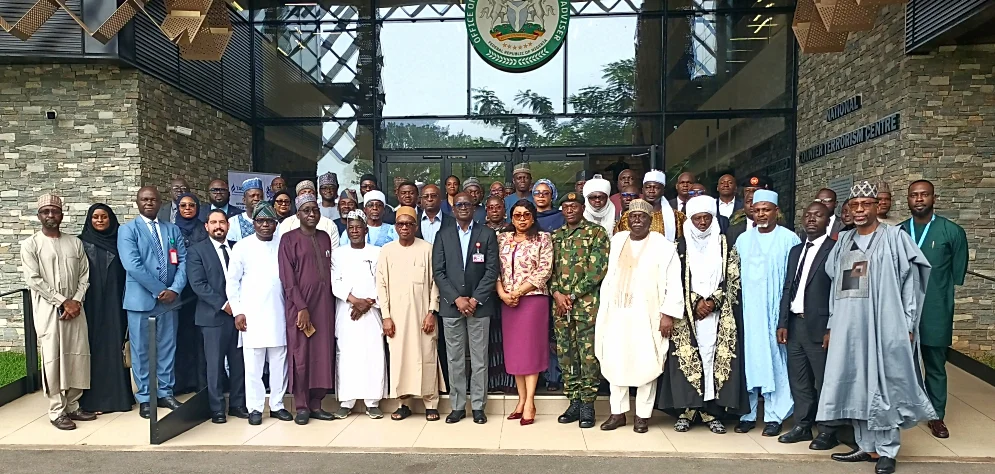
He spoke on Monday in Abuja at the National Validation Workshop on the Standard Operating Procedures for the National DDR Framework and pilot implementation in Kaduna, Katsina and Zamfara states.
He said the roadmap would guide transparent, accountable and coordinated implementation of DDR programmes, while promoting reconciliation, community resilience and respect for human rights.
Laka said the initiative complemented ongoing military operations by addressing the underlying drivers of violent extremism, banditry and other armed conflicts through sustainable non-kinetic measures.
He said military operations alone could not secure enduring peace without credible opportunities for disengagement, rehabilitation and safe reintegration of eligible individuals into their communities.
According to him, the framework is designed to promote reconciliation, strengthen community resilience and address conflict drivers responsible for terrorism, banditry and other forms of armed violence.
“Lasting peace cannot be achieved through kinetic operations alone. We must provide credible pathways that enable eligible individuals to disengage from violence while supporting victims and affected communities.”
“These Standard Operating Procedures will ensure that DDR programmes are implemented professionally, transparently and in full compliance with human rights and the rule of law.”
“Our expectation is that this workshop will validate practical procedures that strengthen Nigeria’s DDR architecture and support sustainable peace at both the federal and state levels,” he said.
Laka said consultations across Nigeria’s six geopolitical zones showed communities wanted a nationally coordinated, locally owned and human rights-based DDR system responsive to local realities.
He said the SOPs would define institutional responsibilities, strengthen inter-agency coordination and standardise implementation while ensuring compliance with the rule of law and human rights principles.
Laka said state-specific procedures for Kaduna, Katsina and Zamfara recognised unique security realities while maintaining consistency with the national framework for effective implementation.
He urged participants to critically review the draft documents to produce practical guidelines capable of strengthening Nigeria’s peacebuilding architecture at federal and state levels.
The Director of Preventing and Countering Violent Extremism at NCTC, Amb. Abimbola Wońosikou, said fragmented rehabilitation initiatives necessitated a coordinated national approach to breaking cycles of violence.
Wońosikou said State DDR Committees would drive implementation through collaboration among governments, security agencies, traditional rulers, women, youths, civil society and justice institutions.
She stressed that effective communication remained essential to correct misconceptions that DDR rewarded criminals, explaining serious offenders would still face prosecution while eligible participants received rehabilitation.
The Commander, Operation SAFE CORRIDOR, Brig.-Gen. Yusuf Ali, said nearly a decade of implementing DDR had generated valuable operational experience for supporting state governments.
Ali said the proposed framework would bridge longstanding gaps between federal policy and state implementation, making reintegration programmes more effective and locally coordinated.
He urged participants to become advocates for DDR by educating communities on its objectives and benefits, noting public understanding remained limited despite years of implementation.
Representing the Director-General of the National Centre for the Control of Small Arms and Light Weapons, retired Maj.-Gen. Bamidele Shafa, said reducing illicit arms remained central to lasting peace.
Shafa said many members of armed groups were coerced into violence and deserved opportunities to disengage through structured rehabilitation and reintegration initiatives.
He added that the centre would ensure accountability for surrendered weapons while preventing their recirculation into criminal networks, strengthening public confidence in the DDR process.
The DDR Technical Adviser, Dr Paul Nyulaku, said Nigeria had developed a framework rooted in international standards but adapted to the country’s unique conflict realities.
Nyulaku said extensive consultations across conflict-affected communities in Kaduna, Katsina and Zamfara ensured the framework reflected lived experiences rather than theoretical assumptions.
He maintained that DDR complemented justice by separating eligible participants from individuals responsible for serious crimes, thereby protecting victims while reducing future violence.
Conflict Adviser at the UK Foreign, Commonwealth and Development Office, Dr Ukoha Ukiwo, reaffirmed Britain’s commitment to supporting Nigeria’s pursuit of sustainable peace and human security.
Ukiwo said the SPRiNG Programme promoted evidence-based policymaking through research, inclusive consultations and partnerships involving government, communities and development stakeholders.
He said lasting peace depended on whole-of-government and whole-of-society approaches that deliberately included women and youths in peacebuilding and conflict prevention initiatives.
Chief of the United Nations DDR Section, Mario Nascimento, said Nigeria’s framework reflected global shifts towards community-centred approaches for addressing modern security threats.
Nascimento said effective reintegration required active participation of governments, communities, civil society and development partners because no institution could achieve lasting peace alone.
He commended Nigeria for developing a nationally owned DDR framework capable of supporting justice, reconciliation and regional knowledge-sharing on peacebuilding initiatives.
The News Agency of Nigeria (NAN) reports that the validation workshop had in attendance, representatives of the states government, traditional rulers and community leaders among others. (NAN)
A.I
July 13, 2026
Tags: Amb. Abimbola Wońosikou Brig.-Gen. Yusuf Ali NCTC retired Maj.-Gen. Bamidele Shafa SAFE CORRIDOR