
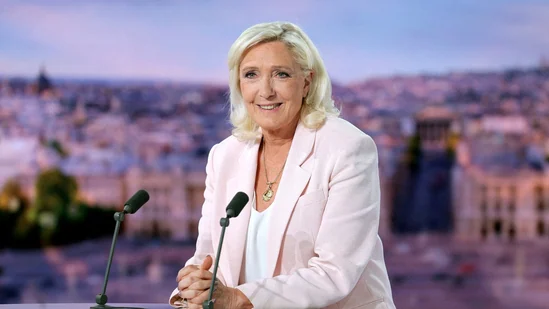
Marine Le Pen is running for the French presidency

FOR OVER half a century, a member of the Le Pen family has stood at every French presidential election bar one. This time, after a court in 2025 banned Marine Le Pen, leader of the populist-right National Rally (RN), from running for elected office for five years, it had looked as if next year’s presidential vote would mark the end of a dynastic era.

FILE PHOTO: French far-right leader Marine Le Pen said that the ban had posed “an enormous democratic problem”, and that its ending changed everything, enabling “the people to decide”. (REUTERS FILE)

But on July 7th, in an unexpected twist, the court of appeal in Paris upheld Ms Le Pen’s conviction for the misuse of European Parliament funds for party ends—yet lightened her sentence, freeing her to run. Hours later Ms Le Pen announced that she, not Jordan Bardella, her 30-year-old lieutenant, would make a bid for the presidency after all.

The RN leader’s decision ends 15 months of uncertainty, and sets France up for a highly unusual election. In its ruling, the court of appeal handed her a three-year jail sentence; two are suspended, and one is to be served with an electronic ankle tag. Crucially for Ms Le Pen, the court also shortened her ban and ruled that she had already served the ineligibility penalty.

Speaking on television, Ms Le Pen said that the ban had posed “an enormous democratic problem”, and that its ending changed everything, enabling “the people to decide”. That ruling, in effect, took the political decision out of the judges’ hands and put it firmly into hers. Ms Le Pen continues to claim that she is innocent. She said that she would now take her case to the highest court, the Cour de cassation, in part to contest the wearing of the tag (which will not be imposed while the appeal is under way).

For the RN, the decision puts an end to months of uncertainty and allows the party to begin its campaign proper. Ms Le Pen will now have the authority to shape its direction, take decisions on which there is policy disagreement (she wants to lower the pension age for some workers to as low as 60, from around 63; Mr Bardella is less sure) and keep the party’s identity as a populist outfit that promises to defend ordinary working families. She is a deputy for a constituency in the mining basin of northern France.

Ms Le Pen’s candidacy, however, will not resolve all tensions within the party. For Mr Bardella, who had for months geared himself up to stand for the presidency in her stead, it will relegate him back into second place. The young RN president has been pushing a different electoral strategy, based on marrying the party’s traditional working-class base and its politics of indignation to a middle-class electorate with a more fiscally responsible, business-friendly discourse. The pair insist that they will work together seamlessly; Ms Le Pen repeated that he would be her prime minister if she wins the presidency. But over the coming months such differences will inevitably strain the tie.

Ms Le Pen now begins her campaign with a handsome lead: she is on 32% in first-round voting, according to an Ifop poll in June, well ahead of either 20% for Edouard Philippe or 15% for Gabriel Attal (two of President Emmanuel Macron’s former prime ministers), depending on which of them stands. In the run-off, polls suggest she has a chance of winning, although is less well-placed than Mr Bardella would have been. Ms Le Pen remains a fearsome campaigner, with three presidential bids and bitter lessons learned behind her. She is one of France’s most popular figures, and will draw support from those who think that it is—at last—her time.

Even so, polls nine months ahead of voting are seldom an accurate indicator of the final result. It remains unclear who she would be up against in the broad centre. Ms Le Pen lacks the freshness and sense of renewal that a Bardella candidacy would have brought the party. Above all, the prospect of a leading presidential contender, however popular, campaigning under house arrest with an electronic ankle tag puts France in thoroughly uncharted territory.