

Senators voted 86-12 on Tuesday to advance the legislation, introduced in April 2025 by the late Senator Lindsey Graham. The vote took place as Ukrainian President Volodymyr Zelenskyy visited the Capitol after attending Graham’s funeral.
The bill aims to increase economic pressure on Moscow over its war in Ukraine. It would impose sanctions on Russian officials, oligarchs, financial institutions and the so-called shadow fleet used to evade restrictions on Russian oil exports.
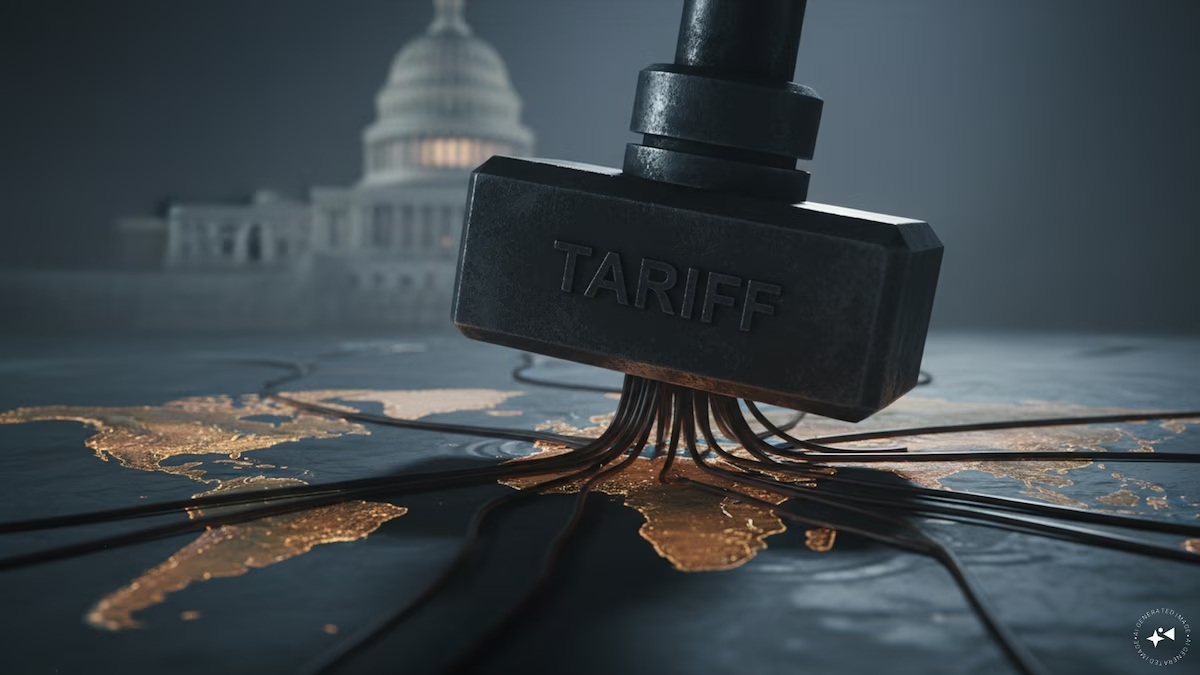
It would also authorise US President Donald Trump to impose tariffs of up to 100% on imports from countries that are among the largest buyers of Russian oil and gas, including India, China and other major purchasers of Russian energy. Supporters say the measure is intended to curb Russia’s energy revenues that help finance the war.
The revised version of the legislation also extends existing US sanctions authority targeting Iran’s energy and weapons sectors after Trump requested its inclusion.
Why India matters
India is the world’s second-largest buyer of Russian crude oil after China. Its reliance on Russian oil has increased following disruptions to global energy supplies caused by the conflict in West Asia and shipping disruptions through the Strait of Hormuz, prompting refiners to source more crude from Russia.
The US first targeted India’s Russian energy trade in August 2025, when Trump imposed an additional 25% tariff on Indian goods, accusing India of “fueling Putin’s war”. That raised the total US tariff on Indian goods to 50%, straining bilateral trade ties and stalling trade negotiations.
After the outbreak of the US-Iran war, Washington temporarily waived restrictions on Russian oil purchases, allowing India to resume imports. The US said those purchases would not generate profits for Russia.
According to the Centre for Research on Energy and Clean Air, India’s imports of Russian crude rose 34% in June 2026 to a record level. The imports were valued at €4.5 billion and accounted for about 36% of Russia’s crude oil export revenues.
Zelenskyy’s response
In a post on X, Zelenskyy said he met more than 60 senators from both parties and thanked them for their continued support for Ukraine.
Calling the Senate vote symbolic, he said, “It was an honor to be present as the votes were counted – 86 senators supported the bill. This is the first step toward implementing Lindsey’s plans, and certainly a step toward peace. It is important that this tool works.”
He also thanked the United States and lawmakers from both parties, saying, “Thank you to the United States and to both parties for your support.”
What happens next
The legislation still requires additional procedural votes and a final Senate vote before it can move to the House of Representatives, which is not expected to consider it before returning from its summer recess in September.
Some Democrats have raised concerns that the tariff provisions would give Trump excessive authority and could increase import costs for American consumers while affecting US allies.
Senator Richard Blumenthal had earlier said the bill would exempt countries buying Russian gas if their purchases account for less than 15% of Russia’s total gas imports.
What leaders said
“There is no greater way to honor Senator Graham’s legacy than to move forward with this bipartisan agreement,” six Republican and Democratic senators said in a joint statement.
“This bill is the one that will pass. This bill is the one that the president will sign,” Senator Richard Blumenthal said.
Representative Gregory Meeks criticised the proposal, saying: “This is not so much a sanctions bill as it is a massive backdoor authority for President Trump to impose more tariffs, including on our European allies, that hurt American families.”
(With input from agencies)