

Tim Bui scanned the sandwich shop menu, snapped a screenshot and FaceTimed his crew back at the graphic design shop. “Do you want the special or the shrimp cake?” he asked his buddies.
The special refers to the “Lynda special,” named for the Vietnamese pop singer who owns this local banh mi institution in the Westminster Super Center on Beach Boulevard.
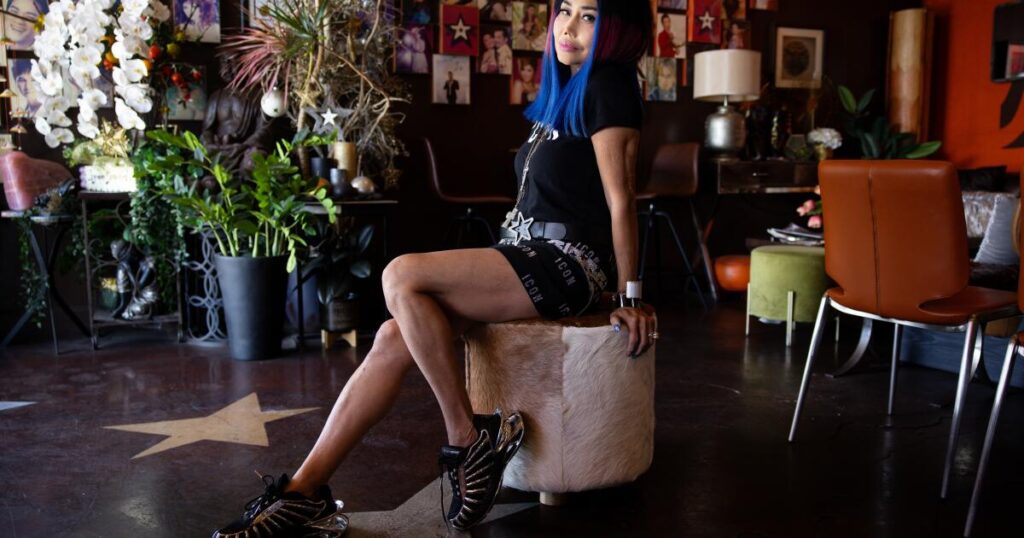
Nicknamed the “Vietnamese Madonna,” Lynda Trang Đài is known for synth-pop ‘80s hits such as “Supermarket Love Affair,” “Jump in My Car” and “Mercedes Boy.” And since opening Lynda Sandwich 15 years ago, she is also known for banh mi.
This afternoon marked the Anaheim creative director Bui’s third trip to Lynda Sandwich in two months. He says he’s hooked by the sandwich options — chicken sausage, pork meatballs, fried egg — ranging from $9 to $10. The “Lynda special” bestseller includes pork cold cuts, chả lụa sausage, chicken with pâté and Đài’s secret sauce.
Propelled by name recognition, online reviews and pricing, Lynda Sandwich has outlasted many others in Westminster’s hypercompetitive banh mi market, where as many as 10 sandwich shops populate a two-block stretch of Bolsa Avenue.
Orange County is home to the largest Vietnamese population outside of Vietnam, which has created an ecosystem where deep cultural ties meet aggressive pricing and rapid culinary innovation.
Inside Đài’s funky restaurant, there’s a mural of the Beatles, Michael Jackson, James Dean and Elizabeth Taylor, her entertainer heroes, painted on a backdrop of orange and brown, her favorite colors. American flags dot the entrance and the cash register, and 100-plus pictures of Vietnamese crooners line the wall.
The singer divides her time between managing the sandwich shop and flying to perform at a flurry of concerts around the country.
Đài, raised in Central Vietnam, escaped her communist homeland by boat in 1979 with her family. They eventually found their way to Southern California, where she began singing in high school. A fellow refugee discovered her and a coveted invitation followed — resulting in her first appearance on “Paris by Night,” the wildly popular Vietnamese-language variety show, similar to MTV, and packaged as a video series.
Stardom exploded. She could sing in both English and Vietnamese and fans flocked to see the performer for her fierce, dynamic stage presence and bold, provocative style.
These days, in between shows, she whips up her secret sauce that’s spread on each sliced baguette before it’s stuffed with chile slices, pickled carrot and daikon, ultra-thin cucumber and chicken, pork, beef, seafood or cold cuts.
“This is why customers come back,” she said. “There’s nothing frozen. People tell me the Lynda sauce is addictive.”
Banh mi, created by Vietnamese street vendors more than a century ago, is inspired by the French snack of pâté, butter and bread. It evolved into an achievement of textural contrasts that cut through the richness of pâté and cold cuts, layered with crisp herbs, fresh chiles, crunchy vegetables and tangy pickles — and eventually mayonnaise to replace butter.
Diners play guessing games to figure out the ingredients in Đài‘s sauce. Still, she isn’t dishing. “It may or may not” be mayo-based, she whispered, eyes twinkling.
Since the local customer base in Southern California is highly knowledgeable, even “mediocre” shops must maintain a high standard for the sandwich’s nonnegotiables: airy, crackly baguettes; rich homemade pâté, cold cuts or roast meats; bright pickled do chua; the freshest herbs; and a savory sauce to bind it all together.
Đài’s banh mi features a “low-dough” baguette with an extra-light interior.
In conversations, she touts how handy banh mi is. “To indulge in pho, you have to sit for a while. With banh mi, you can take it on the plane, take it camping or backpacking,” Đài said, with a flick of coiffed hair while greeting arrivals, gliding toward them in heels and a white minidress, as the bags ready for GrubHub piled up on her counter and locals called to place more orders for pick-up.
For years, consumers have witnessed banh mi price wars: Many shops are forced to keep prices low — sometimes significantly less than other sandwich types — due to the sheer density of competitors. If one seller raises prices, customers can often find a similar quality sandwich “just down the road” for a better bargain.
“Do you remember when we were teenagers in the ‘80s, when banh mi was $1.50 — or buy three, get one free?” said Andrea Nguyen, author of “The Banh Mi Handbook.” “Of course, times have changed.”
Still, to get diners into the restaurants now, “with all the food you can imagine and available in Little Saigon,” Nguyen said, “you have to offer convenience, good taste and a great deal.”
Đài said she doesn’t use ingredients as gimmicks, instead opting for flavor and fair pricing. Her sandwiches start at $8 to less than $10, including the bestselling chicken rotisserie banh mi at $8.50.
The price is right “for a banh mi because it is the most reliable meal,” said Golden West College student Hao Nguyen, who drove in from Huntington Beach. He said he stops at Lynda’s for the grilled chicken sandwich three times a month.
When Lynda Sandwich first opened, banh mi was still a novelty, Đài said, adding: “Now it’s dominant — available anywhere.”
“I’ve been looking at what type of banh mi is served around the world, and in some cases, people first discovered it in Southern California and replicated it wherever they live,” Nguyen said. “It’s a continuing trend,” she added, noting that for a shop like Lynda Sandwich, older Vietnamese Americans may be more familiar with her music and greatest hits, and feeling nostalgic, steer younger generations toward her affordable food.
“Everywhere I go, I try to eat banh mi or look for the tastiest Vietnamese food since it’s among the best food,” Đài said. “That’s why I want to keep serving it. It’s my purpose. I love to feed everyone.”