

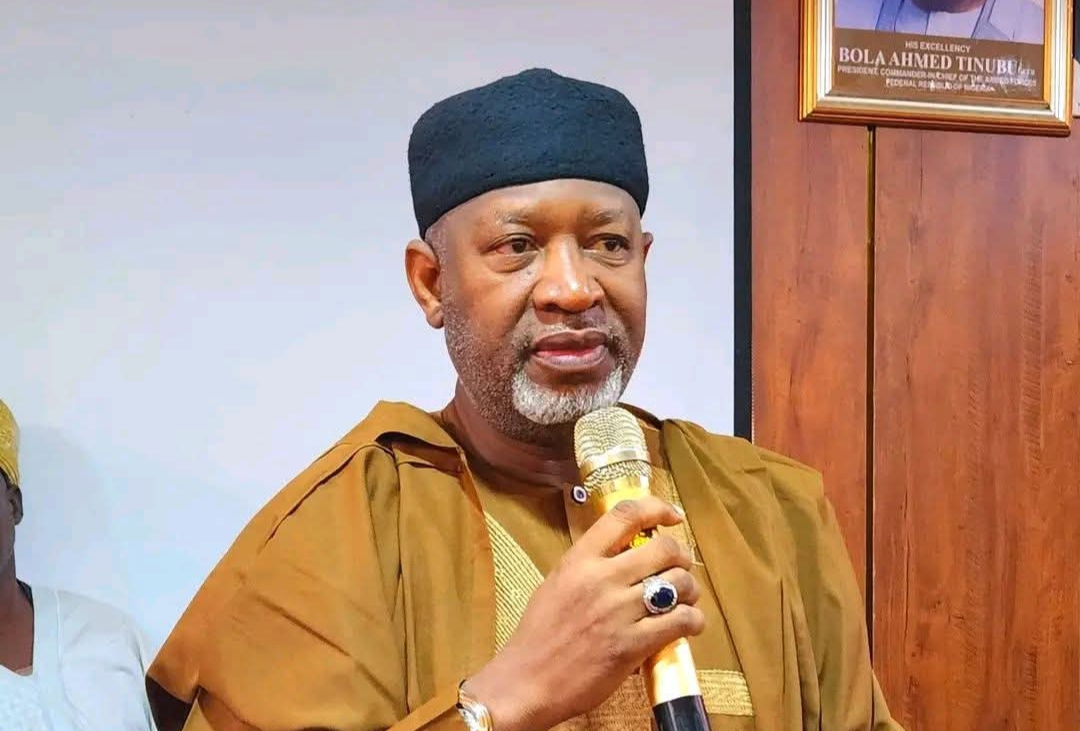
Nigeria’s Former Aviation Minister, Hadi Sirika, has described the late former President Muhammadu Buhari’s greatest legacy as his unwavering commitment to the masses, saying the former Nigerian leader remained true to his pro-people philosophy throughout his life and administration.
Sirika made the remarks while reflecting on Buhari’s legacy following the former president’s death. His comments come as President Bola Tinubu and Buhari’s associates have unveiled plans to commemorate the late leader’s first posthumous anniversary, with tributes continuing to pour in from across Nigeria and beyond.
“I am not exactly sure whether he has been vindicated, but there are a dynamic number of opinions regarding his legacy. Whether the public commentary is accurate or inaccurate remains quite debatable.
“For me, his greatest legacy was his commitment to staying true to his character. He is a pro-people social democrat, which he demonstrated throughout his life and governance. His primary concern has always been the masses, and he remains deeply passionate about uplifting those at the bottom of the ladder,” he remarked.
Comparing Buhari and Tinubu’s administrations, Sirika said the two leaders governed under different circumstances and adopted different approaches. He described Tinubu as “very bold” for removing the fuel subsidy and floating the naira, but said Buhari withheld both reforms simultaneously out of concern for their potential impact on ordinary Nigerians.
“The times are different, and so are the styles of governance. President Bola Tinubu has been very bold in removing the fuel subsidy and floating the Naira, operating under the belief that these moves will positively impact the country.
“During President Buhari’s tenure, I had discussions with him regarding both the subsidy and the Naira. He believed the subsidy was harmful, but he also famously questioned, ‘Who is subsidizing whom?’ As to why he did not implement both policies simultaneously, it was due to concerns over the potential negative impact on the citizens,” he disclosed.
Responding to claims by the Tinubu administration that Buhari left behind an economy requiring painful reforms, Sirika rejected the criticism, describing it as the current government’s opinion. He maintained that Buhari performed “exceptionally well” economically, adding that, based on his experience in government, Nigeria was in a good state in terms of both economic and social indicators.
“That is the opinion of the current government. I don’t want to get dragged into a debate about whether the country was plunged into hardship due to inaction. The truth is that President Buhari performed exceptionally well with the economy. I am not an economist, but having served in the government, I saw firsthand that the country was in a good state regarding both economic and social indicators,” he maintained.
On whether Buhari left behind resources for his successor and a stable nation, Sirika said he believed the former president handed over a flourishing country. He added that the policies pursued by both Buhari and Tinubu were driven by the vision of the All Progressives Congress and shaped by the exigencies of their respective times.
“I believe so. I believe he left a flourishing country,” he stated.
“However, I will say categorically that the policies pursued by President Buhari and the ones being pursued by President Tinubu are both driven by the vision of our party, the APC. These decisions are not made off the cuff; they are based on the exigencies of the time to do what is best for the country,” Sirika added.
Speaking on why Buhari was nicknamed “Baba Go-Slow,” Sirika revealed the label stemmed from the time the former president took to appoint ministers and constitute his cabinet. He said Buhari believed in taking a measured approach to governance, arguing that carefully considered policies were preferable to hasty decisions while highlighting what he described as the administration’s achievements in security and the economy.
“That nickname came early in his administration when it took time to appoint ministers and establish the government. He jokingly responded to it back then, saying something to the effect of, ‘Go fast, go where?’
“In reality, there is always regret in haste. It is better to think through policies thoroughly and allow them time to work. To be fair to President Buhari, he led the government the best way he could. When he arrived, the primary issues were insecurity, the economy, and systemic corruption.
“Look at the security situation we inherited: there were 17 local governments entirely excised from Nigeria, flying the Boko Haram flag. Bombings were happening weekly in Maiduguri, Abuja, and elsewhere. Checkpoints were stationed every two to three kilometers. President Buhari came in, decimated Boko Haram, recaptured those 17 local governments, recovered a substantial number of the abducted Chibok girls, and removed the restrictive checkpoints so people could move, farm, and go to school freely.
“On the economic front, he built up the foreign reserves and established funds for entrepreneurship and private sector access. The economy was doing well, and new companies were continuously coming up,” he highlighted.
Turning to the fate of the airport concession and Nigeria Air projects, the former Aviation Minister said both initiatives were completed under the Buhari administration but were stalled by ongoing litigation.
He maintained that the concession process was transparent and that Nigeria Air was ready for launch before court cases halted its implementation.
“Regarding the airport concessions, the process was fully completed. The winners for the Lagos, Port Harcourt, Kano, and Abuja airports were declared. However, one of the bidders took the matter to court. Once the court resolves the issue, the process should continue, allowing the winners to take over and run the assets. It was a highly transparent process led by the Infrastructure Concession Regulatory Commission (ICRC). The ICRC will tell you that these aviation projects were among the only projects in the country to clear every single step transparently, with the entire process open to the public online.
“The national carrier, Nigeria Air, is unfortunately also a subject of ongoing litigation involving the Airline Operators of Nigeria (AON), led by Air Peace, Azman, and United Nigeria Airlines. Because the matter is sub judice, I cannot comment extensively. The project was fully concluded and about to launch when they went to court. Once the legal system deals with it, I believe the airline will fly,” he assured.
Favour Odima
Follow us on: