


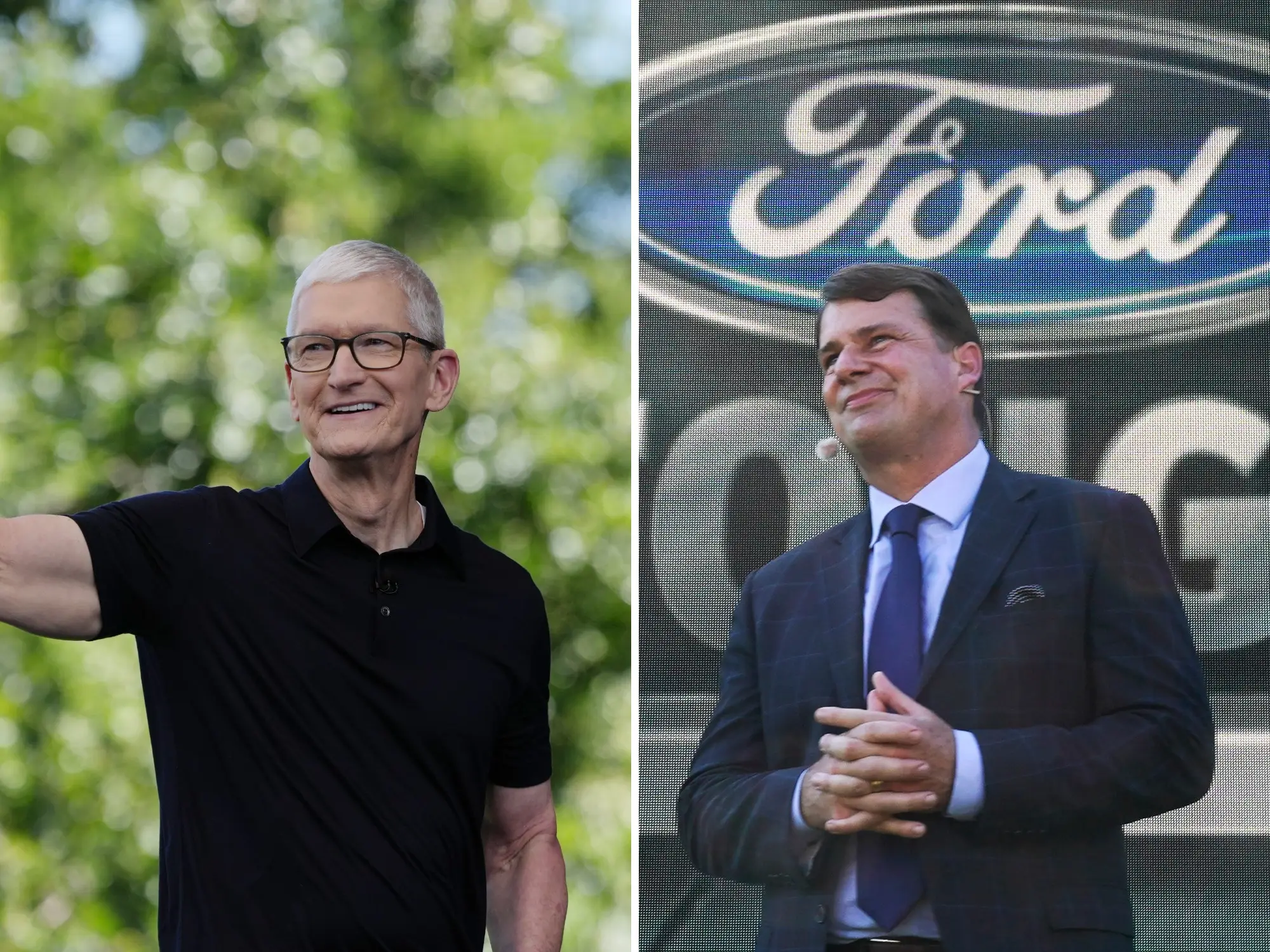
Apple is moving deeper into Ford’s cars.
On Thursday, the companies announced that Ford will integrate Apple Maps into the next generation of its lower-cost electric vehicles, called the universal EV platform.
The deal gives Apple a much larger role in Ford’s next-generation electric vehicles. Their partnership has historically centered on CarPlay, the tech giant’s phone-projection system. Apple’s new partnership will now power built-in navigation and help inform Ford’s next hands-free driving system.
And there’s a big change for Android users: Drivers will not need an iPhone to use Apple Maps.
The navigation system will run natively on the vehicle’s displays and communicate with other parts of the car, providing traffic information, destination searches, EV route planning, and battery preconditioning.
Ford tells Business Insider that the system could also enable location-aware features, such as automatically opening a driver’s garage door when the vehicle arrives home.
That tech is set to debut in the yet-unveiled $30,000 EV pickup truck, which is expected to reach dealerships in 2027.
The partnership will also extend into autonomous driving tech. Ford’s Latitude AI subsidiary will use road-level information from Apple Maps to develop a next-generation hands-free driving experience.
The companies said the system is intended to work seamlessly from a highway’s entrance ramp to its exit ramp.
“This partnership is designed to make advanced technology simple, useful, and intuitive in our customers’ everyday lives,” a Ford representative said in a statement sent to Business Insider.
Technology is at its best when it feels simple, intuitive and genuinely useful. That’s the idea behind our new midsize electric vehicle, the first on our Universal Electric Vehicle Platform.
To give @Ford customers the ultimate driving experience, we’re proud to be working with… pic.twitter.com/NMgvGfUplQ— Jim Farley (@jimfarley98) July 23, 2026
The partnership puts Ford on a very different technology path compared to its EV rivals.
Its decade-old Detroit nemesis, General Motors, has moved away from Apple CarPlay in its newer EVs — and GM CEO Mary Barra has said it plans to eventually phase out both CarPlay and Android Auto across its entire lineup.
GM is instead building around its own interface and Google’s automotive software, and has highlighted its software business as a high-margin profit driver during recent earnings calls.
Tesla and Rivian have also resisted adding Apple’s software into their vehicles, preferring to control their vehicles’ central screens and software ecosystems. Both offer individual Apple services or integrations: Rivian added a native Apple Music app and Apple Key integration, while Tesla lets owners use its vehicle app through the Apple Watch.
Read the original article on Business Insider