

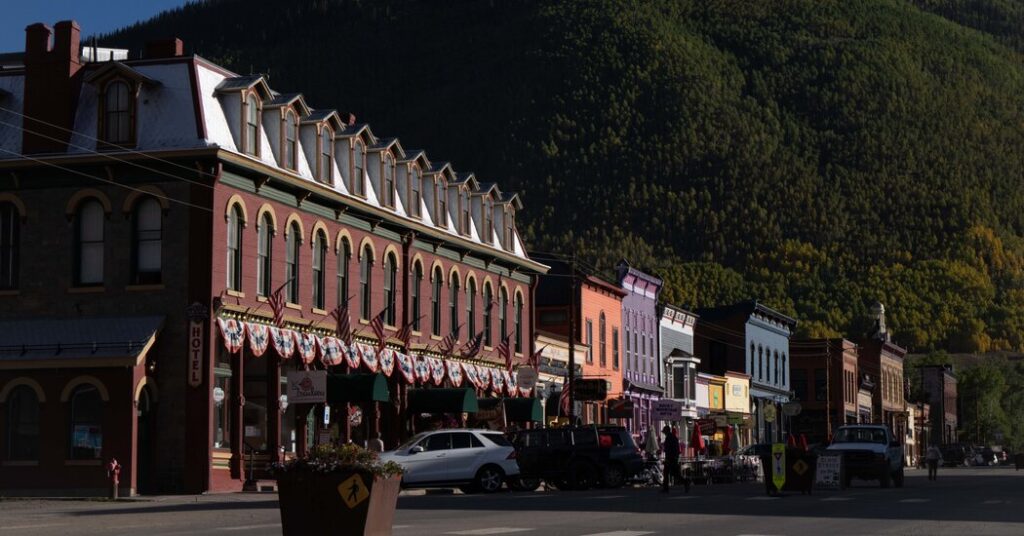
Most years on the Fourth of July, scores of people in the small alpine town of Silverton, Colo., line up along its winding roads, fill its parking lots with lawn chairs and peer up at the night sky, hoping to see the community’s yearly marquee event: a firework show.
For a town of less than 1,000 residents, the fireworks show is a high point, capping off a week of old-school American events to celebrate the country’s birthday, including block parties, bull rides, picnics and parades.
But this year, there will be no show.
As the United States gears up for its 250th anniversary, wildfires that have been tearing across western states have forced some local governments to rethink celebration plans.
“Fireworks are canceled for all of us, quite frankly,” said DeAnne Gallegos, a spokeswoman for San Juan County, which encompasses the town.
Wildfire season in the United States is off to an early and intense start: Firefighters are battling infernos in California, Arizona, New Mexico and more western states. On Sunday, three died in a blaze on the Utah-Colorado border.
After a warm winter and severe droughts, the landscape out west is highly flammable, and full of dry grass, brush and trees. Extreme heat and heavy winds, expected this Fourth of July, could help fires spread rapidly.
In 2024, fireworks started nearly 30,000 outdoor fires, including wildfires, dumpster fires and others, the National Fire Protection Association has estimated. Each year, the organization records a spike in wildfires on July 4 and 5, said Michele Steinberg, director of the N.F.P.A.’s wildfire division.
That’s because a firework can “ignite anything flammable around it” if it hits the ground burning or sends sparks flying, Ms. Steinberg said.
Some wildfire-prone cities moved away from fireworks years ago. Since 2023, Salt Lake City has instead held drone shows, a spokesman for the city said, flying hundreds of synchronized, illuminated drones in patterns above parks. Park City, Utah, and Aspen, Colo., do the same.
This year, the severely hot and dry weather has prompted new changes. In Utah, Gov. Spencer Cox has temporarily restricted fireworks statewide, allowing municipalities to designate specific areas for their use. From Nebraska to Nevada, a host of local authorities have altered their plans.
“People really need to abide by those orders,” said Julie Heckman, executive director of the American Pyrotechnics Association. “This is not the time to celebrate with fireworks when the conditions don’t warrant it.”
Fireworks have long been a staple of the holiday in Silverton, where the show has not been canceled since the pandemic, Ms. Gallegos said. In the meantime, at least one nearby town, citing the risk of wildfires, has made the switch to a drone show. In Silverton, that “went over like a lead balloon,” she said.
But this year, canceling was “the most prudent decision,” as the region battles an ongoing drought and resources stretch thin, Ms. Gallegos said. Local authorities are already battling the Gold Mountain fire, burning in nearby Ouray County.
The municipality of Ouray has also canceled its fireworks and water fights, as well as another tradition involving water sprayed from fire trucks, its mayor said.
“It would be disrespectful to have water fights on Main Street when there’s a wildfire burning with smoke in sight,” said the mayor, Michael Underwood.
Other places have adopted more extreme measures. Across the state, Colorado Springs canceled or postponed seven firework shows as a large wildfire burns about an hour south. Alliance, a city in western Nebraska, has restricted the sale and use of fireworks within city limits.
Residents of Silverton are honoring two anniversaries this year: their county’s 150th and the country’s 250th. Still, “there are so many more ways to celebrate community than fireworks,” Ms. Gallegos said.
“That has been what is our biggest takeaway.”