

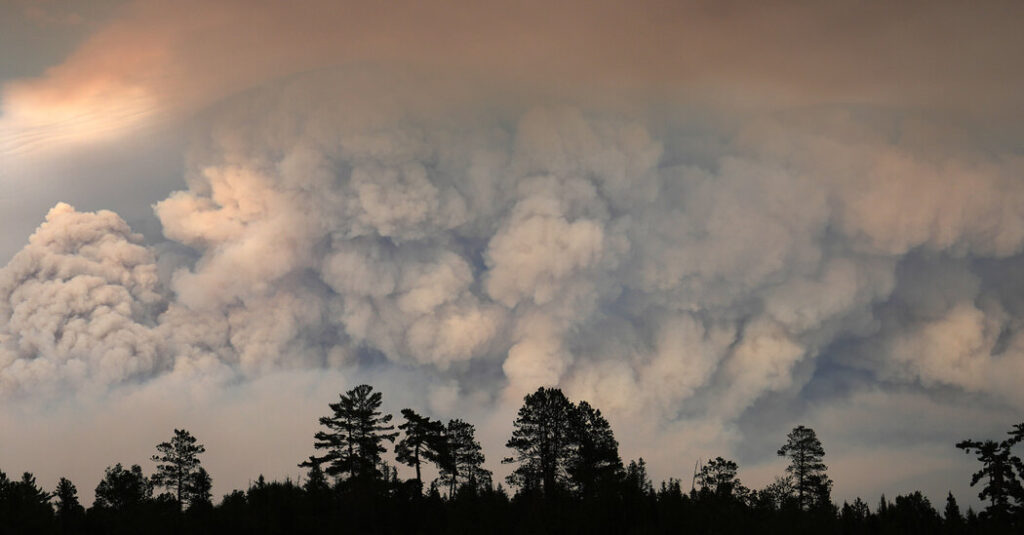
More than 15 wildfires continue to lash portions of a beloved national forest in northern Minnesota, carrying dense plumes of smoke from the Midwest to the East Coast, according to the U.S. Forest Service.
At least 44,000 acres of boreal woodlands have succumbed to fire in Superior National Forest, a three-million-acre wilderness along the U.S.-Canada border.
High temperatures, low humidity and unrelenting winds have overwhelmed the region with raging fires and hazardous smoke. Officials believe lightning strikes ignited most of the blazes.
The Forest Service on Tuesday shuttered the Boundary Waters Canoe Area Wilderness, a popular recreation hub within the forest, delivering an emotional blow to Minnesotans, who have mourned the closure on social media and the future it may foreshadow.
Local authorities have issued varying degrees of evacuation orders in the counties neighboring Superior National Forest. Lake County has ordered residents to leave immediately, while St. Louis and Cook Counties have signaled a full evacuation order may be imminent.
Fire growth has undulated over the past month. Response teams laid containment lines, but as fire-favorable conditions have persisted, flames breached those defenses.
At more than 14,000 acres, the largest blaze in the Boundary Waters is the Thumb Fire, which has encroached into Canada. Air support has been activated, according to the Forest Service.
And “fire weather concerns” may increase into next week, according to the National Weather Service.
Air quality alerts remain in effect from Minnesota to New York, with smoke continuing to affect “large areas of the Midwest and Northeast over the next several days,” the Forest Service said in a statement on Thursday.
On Monday, officials said that eight rangers were evacuating the Boundary Waters, an area roughly the size of Delaware. By Thursday, there were 30 rangers traversing the million-acre expanse in teams of two, going lake by lake with canoes.
More than 1,000 lakes stretch across the Boundary Waters’ rugged terrain.
“There are literally thousands of people who could be out there,” Margo Whitt, a public information officer representing Superior National Forest, said in an interview on Thursday, referring to people in need of evacuation.