

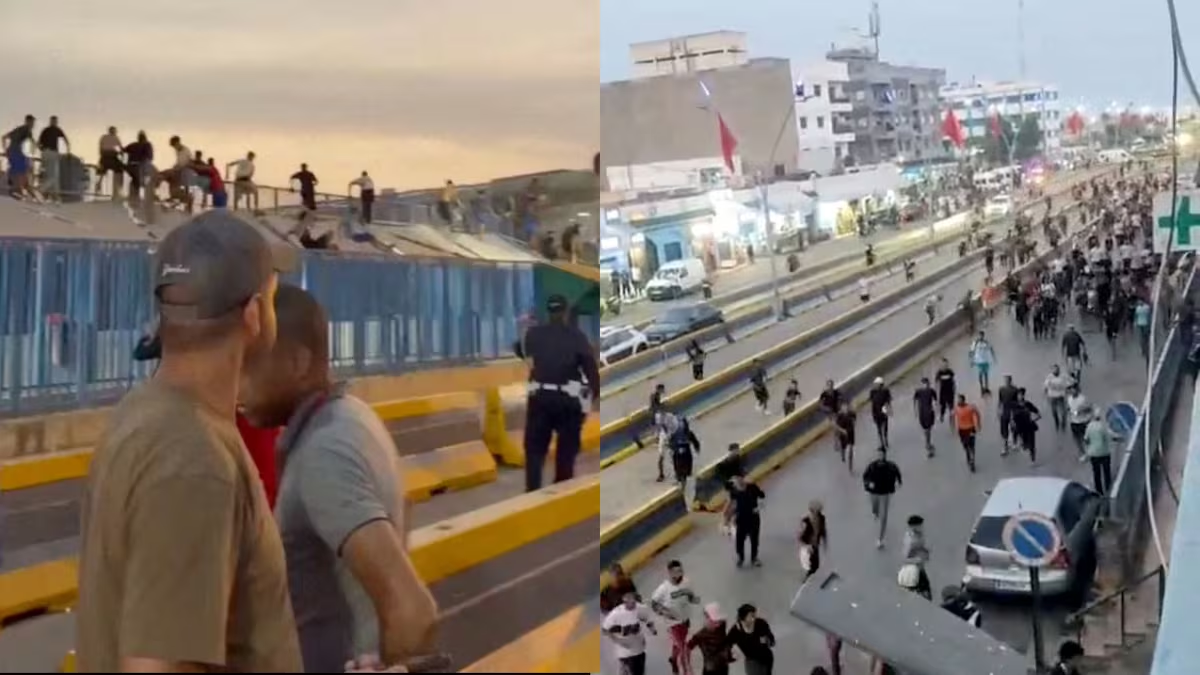
Thousands of migrants have entered Ceuta by swimming around a breakwater or breaking through the border fence, overwhelming the tiny Spanish enclave and prompting Madrid to deploy troops and additional police.
The migrants, many of them Moroccans, crossed into Spain’s North African enclave of Ceuta from Morocco on Thursday, July 30, in one of the largest such movements since 2021.
Spain’s state broadcaster TVE estimated that between 2,000 and 3,000 people had entered the territory, Reuters reported. At least nine bodies were recovered as migrants attempted the dangerous sea crossing.
The crossings have also triggered a political backlash beyond Spain. Italian Prime Minister Giorgia Meloni said she was prepared to consider “extraordinary measures” and raised the possibility of suspending the Schengen Area with Spain.
“The images coming from Ceuta are striking and demonstrate, once again, that uncontrolled illegal immigration poses a concrete threat to the security of Europe’s borders,” Meloni wrote on X.
She said Italy would convene the relevant government bodies and was prepared to take measures “including the suspension of the Schengen Area with Spain”. Meloni did not explain precisely how such a suspension would operate.
Videos showed hundreds swimming around the Tarajal breakwater using inflatable tubes and other flotation devices. Others forced their way through a border gate and ran into the city after security personnel were overwhelmed.
What is Ceuta, and why are migrants trying to reach it?
Ceuta is a small Spanish-controlled territory on Morocco’s northern coast. Along with the nearby enclave of Melilla, it forms the European Union’s only land border with Africa.
Entering Ceuta places migrants on Spanish territory and by extension, EU territory, where they can seek asylum. However, reaching the Spanish mainland is not automatic, and asylum claims must still be assessed.
What triggered the sudden crossing?
The immediate trigger remains unclear.
Spanish authorities have accused people-smuggling networks of encouraging the crossings following a Supreme Court ruling restricting the immediate return of migrants who enter Ceuta by sea without due process.
However, rights activists have questioned whether those attempting the crossing would have known about the ruling.
People had been gathering in the nearby Moroccan town of Fnideq before attempting to reach Ceuta, while Moroccan security forces used water cannons and other measures to prevent further crossings.
How has Spain responded?
Spain has reportedly deployed 60 troops and 200 additional police officers to reinforce security in Ceuta. The enclave’s authorities sought a national emergency declaration after reception facilities were overwhelmed and hundreds of migrants were left sleeping outdoors.
Prime Minister Pedro Sanchez and Interior Minister Fernando Grande-Marlaska are expected to visit Ceuta on Friday to meet local authorities and security personnel.
Madrid said it was coordinating with Morocco and would return those who entered irregularly, while ensuring that people seeking international protection received due process.
Has this happened before?
Yes. In May 2021, thousands of people, including many minors, entered Ceuta over two days after Moroccan border controls were relaxed amid a diplomatic dispute with Spain.
The latest surge has revived concerns that migration could again become a pressure point in relations between Madrid and Rabat, although both governments have publicly emphasised cooperation this time.
(Edited by : Tenzin Norzom)