

Opinion
By Paul Ejime
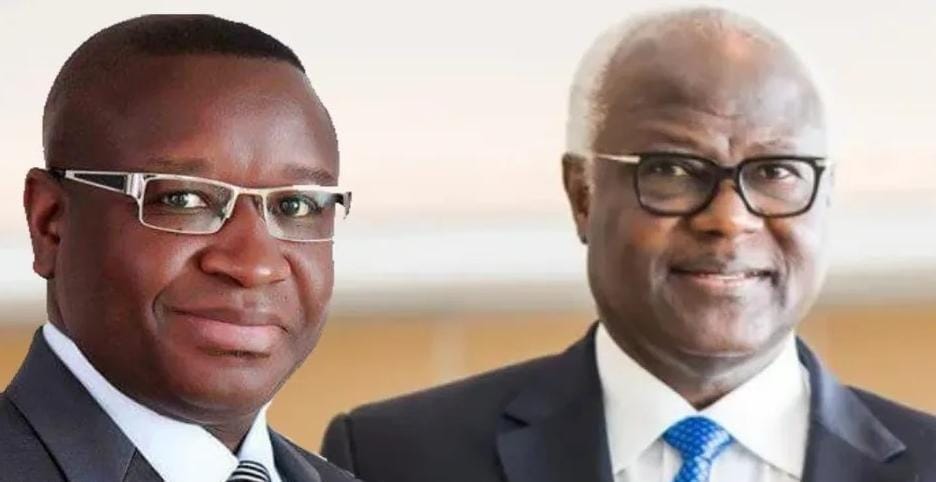
SIERRA Leone’s government has discontinued the treason trial of former President Ernest Bai Koroma, paving the way for his return to his country as a freeman after more than two years of exile in Nigeria.
Following the 2023 post-election crisis, including a reported military coup attempt, the government of President Julius Maada Bio, who claimed victory in the disputed vote, filed treason charges against Koroma, which he denied.
As part of the ECOWAS-led international mediation, Nigeria granted Koroma refuge under a court-sanctioned medical stay in January 2024.
“Today, I received the announcement by the Honourable Attorney-General and Minister of Justice that the criminal proceedings instituted against me have been discontinued in accordance with the laws of the Republic of Sierra Leone,” Koroma said in a statement dated 14 July 2026.
He expressed his gratitude to the ECOWAS Authority of Heads of State and Government, the President of the ECOWAS Commission and former Heads of State “…for their unwavering commitment to peace, dialogue and regional stability.”
“I am especially indebted to His Excellency President Bola Ahmed Tinubu… …the government and people of Nigeria …throughout the process,” Dr Koroma said.
He also “acknowledged with appreciation, the role played…” by his compatriot “…President Maada Bio and all those, whose efforts guided by the constitution and the rule of law, have contributed to bringing this matter to its conclusion,” the statement added.
Bio was reported to have insisted that Koroma must leave Sierra Leone and, on the eve of his departure, said the court’s gesture was meant to demonstrate his government’s “commitment to justice and goodwill,” noting that the trial was not a political witch-hunt.
Diplomatic sources said that with the discontinuation of the trial, Koroma is now free to return home whenever he chooses.
According to the BTI 2026 Country Report, Sierra Leone’s “democratic system has been weakened” by the “prolonged political stalemate following the 2023 elections…”
The Report said “this government lacks legitimacy in the eyes of opposition members, their supporters and some external observers,” and “To restore the credibility of democratic processes and mechanisms, it will be crucial to fully implement the recommendations of the Cross-Party Committee’s review – for example, regarding (political) party financing regulations, the opaque conduct of the Electoral Commission Sierra Leone (ECSL), and the use of state resources in election campaigns.”
“In addition, it is critical to investigate the violent protests of August 2020 and the alleged coup attempt of November 2023. Restoring the democratic legitimacy of the political system will require a thorough and transparent analysis of these events, facilitated by a third, independent party such as the Moral Guarantors identified in the peace agreement following the (1991-2002) civil war,” the Report added.
Meanwhile, as President Bio basks in the euphoria of hosting ongoing ECOWAS Statutory meetings, ending with a regional summit on July 19, the legacy of his one-year leadership of the ECOWAS Authority, expected to end during the summit, will come under severe scrutiny.
It is on record that instead of finding concrete solutions to the coup-epidemic in the region, where four of ECOWAS member States are now under military dictatorships and three, having withdrawn their membership and formed the Alliance of Sahel States, AES, Bio appeared to be lending support to former Guinea-Bissau President Umaro Sissoco Embaló, who organised a self-coup in November 2025, to avoid an electoral defeat.
Independent observers had expected ECOWAS to stand firm and insist on the release of the results of the November 2025 election; however, under Bio, the regional organisation is accused of supporting the controversial transition programme being pursued by Embaló’s military junta allies, with the prospect of bringing him back to power through a planned December 2026 election.
Diplomatic sources have condemned the disturbing discrepancy between the positions of the ECOWAS political leaders and technocrats at the Commission, who are canvassing a hard line, including barring Embaló and officials of the Bissau military junta regime from any fresh elections in Guinea-Bissau.
The Guinea-Bissau leadership crisis has become a litmus test for ECOWAS on how to redeem what is left of its reputation or public perception.
A new ECOWAS Commission management team and Chair of the ECOWAS Authority are expected to emerge from the Freetown summit, as the international community watches with keen interest what the regional leaders will decide on the way forward in Guinea-Bissau.
Allowing Embaló to profit from a self-coup is not only a blatant violation of the ECOWAS protocol against unconstitutional change of government, but it will also amount to setting a dangerous precedent in a country notorious for political instability and in a politically restive region.
***Paul Ejime is a global affairs analyst and consultant on peace & security and governance communication.
A.I
July 15, 2026
Tags: Paul Ejime President Julius Maada Bio