

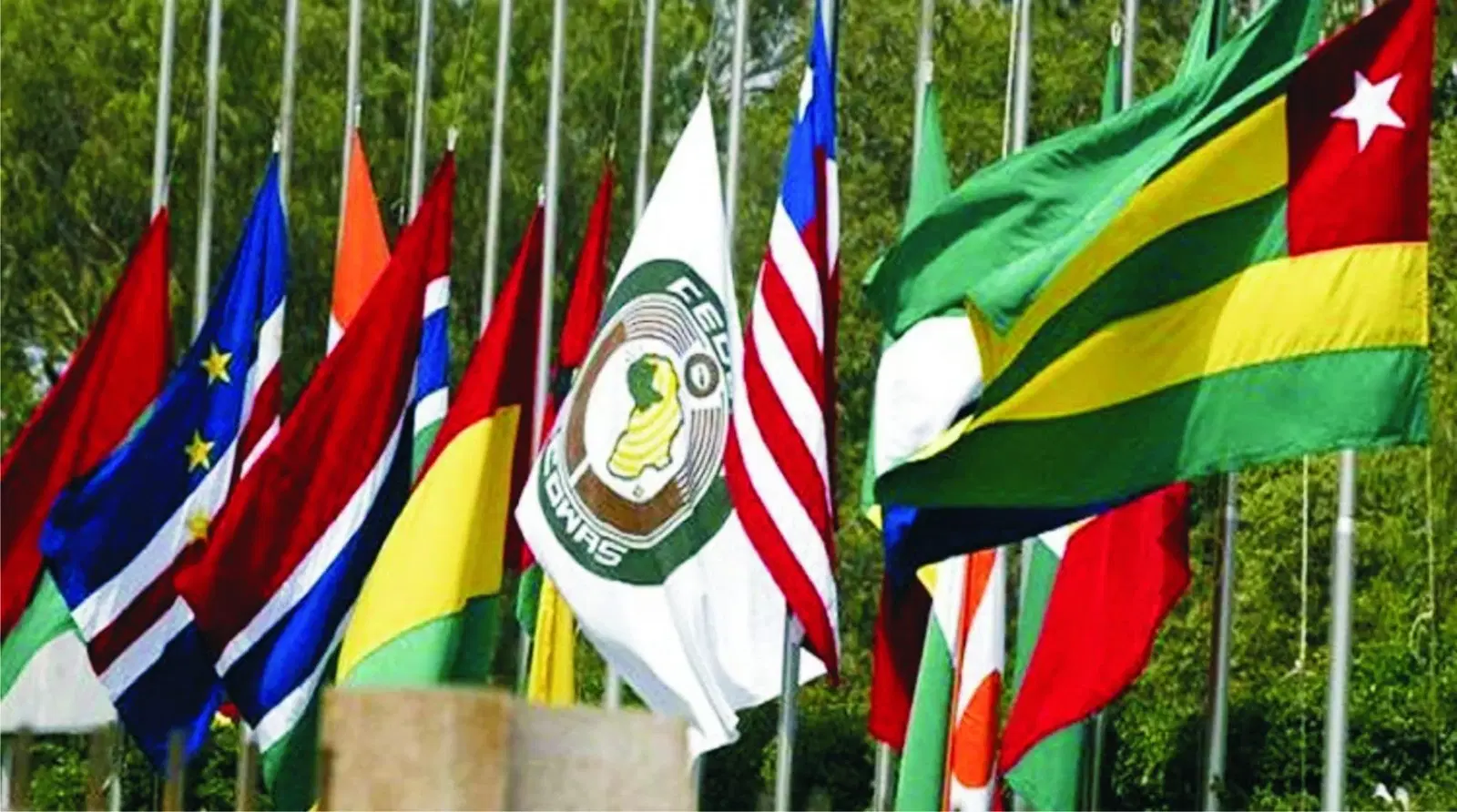
The Economic Community of West African States, ECOWAS, has reaffirmed its commitment to launching the long-awaited single regional currency, the ECO, in 2027.
According to the regional body, this is a major step towards deeper economic integration, stronger regional trade and sustainable growth across West Africa.
The decision was one of the major outcomes of the 69th Ordinary Session of the ECOWAS Authority of Heads of State and Government held on Sunday in Lungi, Sierra Leone, under the chairmanship of Sierra Leonean President, Julius Maada Bio.
In the final communiqué issued yesterday, the leaders said ECOWAS economies remained resilient, despite global economic challenges and projected a favourable outlook for 2026, supported by declining inflation, lower public debt-to-GDP ratios and a widening current account surplus, although fiscal deficits remain a concern.
On the single currency programme, the body declared that “the authority reiterates its firm commitment to the launch of the ECO in 2027 as a key instrument for deepening regional economic integration and promoting sustainable, inclusive and resilient growth within the Community.”
According to the communiqué, the ECO will initially be adopted by member states that meet the agreed convergence criteria, while countries yet to qualify will receive support to enable them join the regional currency at a later stage.
It welcomed the registration of the name “ECO” with African Intellectual Property Organisation and directed the commission to secure trademark registration with other regional and international intellectual property bodies.
Beyond the currency programme, the authority also expressed concern over worsening insecurity in the Sahel and Lake Chad Basin, condemned attacks by terrorist groups and endorsed the revised roadmap for activating the ECOWAS Counterterrorism Brigade, with full operational capability expected by July 2027.
Member states were urged to clear outstanding community levy arrears earmarked for financing the regional counterterrorism force.
The communiqué “strongly condemns the increasing spate of banditry, kidnappings and abductions of school children, particularly in Northern Nigeria.”
It also “expresses its solidarity with the people of Nigeria and commends President Bola Ahmed Tinubu for the swift actions taken to secure the release of victims and the measures put in place to combat the menace.”
Sponsored
ECOWAS also highlighted worsening humanitarian conditions caused by conflict, terrorism, displacement, climate-related disasters and food insecurity, directing the commission to strengthen resource mobilisation and coordinate humanitarian responses, including support for voluntary return of migrants from North Africa.
On relations with the Alliance of Sahel States, ECOWAS extended the mandate of Chief Negotiator, Dr. Lansana Kouyaté, until December 2026 and reaffirmed that negotiations with Burkina Faso, Mali and Niger would continue only as a unified bloc.
The leaders also raised concerns over food insecurity and rising fertiliser prices affecting agricultural productivity across parts of the region.
They welcomed measures taken by member states to cushion the impact of the fertiliser crisis and called for accelerated implementation of ECOWAS Rice Agenda and Regional Rice Roadmap to reduce food imports and strengthen regional food sovereignty.
The Authority reaffirmed its commitment to the ECOWAS Protocol on Free Movement of Persons, Right of Residence and Establishment, stressing the need to preserve regional mobility, facilitate cross-border trade and strengthen economic cooperation.
It added that ongoing engagements with the Alliance of Sahel States should safeguard regional movement and economic exchanges.
ECOWAS strongly condemned continuing xenophobic attacks against Africans in South Africa, particularly West Africans, urging South African government to protect foreign nationals and permanently address the problem, while also backing Ghana’s proposal to place the issue before the African Union Assembly.
On trade, the summit warned that increasing bilateral agreements by individual member states could weaken the ECOWAS Customs Union and directed the commission to coordinate common regional positions during international negotiations.
On aviation, ECOWAS reiterated its determination to reduce the cost of air transport across West Africa, applauding Côte d’Ivoire as the only member state to have removed applicable aviation taxes.
It urged others to accelerate reforms, and called on development finance institutions to support investments in regional aviation infrastructure.
On peace and security, ECOWAS acknowledged progress in democratic governance but expressed concern over terrorism, political instability and humanitarian crises across the region.
It urged Guinea-Bissau’s transition authorities to ensure transparent and inclusive constitutional and electoral processes, respect human rights, release detained political figures and work towards restoring constitutional order. Senegal was appointed facilitator to support dialogue in the country.
The leaders commended the peaceful conduct of elections in Benin, Guinea, Cabo Verde and Côte d’Ivoire and directed the commission to continue supporting member states preparing for elections later this year and in early 2027
SPONSORED