

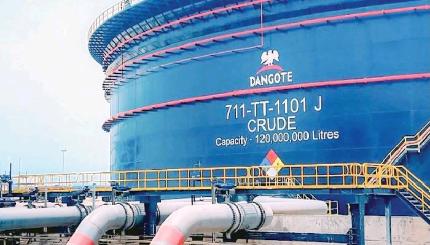
The Dangote Petroleum Refinery has commenced the free distribution of Premium Motor Spirit (PMS), popularly known as petrol, to the Federal Capital Territory (FCT), Abuja, and five states in a move expected to significantly reduce fuel distribution costs and potentially lower pump prices across parts of the country.
The initiative, which began this week, covers Abuja, Lagos, Ogun, Kaduna, Rivers and Delta states, with the company saying the scheme is aimed at improving access to petroleum products and strengthening its nationwide supply chain. Blueprint reports
The development marks another major intervention by the $20 billion refinery in Nigeria’s downstream petroleum sector and is expected to have far-reaching implications for marketers, transporters and millions of consumers struggling with high energy costs.
Relief for marketers and consumers
Under the arrangement, Dangote Refinery will provide free delivery to customers purchasing a minimum of 250,000 litres of petrol.
Industry stakeholders say the initiative could substantially cut the cost of transporting fuel from depots to filling stations, a major factor contributing to the high pump prices of petrol in many parts of the country.
Transportation costs, bridging expenses and logistics challenges have for years been blamed for price disparities between states, especially in the northern part of the country where fuel prices often exceed those in coastal regions.
The free delivery scheme is therefore being viewed as a strategic intervention that could eventually translate into lower retail prices for consumers if marketers pass on the savings.
Analysts believe the initiative could also help improve the availability of petroleum products and reduce the incidence of artificial scarcity.
Kaduna among beneficiaries
The inclusion of Kaduna among the beneficiary states has been welcomed by stakeholders in the North-West, who believe the development could bring much-needed relief to businesses and residents.
Kaduna serves as a major commercial hub in northern Nigeria and has historically borne higher transportation costs for petroleum products due to its distance from coastal depots.
Industry experts say direct supply from Dangote Refinery could reduce these costs and improve supply stability across the state and neighbouring areas.
A reduction in petrol prices would also have a positive effect on transportation costs and the prices of goods and services, which have risen sharply in recent years due to high energy costs.
Major boost for Nigeria’s downstream sector
The latest initiative is being seen as another milestone in the efforts to transform Nigeria’s downstream petroleum sector.
Since commencing operations, the Dangote Refinery has emerged as one of the most influential players in the country’s oil and gas industry, gradually reducing dependence on imported fuel.
With a refining capacity of approximately 650,000 barrels per day, the facility is regarded as the largest single-train refinery in the world and is capable of meeting Nigeria’s domestic demand for petroleum products while also exporting to other African countries.
The refinery’s entry into the market has intensified competition and introduced new dynamics into fuel pricing and distribution.
Industry observers say the free delivery initiative demonstrates the company’s determination to deepen its presence in the downstream sector and address some of the longstanding logistical challenges associated with fuel distribution in Nigeria.
Potential impact on fuel prices
The announcement has generated optimism among Nigerians who have continued to grapple with rising living costs following the removal of fuel subsidies and fluctuations in the exchange rate.
Many consumers are hoping the initiative will trigger another round of reductions in petrol prices and ease the burden on households and businesses.
Petrol prices have remained one of the most significant drivers of inflation in Nigeria, influencing transportation costs, food prices and the general cost of doing business.
Economic analysts say any reduction in logistics costs could help moderate pump prices and contribute to broader efforts aimed at controlling inflation.
However, they also caution that the actual impact of the initiative will depend on market forces, operational efficiency and the willingness of marketers to transfer the cost savings to consumers.
Competition expected to intensify
The move is also expected to intensify competition within Nigeria’s downstream petroleum sector.
Since the commencement of operations at the refinery, industry players have been adjusting their strategies to remain competitive in an increasingly liberalised market.
The free delivery scheme could force other operators to review their pricing structures and logistics arrangements in order to retain market share.
Some experts believe the initiative may also encourage greater efficiency in the sector and ultimately benefit consumers through improved product availability and more competitive pricing.
Hope for economic relief
For many Nigerians, the announcement represents more than just another business decision by the refinery.
With the country’s economy facing persistent inflationary pressures and rising transportation costs, any measure capable of reducing the price of fuel is likely to have a significant impact on the daily lives of millions of citizens.
Businesses, transport operators and households are closely monitoring the implementation of the scheme and its effect on fuel prices in the coming weeks.
If successfully executed, the free PMS delivery initiative could become one of the most consequential interventions in Nigeria’s downstream petroleum sector in recent years and further strengthen Dangote Refinery’s growing influence in Africa’s largest economy.
As the scheme takes off in Abuja and the five beneficiary states, industry stakeholders and consumers alike will be watching keenly to see whether the initiative delivers on its promise of cheaper and more accessible fuel across the country.