

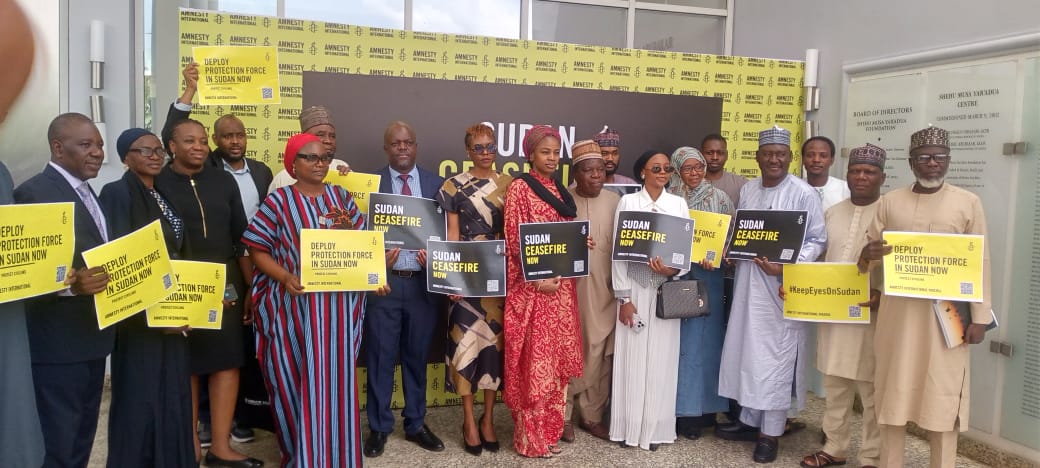
The Chairman of the Board of Trustees of Amnesty International Nigeria, Comrade Auwal Musa Rafsanjani, has called on Nigeria and African leaders to take a more proactive role in addressing the conflict in Sudan.
He warned that failure to act could allow the crisis to spread across the continent.
Rafsanjani noted this on Wednesday in Abuja at the presentation of Amnesty International’s latest report, City Under Siege, Children Under Fire: Rapid Support Forces’ Crimes against Humanity in North Darfur, during a Sudan Solidarity and Advocacy Engagement in Abuja.
He said the conflict in Sudan was one of the world’s worst humanitarian crises, adding that the report documents explained that the violations allegedly committed by the Rapid Support Forces (RSF) during their campaign to seize El Fasher in North Darfur.
According to him, the findings pointed to crimes against humanity, including deliberate attacks on civilians, unlawful killings, sexual violence, forced displacement, destruction of civilian infrastructure and abuses that have disproportionately affected children and other vulnerable groups.
“We gather not merely to present another report, but to amplify the voices of thousands of innocent civilians whose suffering continues largely beyond the world’s headlines,” Rafsanjani said.
Rafsanjani urged the Nigerian government not to remain passive, despite its domestic security and economic challenges.
Rafsanjani called for an immediate ceasefire, unrestricted humanitarian access, protection of civilians, accountability for perpetrators of human rights violations and an inclusive peace process centred on the interests of Sudanese civilians.
He also urged African countries to work together in resolving the conflict rather than relying solely on external actors.
Also, Ambassador Nigeria to Sudan, Ambassador Suleiman Dahiru said the human rights organisation played a vital role by exposing abuses.
He noted that Amnesty International had no enforcement powers but contributed by documenting facts and drawing international attention to human rights violations.
On Nigeria’s possible role in addressing the Sudan conflict, he urged that the country must first confront its own security and economic difficulties before considering external interventions.
“If we have not been able to fully resolve our own security challenges, including the Boko Haram insurgency, how can we realistically influence events in Sudan?” he asked.
He noted that while Nigeria had previously led peacekeeping missions in countries such as Liberia and Sierra Leone, current economic realities make similar deployments difficult.
Also, Country Director for Amnesty International Nigeria, Isa Sanusi, said they know what was happening in Niger Republic, Burkina Faso, Mali and other countries across the Sahel.
He said if they failed to play a role in bringing the conflict in Sudan to an end, the crisis would continue to spread, and Africa could be engulfed in a humanitarian and security crisis of enormous proportions.
He said African countries must come together, pool their resources and work collectively to resolve the crisis.
Sanusi said Africa had undertaken peacekeeping missions before.
He said though our economies may not be as strong as they once were, we can still work together to support peace and stability on the continent.