

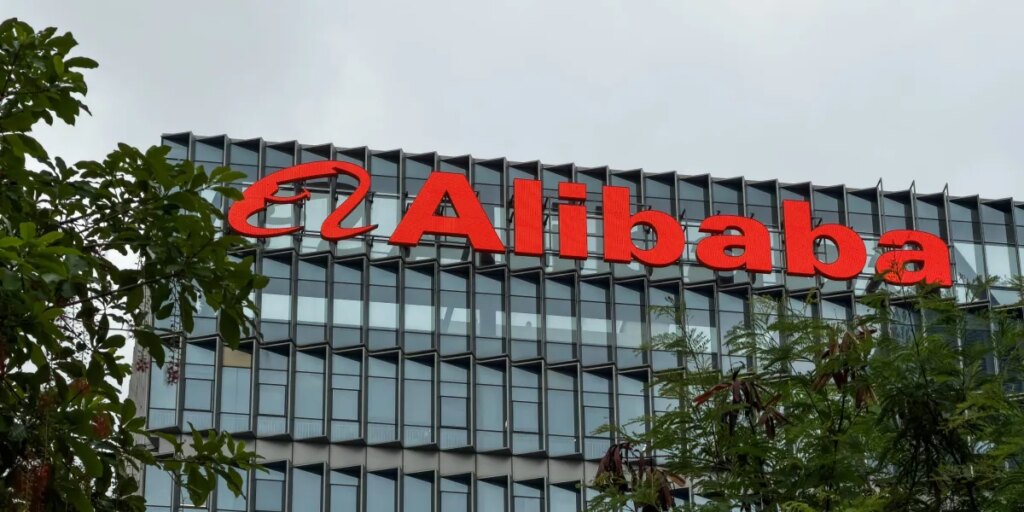
A federal judge ordered the Pentagon to give Alibaba Group Holding Ltd. a reprieve from a law that caused all of its lobbyists to drop it as a client while she considers the constitutionality of the measure, in a case set to test the US’s ability to curtail Chinese companies’ activities.
Washington’s most powerful lobbying firms rushed to sever ties with Alibaba and other Chinese tech giants after a new law targeting entities allegedly aiding China’s military took effect last week, Bloomberg News previously reported.
The restriction bars the Defense Department from working with any company represented by lobbyists who also work for entities blacklisted by the Pentagon for allegedly aiding the Chinese People’s Liberation Army. In practice, the provision forced lobbyists to choose between the sanctioned Chinese companies and US defense contractors, causing them to abandon the former.
US District Judge Eumi K. Lee, who is overseeing a lawsuit by Alibaba challenging its inclusion on the list, on Sunday ordered the Pentagon not to treat Alibaba as a Chinese military company with respect to the lobbying restriction until she resolves the company’s motion on the matter or 60 days after a court hearing on it, whichever comes first.
The case will likely be closely watched as the Pentagon’s blacklist has emerged as a prominent tool for the US in its rivalry with China. On June 8, the Pentagon added Alibabato its roster of Chinese military companies operating in the US known as the 1260H list, bringing the total number of designated Chinese military companies to 188 from 20 named under a preceding statute a few years ago. The roster spans key sectors including semiconductors, artificial intelligence, robotics and drones
Alibaba on June 23 sued the department seeking its removal from the blacklist, saying it doesn’t work with the Chinese military, followed by a June 30 motion for relief from the lobbying restrictions linked to the list the day they took effect.
Read More: Alibaba Sues the US, Seeking Removal From Pentagon’s Blacklist
Alibaba argued in a recent filing that these restrictions violate its freedom of speech, causing it to lose “its voice across the whole of its dealings with the federal government — on legislation, on regulation, on the policies that shape its business.”
No established lobbying firm would be willing to trade access to the tens of thousands of companies that contract with the Pentagon in order to be able to represent it, Alibaba has argued, noting in another filing that all of its more than two dozen registered lobbyists withdrew their registrations in recent weeks.
In a joint stipulation filed on Friday, Pentagon officials said they maintain the lobbying restriction “fully complies with the US Constitution but recognize that it will benefit both the parties and the court to enter into a stipulation for a limited period of time so the court can assess” the matter.
The Pentagon declined to comment, citing ongoing litigation. Alibaba didn’t immediately respond to a request for comment.
Read More: Frail Trump-Xi Truce Highlighted by Pentagon’s Botched Blacklist
US House China select committee chief John Moolenaar and House intelligence committee member Elise Stefanik wrote to Defense Secretary Pete Hegseth last month, urging strict implementation of the new restriction.
“It is critical that the department’s contractors avoid partnering with firms and lobbyists that simultaneously advance the interests of companies executing the military ambitions of the Chinese Communist Party.”