

As political activities gradually gather momentum ahead of the 2027 general elections, the debate over religious inclusion and equitable representation has taken centre stage in Niger State, with Christian leaders intensifying pressure on the ruling All Progressives Congress (APC) to nominate a Christian as its deputy governorship candidate if Governor Mohammed Umaru Bago seeks a second term.
The renewed agitation, championed by the Coalition of Concerned Christian Stakeholders (CCCS), has reignited discussions on power-sharing, internal party democracy, zoning, consensus politics and the place of religious balance in the state’s governance.
Although the APC has yet to officially respond to the demand, Christian groups insist their campaign is not about promoting religious division but ensuring fairness, justice and inclusive governance in one of Nigeria’s most religiously diverse states.
Growing Calls for Political Inclusion
The latest demand is the culmination of months of complaints by Christian organisations over what they describe as a steady decline in their political representation in Niger State.
The agitation first gained public attention on May 20, 2026, when the Niger State Christian Voice in Politics and Governance, led by its convener, Habila Daniel Diko, accused the APC of sidelining Christian aspirants during the party’s National Assembly primaries.
READ ALSO; INEC Extends 2027 candidate nomination deadline to July 14
The group alleged that consensus arrangements and zoning were used to edge out Christian aspirants, warning that the development could discourage Christians, particularly young people, from actively participating in politics.
It also expressed concern over the political future of the Deputy Speaker of the Niger State House of Assembly, Hon. Afiniki Dauda, alleging that she came under pressure during the APC primaries.
The group warned that unless the situation was addressed, Christians risked losing what remained of their representation in the state’s political leadership.
Coalition Demands Christian Deputy Governor
The campaign gathered fresh momentum last week when the Coalition of Concerned Christian Stakeholders formally demanded that the APC reserve its deputy governorship ticket for a Christian ahead of the 2027 governorship election.
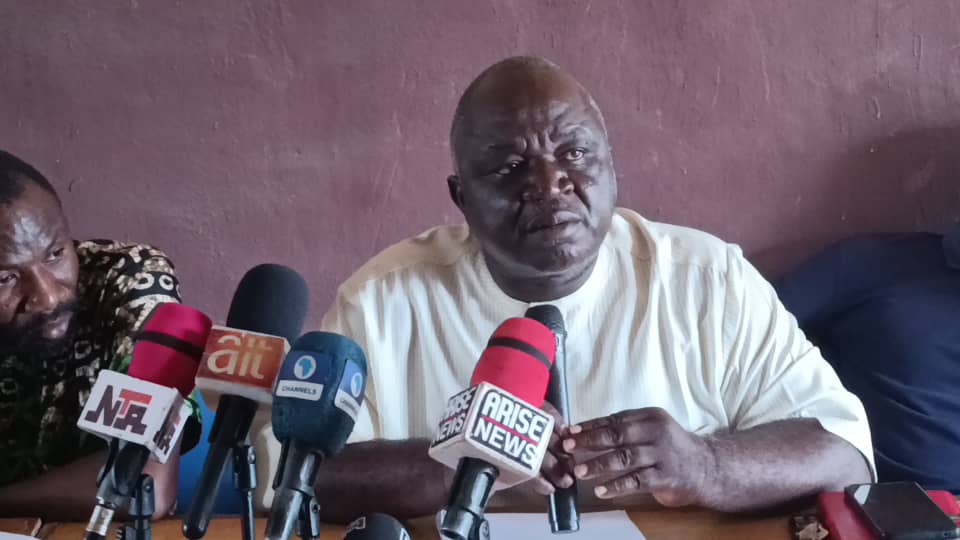
Addressing journalists in Minna on July 8, the coalition’s Secretary, Comrade Jude Johnson, flanked by former Commissioner for Information, Culture and Tourism Jonathan Vatsa and other members, said the demand was rooted in equity rather than religion.
“We demand a Christian deputy,” the coalition declared, arguing that leadership in Niger State should reflect its religious diversity, comprising Christians, Muslims and adherents of traditional religions.
According to the coalition, Christians overwhelmingly supported Governor Bago’s election in 2023, but their continued backing for his re-election would depend on whether the party addresses what they describe as an increasing imbalance in political appointments and elective positions.
READ ALSO; Wike urges PDP to strengthen grassroots ahead of 2027, says ‘Everything isn’t about the presidency’
The group also urged the governor to consider selecting a Christian running mate from Niger East Senatorial District (Zone B), arguing that the zone has competent party members and a sizable Christian population.
Concerns Over Representation
Currently, the offices of Governor, Deputy Governor, Speaker of the House of Assembly, Secretary to the State Government and Chief of Staff are all occupied by Muslims.
Similarly, the state’s three senators and all 11 members of the House of Representatives are Muslims.
Within the 27-member State House of Assembly, only three lawmakers are Christians, while Deputy Speaker Hon. Afiniki Dauda remains the highest-ranking Christian elected official.
However, following the APC primaries, Dauda is not expected to return to the Assembly.
At the grassroots level, only one of the state’s 25 local government chairmen is a Christian, while just three of the 30 commissioners serving in the current administration are Christians.
The coalition argued that the figures demonstrate a consistent decline in Christian representation despite claims that Christians constitute about 45 per cent of Niger State’s population.
Responding to questions over why Christians remained largely silent during the administration of former Governor Abubakar Sani Bello, Vatsa disclosed that the APC had initially proposed Sunday Kolo as a Christian deputy governorship candidate before the arrangement eventually changed.
“We proposed a Christian-Muslim ticket and Sunday Kolo was picked. That was the party’s suggestion, but it did not happen; instead, Ahmed Mohammed Ketso emerged,” he said.
Vatsa argued that the development illustrated what he described as the weakening of party supremacy, with influential political interests increasingly determining candidate selection.
He also dismissed claims that his current position was politically motivated, noting that he openly opposed the APC’s Muslim-Muslim presidential ticket ahead of the 2023 general election.
Similarly, Sunday Olayinka Ojimi, Secretary of the OAIC, a bloc within the Niger State chapter of the Christian Association of Nigeria (CAN), alleged that Christians had been systematically excluded from governance under the current administration.
According to him, Christian aspirants who enjoyed grassroots support during the APC primaries were allegedly persuaded to step down, limiting their chances of occupying elective offices.
“Even where our candidates were popular and the electorate wanted them, they were asked to step down. At the state level, we are not carried along, and even at the local government level we have only one chairman. All we are asking for is the position of deputy governor to ensure equity, fairness and proper representation,” Ojimi said.
With preparations for the 2027 governorship election gradually taking shape, analysts say the agitation could influence party strategies, alliances and voter behaviour.
Whether the APC eventually fields a Christian deputy governorship candidate remains uncertain, but the issue has already emerged as one of the defining debates likely to shape the political landscape ahead of the next governorship election in Niger State.