

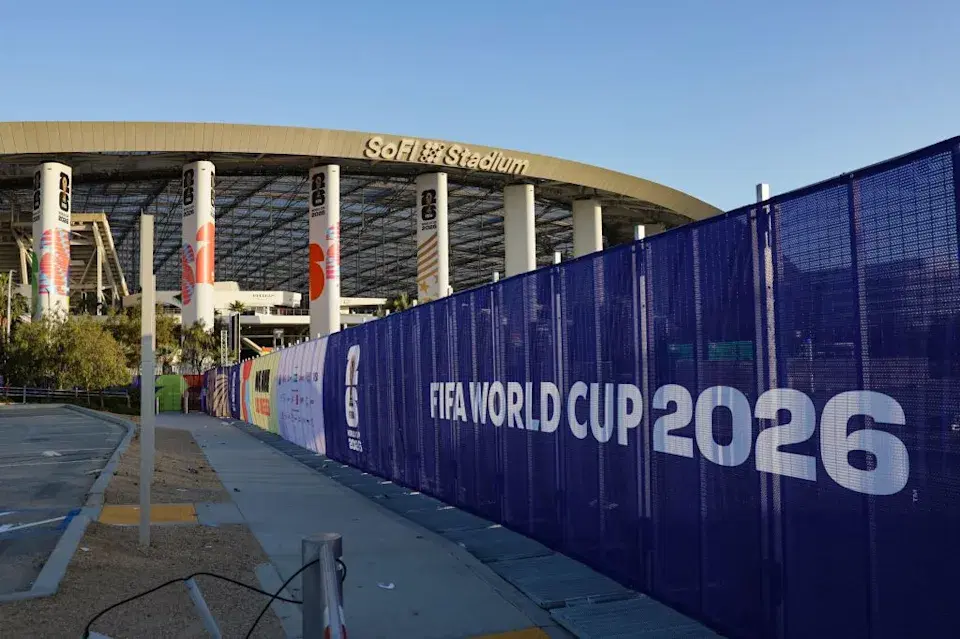
The United States has warned foreign social media influencers and content creators attending the 2026 FIFA World Cup that earning money from content produced while on a tourist visa could lead to deportation and other immigration penalties.
In an email statement to Spanish news agency EFE on Wednesday, the U.S. Customs and Border Protection (CBP) and the Department of Homeland Security (DHS) confirmed that foreign nationals entering the country on B-2 tourist visas are not permitted to work or receive compensation for activities
carried out while in the United States.
The warning comes just as the World Cup kicks off across the United States, Canada and Mexico, with thousands of content creators expected to travel to North America to cover the tournament for audiences on YouTube, TikTok, Instagram, Facebook and other platforms.
US authorities said creating content as the primary purpose of a visit and generating income while physically present in the country is considered employment and requires the appropriate visa.
“Having the sole purpose of the visit be content creation (as an influencer), thereby generating income from U.S. sources while in the country, is considered work and requires the appropriate visa,” CBP and DHS said in a joint statement.
Officials added that individuals admitted under visitor status who receive income from a U.S. source could be violating the terms of their entry.
Sponsored
Under existing immigration rules, a B-2 visa is intended for tourism, holidays, family visits or medical treatment and does not permit paid employment.
Authorities warned that violations could result in visa cancellation, deportation and restrictions on future travel to the United States.
The advisory is expected to affect independent digital creators planning to document the World Cup, one of the biggest sporting events in the world and a major opportunity for influencers seeking to grow audiences and attract sponsorship deals.
However, immigration experts noted that each case would likely be assessed individually. Some creators may be able to challenge penalties if they can prove their accounts are registered outside the United States and that income is linked to content produced elsewhere.
The warning is the latest controversy surrounding preparations for the 2026 World Cup.
In recent days, Somali referee Omar Artan was denied entry into the United States despite being appointed by FIFA as one of the tournament officials, while Iran’s football federation also complained that its allocation of supporter tickets for the group stage had been revoked.
The expanded 48-team World Cup runs from June 11 to July 19 across the United States, Canada and Mexico.
SPONSORED